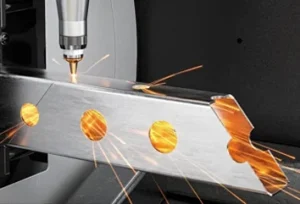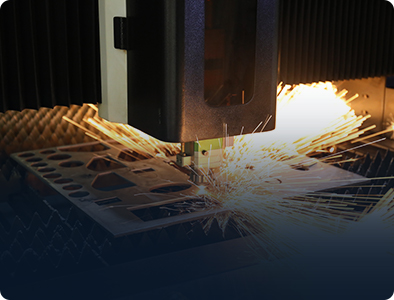
Copper can be laser cut, but it is more challenging than mild steel, stainless steel or aluminum because copper reflects laser energy and conducts heat very quickly. For successful copper laser cutting in Singapore, buyers should confirm the copper grade, thickness, surface condition, tolerance, edge quality, burr requirement and final application. For copper busbars, electrical connectors, conductive plates and prototype copper components, sample testing is recommended before production, especially when the part includes small holes, narrow slots, tight tolerances or strict edge quality requirements.
Copper laser cutting is used for copper sheets, busbars, electrical connectors, conductive plates, terminals, contact parts, prototype components and precision industrial parts. However, copper is not processed like mild steel or stainless steel. It is one of the more challenging metals to cut because it reflects laser energy and conducts heat very quickly.
For buyers in Singapore, this matters because copper parts are often used in engineering, electronics, electrical assemblies, automation systems, power distribution, battery-related components and prototype manufacturing. A copper part is usually not judged only by its outer shape. Buyers also need to consider burr, oxidation, hole accuracy, flatness, conductivity requirements, edge quality and whether the part can be assembled without additional rework.
This guide explains how copper laser cutting works, why reflective metals need careful setup, what quality challenges to expect, when sample testing is recommended, and what information buyers should prepare before requesting a quotation.
- Copper can be laser cut, but it requires more careful process setup than many common metals.
- The two biggest challenges are high reflectivity and high thermal conductivity.
- Copper sheet cutting quality depends on thickness, alloy, surface condition, laser source, focus, assist gas and fixture stability.
- Burr, oxidation, dross, incomplete cutting and heat distortion are common issues to check during sample validation.
- Copper busbars and electrical connectors require extra attention to edge quality, hole accuracy and dimensional consistency.
- Buyers should provide copper grade, thickness, drawing file, tolerance, quantity and application details before requesting a quote.
- For new copper parts, sample testing is more reliable than choosing a process based only on material name.
Can Copper Be Laser Cut?
Yes, copper can be laser cut. However, laser cutting copper is more sensitive than cutting mild steel or stainless steel. Copper reflects more laser energy and removes heat from the cutting zone quickly, so the process window is narrower.
Copper laser cutting can be used for flat copper sheet components, conductive plates, electrical terminals, busbar prototypes, connector parts, shielding parts and small custom copper components. It is especially useful for low-volume or prototype work because it does not require dedicated tooling.
However, copper should not be treated as a “standard metal cutting” material. The cutting result depends on material grade, thickness, feature size, laser setup, tolerance and edge quality requirements.
What affects copper laser cutting quality?
| Factor | Why It Matters |
|---|---|
| Copper grade | Pure copper and copper alloys may respond differently to laser energy and heat. |
| Thickness | Affects penetration, cutting speed, burr and cost. |
| Surface condition | Polished, oxidized or coated surfaces may behave differently during cutting. |
| Hole and slot size | Small features may limit cutting quality, especially on thicker copper. |
| Tolerance requirement | Determines whether sample validation is needed before production. |
| Edge requirement | Helps decide whether deburring, cleaning or finishing is required. |
| Final application | Busbars, connectors, prototypes and decorative parts have different quality priorities. |
For broader material process selection, see Lumen Future’s guide to choosing the right laser process for different materials.
Why Copper Is Difficult to Laser Cut
Copper is difficult to laser cut because it combines two major challenges: high reflectivity and high thermal conductivity. These two properties affect how the laser energy enters the material and how heat behaves during cutting.
High Reflectivity
Copper is a reflective metal. A bright or clean copper surface can reflect more laser energy than many common steels. This means less energy may be absorbed at the cutting point unless the laser process is properly matched to the material.
Reflectivity affects cutting stability, piercing behavior, required laser energy, edge consistency, process repeatability and the risk of incomplete cutting. This is why reflective metal cutting often requires more process review than standard sheet metal cutting.
High Thermal Conductivity
Copper conducts heat very quickly. During cutting, heat can spread away from the kerf faster than in many steels. This can make full penetration more difficult and may require careful balancing of laser power, cutting speed, focus and assist gas.
High thermal conductivity can lead to incomplete cuts, wider heat-affected areas, burr or dross on the underside, slower cutting speed, feature quality variation and heat distortion on small parts. This is one reason copper laser cutting parameters should not be copied directly from steel, stainless steel or aluminum cutting jobs.
Burr and Dross Risk
Burr and dross can appear when molten material is not fully removed from the cut edge. In copper cutting, this may happen when energy delivery, speed, focus or assist gas is not properly matched to the thickness and feature geometry.
For electrical components and busbars, burr is more than a cosmetic issue. It can affect assembly, contact surfaces, insulation clearance and handling safety.
Oxidation and Edge Color
Copper can show oxidation or edge color change during laser cutting. The edge may appear darker or different from the original copper surface. This may be acceptable for some internal industrial components, but it may not be acceptable for visible parts or parts that require a clean conductive surface.
Do not assume all copper edges are acceptable as-cut
If edge oxidation, burr or discoloration is not acceptable, specify this before quotation. The supplier may need to review gas setup, cutting strategy, deburring or sample testing before production.
Thickness and Alloy Differences
Copper is not one single material. Pure copper, oxygen-free copper, phosphor bronze, brass, copper alloys and plated copper materials may all behave differently during laser processing.
A setting that works for one copper sheet may not work for another. Even the same thickness can cut differently if the alloy, surface condition or supplier batch changes. This is why sample testing is important before larger production runs.
Copper Laser Cutting vs Other Metals
Copper is generally more difficult to laser cut than mild steel and stainless steel. It may also require more careful setup than aluminum or brass because copper combines strong reflectivity with very high heat conductivity.
| Material | Laser Cutting Difficulty | Main Concern |
|---|---|---|
| Mild steel | Lower | Oxidation, thickness and edge quality |
| Stainless steel | Medium | Heat tint, burr and finish requirement |
| Aluminum | Medium | Reflectivity, heat conductivity and surface finish |
| Brass | Higher | Reflectivity, edge color and visible finish |
| Copper | Higher | Reflectivity, heat conductivity, burr and oxidation |
Compared with brass, copper is usually more industrial and function-driven. Brass is often used for decorative parts, signs, engraved plates and visible components. Copper is more often used for conductive parts, busbars, connectors, contact plates and electrical prototypes.
Decoration + engraving + appearance
Brass projects often involve nameplates, signage, plaques, visible surfaces and engraving contrast.
Electrical + conductive + industrial parts
Copper projects often involve busbars, connectors, conductive plates, terminals and prototype electrical components.
For a related reflective metal guide, see brass laser cutting and engraving. For aluminum material comparison, see aluminum 6061 vs 5052 laser cutting.
Copper Sheet Cutting: What Buyers Should Know
Copper sheet cutting is most suitable for flat 2D parts such as conductive plates, terminals, small brackets, contact pieces, battery-related components and prototype electrical parts. The buyer should provide a clear drawing file, material thickness, quantity and critical dimensions before quotation.
| Project Detail | Why It Matters |
|---|---|
| Sheet thickness | Determines cutting difficulty, speed and edge quality. |
| Copper grade | Affects heat behavior and process stability. |
| Hole size | Small holes may need review before production. |
| Slot width | Narrow slots may be difficult depending on thickness. |
| Edge requirement | Determines whether deburring is needed. |
| Flatness requirement | Important for busbars and assembly parts. |
| Conductive function | Helps identify critical surfaces and burr limits. |
| Quantity | Affects setup cost and production planning. |
For quotation and production, DXF or DWG files are usually preferred for 2D copper sheet cutting. If your part has bending, assembly or 3D geometry, a STEP file may also be useful for review. For file preparation details, see the guide on how to prepare CAD files for laser cutting.
Common Copper Laser Cutting Applications
Copper laser cutting is most valuable when a project needs custom geometry, fast revision, small-batch production or prototype validation. In Singapore, copper parts are often requested by engineering teams, electronics companies, automation suppliers, research teams and industrial maintenance buyers.
Copper Busbars
Copper busbars are used to conduct current in electrical systems, power distribution assemblies, battery-related prototypes and control cabinets. Busbar parts often require accurate hole positions, controlled burr and consistent flatness.
Details to confirm before busbar cutting
Copper busbar prototypes and conductive plates often need sample testing before production because edge burr, hole accuracy and oxidation may affect assembly.
Electrical Connectors and Terminals
Copper is commonly used for connectors, terminals, conductive tabs, contact plates and grounding parts. These parts may be small, thin and feature-dense. Cutting quality matters because burr or dimensional error can affect fit and electrical contact.
For connector and terminal parts, buyers should confirm minimum feature size, hole position tolerance, edge burr requirement, surface condition and whether the part will be plated, cleaned or assembled later.
Conductive Plates and Contact Parts
Copper conductive plates and contact parts may be used in electrical panels, automation equipment, industrial devices, test fixtures and custom engineering assemblies. These parts often require good flatness and accurate cut geometry.
If the part touches another conductive component, edge burr and surface contamination may matter more than appearance.
Prototype Copper Components
For Singapore engineering teams, local copper laser cutting is useful during prototype development because the supplier can review drawings, clarify tolerance requirements, test small batches and adjust details before production.
Prototype copper cutting is useful when the design may still change, the quantity is too low for tooling, the part needs fast local review, or the customer needs multiple design versions before production.
Automation and Electronics Fixtures
Copper parts may also be used in automation fixtures, electronics testing, shielding, grounding and conductive contact setups. These applications may require custom shapes and quick revision, making laser cutting useful for early-stage development.
Common Quality Challenges in Copper Laser Cutting
Copper laser cutting can produce useful industrial parts, but quality should be checked carefully. The main issues are not always visible from the top surface alone. The underside, edge, holes and small features should also be inspected.
| Challenge | What It Looks Like | Common Cause |
|---|---|---|
| Burr | Raised or sharp edge on underside | Energy, speed, focus or gas not matched |
| Oxidation | Darkened or colored edge | Heat input and gas interaction |
| Dross | Recast material attached to edge | Molten material not fully removed |
| Incomplete cut | Part remains attached to sheet | Thickness, focus or power mismatch |
| Heat distortion | Small parts warp or lose flatness | Heat accumulation during cutting |
| Hole inaccuracy | Holes undersized, tapered or rough | Hole size too small for thickness or process |
| Edge roughness | Uneven or rough cut boundary | Unstable process or unsuitable parameters |
These issues are not solved by one fixed parameter. Copper laser cutting requires parameter validation based on the actual grade, thickness, surface condition and feature size.
If the project requires smooth edges, review the guide on polishing and deburring after laser cutting.
Why Parameters Depend on Thickness, Alloy and Surface Condition
There is no universal copper laser cutting parameter that works for every copper sheet. A setting that works on thin copper foil may not work on thicker copper plate. A setting that cuts one copper alloy cleanly may leave burr or oxidation on another.
Same material name, different cutting result
Two copper sheets with the same nominal thickness can behave differently if one is pure copper and another is a copper alloy, if one surface is oxidized and the other is bright, or if one design has large open profiles while another has many small holes and narrow slots.
Copper cutting parameters depend on material thickness, copper grade or alloy, surface finish, oxidation level, coating or plating, hole size, feature density, cutting path length, required tolerance, edge quality requirement and whether the part is functional or visible.
For example, a simple rectangular copper plate may be easier to cut than a thin copper connector with many small holes. A busbar with larger holes may have different process requirements from a fine electrical terminal with narrow slots.
This is why buyers should avoid asking only, “Can you cut copper?” A better request is: “Can you review this copper grade, thickness, drawing and application to confirm whether laser cutting is suitable and whether sample testing is needed?”
When Should You Use Sample Testing for Copper Laser Cutting?
Sample testing is not required for every simple copper part, but it is highly recommended when the part is new, the material is expensive, the tolerance is tight or the application is function-critical.
| Sample Testing Is Recommended When | Why It Matters |
|---|---|
| Copper grade is unknown | Different alloys can cut differently. |
| Thickness is above a normal thin-sheet range | Penetration and burr risk increase. |
| The part includes small holes or slots | Feature quality may limit the process. |
| The part is used as a busbar or connector | Burr and hole accuracy affect assembly. |
| Edge oxidation is not acceptable | Gas and heat input need validation. |
| The batch quantity is high | Sample approval reduces production risk. |
| Flatness is critical | Heat can affect small or thin parts. |
| The part will be plated or assembled later | Edge condition may affect downstream work. |
- Full cut-through — no attached sections or material bridging.
- Edge burr — no sharp burr that affects assembly or handling.
- Hole quality — holes are correctly sized, aligned and clean enough for use.
- Oxidation — edge color is acceptable for the application.
- Dimensional accuracy — key dimensions match the drawing.
- Flatness — the part remains flat enough for assembly.
- Surface condition — no unacceptable scratches or contamination.
- Assembly fit — screws, insulation, connectors or mating parts fit correctly.
For new copper parts, sample testing is often more reliable than choosing a process based only on material name.
What Buyers Should Prepare Before Requesting a Quote
A complete RFQ helps the supplier review copper laser cutting more accurately. Missing material or application information can delay quotation because copper is more sensitive to process setup than many standard metals.
| Information to Provide | Why It Matters |
|---|---|
| Copper grade | Pure copper and copper alloys behave differently. |
| Thickness | Affects penetration, speed, burr and cost. |
| Drawing file | DXF or DWG helps quotation and production. |
| Quantity | Affects setup cost and unit price. |
| Critical dimensions | Helps identify tolerance-sensitive features. |
| Hole size | Small holes may need review. |
| Edge requirement | Determines whether deburring is needed. |
| Oxidation tolerance | Defines acceptable edge appearance. |
| Final application | Busbar, connector, prototype or decorative part. |
| Delivery requirement | Helps plan local Singapore lead time. |
If you are not sure whether your file is ready, review Lumen Future’s CAD file preparation guide for laser cutting. For broader pricing factors, see laser cutting cost in Singapore.
Thickness: 1.5 mm
Quantity: 20 pcs prototype, possible 200 pcs after approval
File: DXF attached, PDF drawing attached for dimensions
Application: Electrical connector plate
Critical features: Hole diameter and hole spacing
Finish requirement: Remove sharp burrs; slight edge discoloration acceptable
Delivery: Required in Singapore within 7 working days if possible
This kind of enquiry gives the supplier enough information to check manufacturability, estimate cost and identify whether sample testing is needed.
How Copper Laser Cutting Cost Is Estimated
Copper laser cutting cost depends on more than material thickness. Reflective metals may require more careful setup, slower processing, sample validation or additional finishing, depending on the job.
Common cost factors include copper grade, material thickness, cutting length, number of holes and internal features, small feature density, quantity, setup time, sample testing requirement, deburring or cleaning requirement, tolerance requirement and delivery schedule.
A simple copper sheet part with large features may be more straightforward to quote. A busbar prototype with tight hole spacing, burr control and strict flatness requirements may need more review before pricing.
Copper Laser Cutting in Singapore: Local Buyer Notes
For Singapore buyers, local copper laser cutting can be useful when the project needs fast drawing review, engineering communication, prototype iteration or small-batch production. This is especially relevant for electronics, automation, electrical panel, research, maintenance and precision manufacturing projects.
Where copper laser cutting demand often comes from in Singapore
Local copper projects often come from engineering and industrial teams that need fast review, small-batch validation and clear communication before assembly.
Electronics & Electrical Teams
Connector plates, terminals, grounding parts, shielding pieces and conductive prototypes.
Automation & Equipment Builders
Custom conductive plates, fixtures, contact components and test-related copper parts.
Power Distribution & Busbar Projects
Copper busbar prototypes, hole-position validation and short-run conductive components.
Prototype & Research Work
Small quantities, frequent drawing revisions and application-specific sample testing.
Local support is useful when the design is still being revised, the part needs quick prototype feedback, the buyer needs to discuss tolerance or material options, or the supplier needs to review files before quoting.
For buyers comparing fabrication partners, it is also important to check whether the supplier can review material requirements, file quality, finishing needs and lead time clearly. See the guide on choosing a sheet metal fabrication supplier in Singapore for a broader supplier evaluation framework.
Practical Quality Checklist for Copper Parts
Use this checklist when reviewing copper laser cut samples or production parts.
- Full cut-through: no bridging or attached sections.
- Burr: no sharp or excessive burr on edges or holes.
- Hole quality: holes are clean, correctly sized and aligned.
- Edge oxidation: edge color is acceptable for the application.
- Flatness: part remains flat enough for assembly.
- Surface condition: no unacceptable scratches or contamination.
- Critical dimensions: key dimensions match the drawing.
- Assembly fit: part fits with screws, insulation, connectors or mating parts.
- Repeatability: multiple pieces show consistent quality.
Frequently Asked Questions
Can copper be laser cut?
Yes. Copper can be laser cut, but it is more challenging than many common metals because it reflects laser energy and conducts heat quickly. The result depends on copper grade, thickness, surface condition, laser setup and quality requirements.
Why is copper difficult to laser cut?
Copper is difficult to laser cut because it has high reflectivity and high thermal conductivity. It can reflect laser energy and remove heat from the cutting zone quickly, making process setup more sensitive than mild steel or stainless steel.
Can fiber laser cut copper?
Fiber laser systems can be used for copper cutting in suitable configurations, but results depend on thickness, grade, machine capability, focus, assist gas and quality requirements. Buyers should confirm suitability through drawing review and sample testing when necessary.
What thickness of copper can be laser cut?
The suitable copper thickness depends on the copper grade, sheet condition, laser system, feature size, tolerance requirement and edge quality requirement. It is better to review the actual drawing and material instead of relying on a general thickness claim.
Does copper laser cutting leave burr?
Copper laser cutting can leave burr if the process is not matched to the material thickness and geometry. Burr can often be reduced through parameter optimization and may also be addressed through deburring or edge finishing.
Does copper oxidize during laser cutting?
Copper may show oxidation or edge color change during laser cutting, depending on heat input, gas setup and surface condition. If oxidation is not acceptable, this should be specified before quotation and sample testing may be recommended.
Can copper busbars be laser cut?
Copper busbar prototypes and some custom busbar parts can be laser cut, depending on thickness, hole size, burr requirement and tolerance. For busbars, sample testing is recommended because hole accuracy, burr and flatness may affect assembly.
What file format should I send for copper laser cutting?
DXF or DWG files are usually preferred for 2D copper sheet cutting. A PDF drawing can be included for dimensions and notes. If the part has bending or assembly geometry, a STEP file may also be useful for review.
Is sample testing needed for copper parts?
Sample testing is recommended when the copper grade is unknown, the thickness is challenging, the design includes small holes or slots, edge oxidation is not acceptable, or the part is used as a busbar, connector or function-critical component.
How much does copper laser cutting cost in Singapore?
Copper laser cutting cost depends on material grade, thickness, cutting length, number of holes, feature complexity, quantity, finishing requirement, tolerance and delivery schedule. Reflective metals such as copper may require more careful setup or sample validation, which can affect quotation.
Related Guides
- Fiber vs CO2 vs UV Laser: Choosing the Right Process for Your Material
- Sheet Metal Fabrication Singapore: Choosing the Right Supplier
- How to Prepare CAD Files for Laser Cutting
- How Much Does Laser Cutting Cost in Singapore?
- Laser Cutting Services in Singapore: The Complete Buyer’s Guide
- Brass Laser Cutting & Engraving in Singapore
- Aluminum 6061 vs 5052 Laser Cutting in Singapore
- Polishing & Deburring After Laser Cutting
Need Copper Laser Cutting in Singapore?
Send your copper drawing, thickness, quantity and application requirements to Lumen Future for review. For busbars, connectors and new copper parts, our team can help assess whether sample testing is needed before production.
- Send DXF or DWG files for 2D copper sheet cutting.
- Include copper grade, thickness and quantity so the process can be reviewed accurately.
- Specify burr, oxidation, tolerance and application requirements before quotation.