Laser cutting prices in Singapore vary widely because it isn’t one service — it’s a family of processes (fiber, CO₂, UV) applied to different materials with different post-processing. Cost depends on material, thickness, complexity, quantity, and finishing. Typical lead time is 24–48 hours for standard orders and as fast as 8 hours for urgent jobs. The right supplier matches the right process to your drawing, runs in-house post-processing, and quotes within 24 hours of receiving a clean DXF or STEP file.
If you’ve recently asked three different Singapore suppliers to quote the same laser-cut part, you’ve probably noticed something strange: the numbers can range from S$5 to S$50 per piece — for what looks like the same job. Why?
Because laser cutting isn’t one service. It’s a family of processes (fiber, CO₂, UV), applied to dozens of materials, with wildly different setup costs, tolerances and post-processing requirements. The supplier who quotes S$5 might be running a 1kW CO₂ cutter on acrylic. The one quoting S$50 might be using a 6kW fiber laser with deburring, inspection and a 24-hour turnaround built in.
This guide is for engineers, procurement teams, and SME owners sourcing custom parts in Singapore. By the end, you’ll know what you’re paying for, what to ask, and how to avoid the three most common mistakes buyers make when sending their first DXF file.
What Is Laser Cutting? A Quick Refresher for Buyers
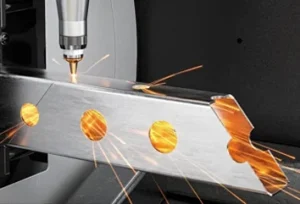
Laser cutting uses a focused beam of light to melt, burn, or vaporize material along a programmed path. A jet of assist gas (nitrogen, oxygen, or compressed air) blows the molten material out of the cut, leaving a clean edge.
Three laser sources dominate the Singapore market, and the difference matters for your project:
| Laser Type | Best For | Typical Materials | Edge Quality |
|---|---|---|---|
| Fiber Laser | Metals, including reflective ones | Carbon steel, stainless steel, aluminium, brass, copper, titanium | Excellent on metals up to 20mm |
| CO₂ Laser | Non-metals and some metals | Acrylic, wood, leather, fabric, paper, thin mild steel | Smooth, polished edge on acrylic |
| UV Laser (cold processing) | Heat-sensitive materials | PI film, FPC, thin glass, ceramics | Near-zero heat-affected zone |
If a supplier only runs fiber lasers, they probably can’t quote your acrylic signage. If they only run CO₂, they likely can’t cut your 10mm stainless steel bracket. A one-stop shop with all three sources can match the right process to your drawing instead of forcing your part onto the wrong machine.
Common Materials Cut by Laser in Singapore
Most Singapore suppliers list “stainless steel, mild steel, aluminium.” That’s the standard menu. But projects in semiconductor, electronics, and marine industries often need much more than that.
Metals (the standard 80%)
| Material | Typical Thickness Range | Common Applications |
|---|---|---|
| Carbon Steel (Mild Steel) | 0.5–20 mm | Structural brackets, enclosures, base plates |
| Stainless Steel 304 / 316 | 0.5–12 mm | Food-grade, marine, medical, kitchen |
| Aluminium (5052, 6061) | 0.5–10 mm | Drone frames, heat sinks, automation parts |
| Brass | 0.5–6 mm | Decorative parts, electrical contacts |
| Copper | 0.5–6 mm | Bus bars, electrical components |
| Titanium | 0.5–5 mm | Medical implants, aerospace |
Specialty & Electronic Materials (where most suppliers stop)
This is where projects often get stuck looking for a vendor in Singapore.
- Glass — borosilicate, quartz, sapphire, microcrystalline glass (MCG) for optics, sensors, and semiconductor tooling
- PI Film — black or white polyimide film for FPC outlines, electromagnetic shielding, and insulation in semiconductor manufacturing
- PCB / FPC — depaneling and outline cutting for electronics assembly
- Ceramics — alumina and zirconia for high-temperature and electrical insulation
If your project involves any of these, you’ll want a supplier with UV cold processing — fiber and CO₂ lasers will crack or burn them.
Non-metals (signage, prototyping, gifts)
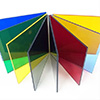
Acrylic, wood, MDF, leather, fabric, rubber, paper, composite materials. Common for retail signage, architectural models, packaging prototypes, and corporate gifts.
For a full materials list across all categories, see our 100+ materials we support.
Laser Cutting Price in Singapore: What You’re Actually Paying For
There’s no single “price per cut” in Singapore. A quote is built from six components, and understanding them helps you compare suppliers fairly.
The Six Cost Components
- Material cost — Raw sheet price, usually with a 5–20% yield buffer for nesting waste
- Machine time — Calculated by cutting length and pierce count, not just part area
- Setup fee — Programming, nesting, machine setup. This is why a 1-piece order costs disproportionately more than 100 pieces
- Assist gas — Nitrogen (for clean stainless steel and aluminium edges) costs noticeably more than oxygen or compressed air
- Post-processing — Deburring, edge finishing, tapping, bending, welding, surface treatment
- Margin & overhead — Quality inspection, packaging, delivery
Rough Price Anchors
For straightforward sheet metal cuts in Singapore, simple parts often fall in the S$5–S$20 per square decimetre range for common metals like mild steel, with stainless steel and aluminium running higher. Reflective metals (copper, brass), specialty materials (sapphire, PI film), and parts requiring tight tolerances or full post-processing sit above this range.
The biggest pricing trap for buyers: Comparing a “cutting only” quote to a “cutting + bending + deburring + inspection” quote. Always confirm what’s included before comparing numbers.
For a step-by-step breakdown of how a quotation is built, see our DXF File to Delivered Parts process.
Lead Time: Standard vs. Urgent Orders
Singapore’s manufacturing ecosystem runs tight. Buyers expect days, not weeks.
| Order Type | Typical Lead Time | What Affects It |
|---|---|---|
| Standard order | 24–48 hours | Material in stock, single process |
| Urgent order | As fast as 8 hours | Available capacity, simple geometry |
| Multi-process orders (cut + bend + weld) | 3–7 working days | Number of operations, batch size |
| Specialty materials | 5–10 working days | Sapphire, sapphire glass, imported PI film |
Five factors typically push lead time up:
- Material availability — exotic alloys or thick plates may need to be ordered in
- Complexity — tight tolerances, fine features, or large pierce counts
- Post-processing chain — every additional operation (bending, welding, polishing) adds queue time
- Batch size — larger runs need more nesting and machine time
- Inspection requirements — CMM, first-article, or material certificates
For Singapore-based projects, working with a local factory matters more than buyers usually realize: drawings can be reviewed face-to-face, samples can be picked up the same day, and delivery to Tuas, Jurong, Ubi, or the CBD takes hours, not international shipping windows. See our logistics and lead time page for current turnaround commitments.
How to Prepare Files for a Smooth Quote
The single biggest cause of slow quotes isn’t supplier laziness — it’s incomplete files. Suppliers send drawings back for clarification, and a 2-hour quote becomes a 3-day email thread.
Accepted File Formats
- STEP / IGES — best for 3D parts, especially when bending is involved
- DXF / DWG — standard for 2D flat-pattern cutting
- PDF / AI — acceptable for signage and non-precision work, but always send a DXF alongside
Information Your Quote Request Must Include
| Field | Example |
|---|---|
| Material grade | SS304, AL6061-T6, MS1.5 |
| Thickness | 2.0 mm |
| Quantity | 50 pieces |
| Tolerance | ±0.1 mm or ISO 2768-m |
| Surface finish | Mill finish, brushed, deburred edges |
| Post-processing | Bending, tapping, powder coating |
| Delivery location | Tuas / Jurong / customer pickup |
The Three Most Common File Mistakes
- Open contours — paths that aren’t closed loops confuse the cutter
- Wrong scale — units set to inches when drawing should be mm
- Duplicate lines — overlapping geometry causes the laser to cut the same line twice, burning the edge
A clean, complete file is the difference between a quote in 24 hours and a quote in 4 days.
Tolerance & Quality Standards You Should Expect
For most general fabrication projects in Singapore, suppliers work to ISO 2768-m (medium) as a default, with ISO 2768-f (fine) available on request.
Typical Achievable Tolerances
| Thickness | Standard Tolerance | Tight Tolerance |
|---|---|---|
| ≤ 3 mm | ±0.1 mm | ±0.05 mm |
| 3–10 mm | ±0.15 mm | ±0.1 mm |
| > 10 mm | ±0.2 mm | ±0.15 mm |
Edge Quality Terms to Know
- Kerf — the width of material removed by the laser beam (typically 0.1–0.3 mm)
- HAZ (heat-affected zone) — discoloration or hardness change near the cut edge
- Dross — molten residue on the bottom edge of the cut, removable by deburring
- Taper — slight angle on the cut wall, more visible on thicker plates
Ask your supplier whether dimensional inspection (calipers, height gauges, CMM) is included in the quote. For precision parts in semiconductor or medical applications, this is non-negotiable. See our quality assurance process for the inspection workflow we follow on every order.
Laser Cutting vs. Other Cutting Methods: When to Choose What
Laser isn’t always the right answer. Here’s how it compares to alternatives commonly available in Singapore:
| Method | Best For | Speed | Precision | Material Limit |
|---|---|---|---|---|
| Fiber Laser | Thin to mid-thickness metals | Fast | High (±0.1 mm) | Up to 20 mm steel |
| CO₂ Laser | Acrylic, wood, fabric | Fast | High on non-metals | Limited on metals |
| Waterjet | Thick metals, stone, composites | Slow | Medium (±0.2 mm) | Up to 200 mm |
| Plasma | Thick carbon steel | Very fast | Low (±0.5 mm) | Up to 50 mm |
| CNC Milling | 3D features, slots, pockets | Slow | Very high (±0.02 mm) | Any thickness |
| Shearing | Straight cuts only | Very fast | Low | Up to 6 mm |
Rule of thumb: Choose laser when you need precision, fine features, or clean edges on metals under 20 mm. Choose waterjet for thick plates or heat-sensitive materials. Choose milling for 3D geometry.
Industries Using Laser Cutting in Singapore
Singapore’s manufacturing base is more diverse than most overseas buyers assume. Different industries make very different demands on a laser cutting supplier:
- Semiconductor & Electronics — Equipment housings, chamber components, PI film insulators, FPC outlines. Tight tolerances, traceability, and cleanroom-compatible finishes are standard requirements.
- Marine & Offshore Engineering — Stainless steel 316L brackets, flanges, valve bodies. Corrosion resistance, mill certificates, and large-format cutting capacity matter most.
- Automation & Robotics — Frames, brackets, end-effector plates, sensor mounts. Repeatability across batches and quick prototyping cycles are critical.
- Steel Structures & Construction — Plate components, gusset plates, decorative facades. High-volume cutting and bending in carbon steel.
- Medical & Healthcare Equipment — Stainless enclosures, surgical tool components, equipment trays. Surface finish, biocompatibility, and inspection documentation are essential.
If your project falls into one of these categories, ask suppliers about prior work in the same industry — process knowledge transfers more than they advertise.
How to Choose the Right Laser Cutting Supplier in Singapore
Use this 7-point checklist when shortlisting suppliers:
- Equipment range — Do they have fiber, CO₂, and UV lasers? A single-process shop will outsource (and mark up) anything outside their machine
- Material coverage — Beyond the standard three metals, can they handle glass, PI film, sapphire, or specialty alloys you may need on future projects?
- In-house post-processing — Bending, welding, polishing, surface finishing under one roof eliminates coordination across 3–4 vendors
- Quote turnaround — A 24-hour quote signals a structured process. A week-long wait usually means manual, ad-hoc workflows
- Quality control — Ask about inspection equipment (CMM, optical), ISO certification, and whether first-article inspection is standard
- Local delivery capability — Same-day or next-day delivery within Singapore is a real advantage over overseas vendors
- Confidentiality — For proprietary designs, ask whether they sign NDAs and how design files are stored
A supplier that scores well on 5+ of these is usually a safer bet than the cheapest quote.
Frequently Asked Questions
How much does laser cutting cost in Singapore?
Pricing depends on material, thickness, complexity, and quantity. Simple parts in common metals often fall in the S$5–S$20 per square decimetre range, with specialty materials, tight tolerances, and post-processing increasing the price. The most accurate way to compare suppliers is to send the same DXF and material spec to each.
What’s the maximum thickness for laser cutting?
Fiber lasers can cut up to 20 mm carbon steel, 12 mm stainless steel, and 10 mm aluminium reliably. Beyond these thicknesses, waterjet or plasma is typically more economical.
Can you get a quote without a CAD file?
Yes, but it will be slower and less accurate. A hand sketch with dimensions can get you a ballpark figure, but a DXF or STEP file is required for a firm quote.
Is there a minimum order quantity?
Most Singapore suppliers, including us, accept single-piece prototype orders. The cost per piece is higher because the setup fee is spread across one part instead of fifty.
How accurate is laser cutting?
Standard tolerance is ±0.1 mm on thin sheets and ±0.2 mm on plates up to 10 mm. Tighter tolerances (±0.05 mm) are possible but cost more due to slower cutting speeds and inspection requirements.
Get a Quote in 24 Hours
Three takeaways from this guide:
- Price differences come from process, materials, and post-processing — not just supplier markup. Compare like for like.
- A clean DXF with full spec saves days — material grade, thickness, quantity, tolerance, finish.
- Local matters — for Singapore projects, working with a local factory means faster quotes, faster samples, and faster delivery.