Laser Surface Cleaning
Laser Cleaning Service in Singapore
Rust removal, weld oxide stripping, paint removal, adhesive residue cleaning, and precision surface decontamination — using pulsed fibre laser with no abrasives, no chemicals, and no substrate damage. Selective removal of contaminant layers while leaving the base material completely intact.
Featured Laser Cleaning Projects
Explore laser cleaning projects for rust removal, paint stripping, oxide removal, weld seam cleaning, mould maintenance, and metal surface preparation. Our laser cleaning service provides a non-contact, chemical-free process for restoring metal surfaces and preparing parts for welding, coating, repair, and industrial maintenance in Singapore.


What We Do
Cutting Capabilities
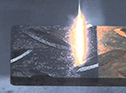
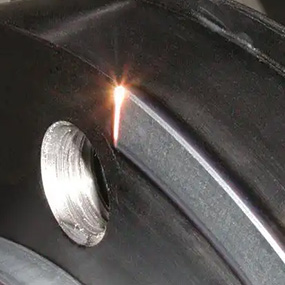
Pulsed laser cleaning works by delivering short, high-energy pulses that ablate the contaminant layer without touching the substrate beneath. The process is fully controllable — depth, spot size, and pulse energy are tuned to remove exactly the layer you want, nothing more.
Full removal
Rust & Oxide Removal
rust, mill scale, heat tint, black oxide
Remove surface rust, mill scale, and heat-tint oxides from steel, stainless steel, and aluminium. Clean bare metal surface ready for coating, welding, or bonding.
No abrasives
Weld Oxide Removal
heat tint removed, Ra unchanged
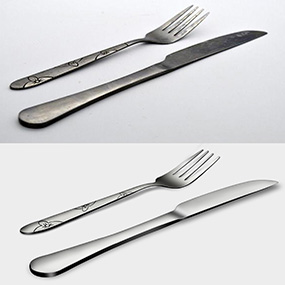
Remove blue-black heat tint from stainless steel welds without abrasives. Restores passive layer and corrosion resistance without altering surface texture or Ra.
Layer-selective
Paint & Coating Removal
remove top coat only, or strip to bare metal
Strip paint, powder coat, epoxy, and protective coatings from metal surfaces. Selective by layer — removes only the coating, leaves the substrate and any underlying primer intact if required.
Residue-free
Adhesive & Residue Removal
adhesive, grease, oil, release agent
Remove adhesive residue, label glue, grease, oil contamination, and release agent from metal and glass surfaces. Clean bonding surfaces for re-adhesion or welding without chemical solvents.
Zone-specific
Selective Area Cleaning
programmed from DXF or marked area
Clean specific zones — weld seams, bonding areas, contact pads, or corrosion spots — while leaving surrounding surfaces untouched. Beam path programmed from your drawing or marked area.
Contamination-free
Pre-Weld / Pre-Bond Surface Prep
surface activated and clean for bonding
Laser cleaning immediately before welding or bonding removes all contaminants that cause porosity, cold lap, or adhesion failure — without introducing new contaminants from chemical or abrasive methods.
Materials & Substrates
Substrates We Clean
Laser cleaning works on any conductive or semi-conductive substrate. The laser removes the contaminant layer without touching what’s beneath — substrate material determines the pulse parameters, not the cleaning outcome.
Stainless Steel
2 – 19mm
Weld heat tint removal without abrasives
Restores passive layer and full corrosion resistance. Ra and grain direction unchanged — ideal for polished or brushed surfaces.
Carbon / Mild Steel
All grades
Rust, mill scale, and paint removal
Pre-weld cleaning removes contamination that causes porosity. Surface ready for coating immediately after cleaning.
Aluminium
All alloys
Oxide layer removal for welding and bonding
Anodised surface cleaning without coating damage. Adhesive residue and oil removal for re-bonding applications.
Copper & Brass
All grades
Oxidation and tarnish removal from electrical contacts and connectors
Pre-solder and pre-weld surface activation without chemical flux contamination.
Tool Steel & Moulds
All hardness
Release agent removal from mould cavities between production runs
Corrosion removal from stored tooling without altering cavity dimensions or surface finish.
Titanium
All grades
Oxide and heat tint removal before welding and bonding
Critical for aerospace and medical applications where oxide inclusion in welds causes fatigue failure.
Glass & Ceramics
Flat surfaces
Coating and adhesive residue removal from glass surfaces without abrasive scratching
Organic contamination removal from ceramic substrates for semiconductor processing.
Coated & Painted Parts
Any substrate
Selective paint or powder coat removal — strip only the top layer, or remove completely to bare metal
Localised removal for repair, re-coating, or weld preparation on painted structures.
Not sure if your substrate is suitable? Send us a sample — we run a test clean and confirm results with photos before production.
Where Laser Cleaning is Used
Anywhere contamination, corrosion, or unwanted coatings need to be removed without damaging what’s underneath — laser cleaning replaces abrasive blasting, chemical stripping, and manual grinding.
Welding & Fabrication
Weld Heat Tint Removal
Remove the blue-black chromium oxide heat tint from stainless steel welds. Restores the passive layer and full corrosion resistance without abrasive tools that contaminate the surface with iron particles and alter the Ra value.
Maintenance & Restoration
Rust & Corrosion Removal
Strip surface rust and mill scale from carbon steel structural parts, equipment frames, and fabricated assemblies. Bare metal surface achieved without dimensional loss — ready for immediate re-coating or welding.
Semiconductor & Electronics
Precision Component Decontamination
Remove organic contamination, oxide layers, and adhesive residues from semiconductor tooling, PCB contact pads, and precision fixtures. Chemical-free process with no solvent residue — critical where chemical contamination would compromise downstream processes.
Tooling & Moulds
Mould Cavity Cleaning
Remove mould release agent, polymer residue, and carbonised deposits from injection mould cavities between production runs. Laser cleaning reaches into deep ribs and fine details that manual cleaning cannot access without risk of cavity damage.
Bonding & Adhesion
Pre-Bond Surface Activation
Remove oil, grease, oxide, and release agents from bonding surfaces immediately before adhesive application, gasket sealing, or rubber-to-metal bonding. Laser activation increases surface energy and bond strength without chemical primers.
Aerospace & Marine
Paint & Coating Stripping
Localised paint removal for inspection windows, weld preparation zones, and repair areas on painted structural members. Remove exactly the area needed without disturbing the surrounding coating — no masking, no overspray, no solvent disposal.
From Drawing to Delivery
Six steps, transparent at every stage. Most orders quote within 24 hours.
Upload Drawing
DXF, DWG, PDF, or STEP. We accept most 2D/3D formats.
Engineering Review
We check tolerances, material fit, and flag any DFM issues before quoting.
Quotation
Detailed quote within 24h — material, thickness, quantity, finish noted.
Production
Cutting programmed and run on our fibre laser. Inline QC checks throughout.
Quality Check
Dimensional verification. First-off approval for new jobs; batch sampling for repeats.
Delivery
Same-day dispatch for in-stock jobs. Local Singapore delivery or self-collect.
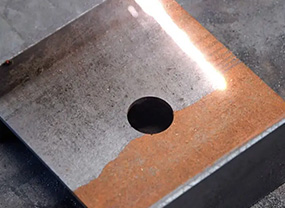
What Makes Laser Cleaning Different from Alternatives
Laser cleaning is not just a cleaner version of abrasive blasting — it is a fundamentally different process that solves problems abrasives and chemicals cannot.

Zero Substrate Damage — Guaranteed
Pulsed laser cleaning removes the contaminant layer through a threshold effect: the laser energy is absorbed by the oxide, rust, or coating — not the base metal. Below the ablation threshold of the substrate material, the metal surface is physically untouched. Dimensional tolerance and surface Ra are preserved exactly. No grit embedded in the surface, no stress marks, no chemical residue.
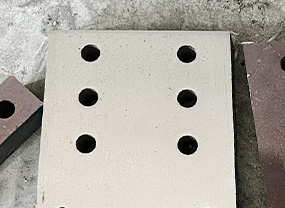
No Consumables, No Waste Disposal
Chemical stripping generates solvent waste that requires licensed disposal. Abrasive blasting generates contaminated grit that must be contained and disposed of. Laser cleaning produces only a fine vapour — extracted and filtered on-site. There are no chemicals to handle, no grit to dispose of, and no secondary contamination of the part being cleaned.
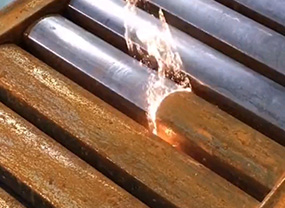
Access to Complex Geometry
Abrasive tools and chemical baths clean surfaces they can reach — deep mould cavities, narrow channels, and internal surfaces are inaccessible or get uneven treatment. Laser cleaning is delivered through a fibre-optic head that can be positioned within millimetres of any surface. We clean weld heat tint inside pipe bores, release agent from deep rib cavities, and oxide from PCB contact pads that no abrasive tool could reach.
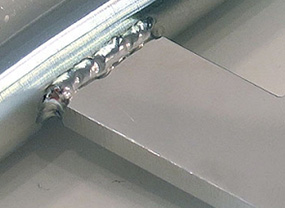
Pairs Directly with Our Other Services
Laser cleaning is most valuable as part of a fabrication workflow, not as a standalone service. We clean weld heat tint immediately after TIG welding before passivation. We clean pre-bond surfaces before adhesive application on cut and bent assemblies. We clean mould cavities on tooling we've already machined. The cleaning step is included in the same job order — no separate logistics, no extra lead time.
Laser Cleaning vs Other Cleaning Methods
Understand where laser cleaning outperforms abrasive blasting, chemical stripping, and manual grinding.
| Criterion | Laser Cleaning (Ours) | Abrasive Blasting | Chemical Stripping | Manual Grinding |
|---|---|---|---|---|
| Substrate damage | Zero — threshold effect | Surface erosion / grit embed | Chemical attack risk | Dimensional loss |
| Selective area cleaning |
Programmable zone
|
Masking required |
Masking required |
Manual care needed |
| Access to complex geometry | Fibre head reaches anywhere | Line-of-sight only | Immersion covers all | Limited by tool access |
| Chemical / waste disposal |
None — fume extracted
|
Contaminated grit disposal |
Hazardous waste disposal |
Grinding swarf |
| Ra / finish after cleaning |
Unchanged from before
|
Roughened significantly |
Mostly unchanged |
Roughened, direction marks |
| Suitable for stainless steel |
Yes — no Fe contamination
|
Fe grit contaminates SS |
Yes (acid pickling) |
Risk of Fe contamination |
Featured Projects
Laser Cleaning Work We've Delivered
A selection of recent laser cleaning projects — from stainless steel weld tint removal to mould cavity cleaning and pre-bond surface activation.
SS Weld Heat Tint Removal
316L SS · Full weld seam · Ra unchanged · Pre-passivation
Injection Mould Cavity Cleaning
P20 tool steel · Release agent + polymer · No cavity damage
PCB Contact Pad Decontamination
FR4 substrate · Oxide + flux residue · Selective zone · 300 pcs
Services That Work Well Together
Laser cleaning is most effective as part of a fabrication or maintenance workflow — integrated with the processes it supports.
Laser Welding & Assembly
Clean weld heat tint from SS seams immediately after TIG or laser welding — before passivation, in the same facility.
Polishing & Grinding
Laser clean oxide and contaminants first, then polish to Ra spec — cleaner starting surface means faster, more consistent polishing.
Laser Engraving
Clean oil and oxide from the engraving area for sharper, higher-contrast marks — especially on anodised and coated surfaces.
Metal Cutting
Clean mill scale and oil from incoming sheet stock for more consistent laser cutting parameters and edge quality.
FAQ
Laser Cleaning Questions
These are some of the common questions customers ask before sending drawings or requesting quotation.
How does laser cleaning work without damaging the substrate?
Pulsed laser cleaning exploits the difference in ablation thresholds between the contaminant and the substrate. The contaminant layer — rust, oxide, paint, adhesive — absorbs the laser energy and vaporises at a lower energy density than the base metal. By tuning the pulse energy below the substrate’s ablation threshold but above the contaminant’s, only the contaminant is removed. The base metal never absorbs enough energy to be altered. This is why the Ra value and surface texture remain unchanged after cleaning.
Can laser cleaning remove heavy rust, not just surface tint?
Does laser cleaning restore the passive layer on stainless steel?
Laser cleaning removes the chromium-depleted heat tint oxide from weld zones, exposing the underlying chromium-rich layer which then re-passivates naturally in air within hours. For applications requiring a documented passivation layer, we recommend following laser cleaning with citric acid or nitric acid passivation per ASTM A967 — this accelerates and certifies the passive layer restoration. We can include passivation in the same job scope.
Can you clean only a specific area, leaving the rest untouched?
Yes — selective area cleaning is one of the primary advantages of laser cleaning over blasting and chemical methods. We program the laser beam path from your DXF outline or from a marked area on the part. The beam stays precisely within the defined zone. No masking tape, no overspray, no risk of chemical damage to surrounding surfaces. Common uses: weld seam only, specific corroded patches, pre-bond zones on painted structures, and contact pad areas on electronic assemblies.
Is laser cleaning safe for aluminium and anodised surfaces?
Laser cleaning on bare aluminium removes the natural oxide layer and adhesive or oil contamination effectively. For anodised aluminium, laser cleaning of the anodised surface itself will remove the anodised layer — so we only clean specific uncoated zones (edges, weld preparation areas, bonding spots) while leaving the anodised surface intact. If you need to clean an anodised part, tell us which zones to clean and we’ll program the beam path accordingly.
What is the turnaround time for laser cleaning?
For standard jobs — weld heat tint removal, light rust removal, adhesive stripping — we typically complete and return parts within 24–48 hours. For large structural assemblies or heavily corroded surfaces requiring multiple passes across large areas, lead time is 3–5 working days. If laser cleaning is combined with other services (welding, polishing, passivation), the overall lead time follows the longest process in the sequence. Most laser cleaning jobs are quoted and scheduled the same day you contact us.
Blog
Laser Cleaning Work We've Delivered

Sheet Metal Fabrication in Singapore: How to Choose the Right Supplier in 2026
The definitive 2026 guide to choosing a sheet metal fabrication supplier in Singapore — capabilities, certifications, the 12-point evaluation checklist.

How Much Does Laser Cutting Cost in Singapore? Pricing Factors Explained (2026)
Real laser cutting prices in Singapore for 2026 — from S$35 minimum charges to per-piece costs by material. Plus 5

Laser Cutting Services in Singapore: The Complete 2026 Buyer’s Guide
A practical 2026 guide to laser cutting in Singapore — processes, materials, pricing, lead time, and how to choose the

Laser Cleaning vs. Traditional Surface Treatment: When to Use Each Method
When buyers look for a laser marking machine, they are rarely asking a theoretical question. They are usually trying to

What to Include in Your CAD File to Get an Accurate Quote Within 24 Hours
When buyers look for a laser marking machine, they are rarely asking a theoretical question. They are usually trying to

Local vs. Overseas Metal Fabrication in Singapore: A Real Cost Comparison
When buyers look for a laser marking machine, they are rarely asking a theoretical question. They are usually trying to
Get a Free Quote Today
Send your drawing or project requirement for review. We can discuss materials, related processing needs and a practical next step for your project.
Confidentiality Note
We understand the value of your design files. The information you submit will be used only for project evaluation, quotation and production communication. We take customer confidentiality, data security and intellectual property protection seriously.