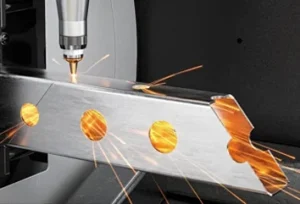
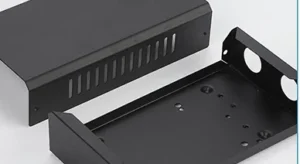
To choose the right sheet metal fabrication supplier in Singapore, evaluate four things: equipment capability, certifications (ISO 9001, bizSAFE), one-stop service range, and industry experience matching your project. Singapore has 200+ sheet metal fabricators across four tiers — from large heavy-fabrication houses in Tuas to precision quick-turn shops in Ubi and Loyang. The supplier that’s right for a marine bracket order is almost never the right one for a medical device prototype. This guide gives you a 12-point evaluation checklist, an RFQ template, and the local geography of where to find each type.
Singapore has more than 200 sheet metal fabrication companies, ranging from five-person workshops to ISO-certified factories that have been running since the 1960s. The cheapest supplier you find online might be perfect for a one-off prototype — and a disaster for a 5,000-piece production run with traceability requirements.
Choosing the wrong fabricator costs more than money. It costs delivery delays that miss your assembly window, parts that fail QC and need to be remade, and — in regulated industries — audit findings that put your own certification at risk.
This guide is the evaluation framework we wish more buyers had before signing supplier contracts. It covers the four tiers of Singapore fabricators, a 12-point checklist, the local geography of where to find each type, an RFQ template you can copy, and the red flags that tell you to walk away. If you haven’t yet read our complete laser cutting buyer’s guide or our breakdown of laser cutting costs in Singapore, those are the right primers before going supplier-shopping.
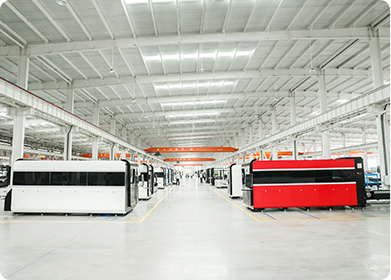
The Singapore Sheet Metal Fabrication Landscape in 2026
Not every “sheet metal fabricator” is competing for the same projects. The industry sorts itself into four broad tiers, and matching your project to the right tier is the first decision.
| Tier | Profile | Best Fit For |
|---|---|---|
| Tier 1: Large Heavy Fabricators | 100+ employees, 25+ years in business, ISO 9001 + sector-specific certifications, heavy plate capacity | Steel structures, marine, oil & gas, large enclosures, long-term contract manufacturing |
| Tier 2: Mid-Sized Generalists | 20–100 employees, full sheet metal capability (laser, bending, welding, finishing), ISO 9001 | Industrial equipment, control panels, semiconductor housings, mid-volume production |
| Tier 3: Precision & Quick-Turn Shops | 10–30 employees, advanced laser capability (fiber + CO₂ + UV), fast quoting, flexible scheduling | Prototypes, small-batch precision parts, R&D projects, multi-material orders |
| Tier 4: Micro Workshops | 1–5 people, single CNC laser, limited bending/welding, no formal QMS | Simple one-offs, signage, hobbyist projects, basic prototyping |
A common buyer mistake is sending a quick-turn precision prototype to a Tier 1 heavy fabricator (slow, expensive, over-engineered for the job), or sending a 10,000-piece production order to a Tier 4 workshop (no capacity, no QC system). Tier-match first, then evaluate within the tier.
What “Sheet Metal Fabrication” Actually Includes
Many suppliers in Singapore market themselves as “sheet metal fabricators” but only handle 1–2 of the core processes. Before evaluating anyone, know what the complete chain looks like:
| Process Group | Key Operations |
|---|---|
| Cutting | Laser cutting (fiber/CO₂/UV), plasma, waterjet, turret punching, shearing |
| Forming | CNC press brake bending, rolling, stamping, deep drawing |
| Joining | TIG / MIG / spot welding, laser welding, riveting, PEM stud / nut insertion |
| Finishing | Deburring, polishing, brushed/satin finish, powder coating, painting, plating, anodising |
| Assembly & Inspection | Hardware installation, sub-assembly, CMM inspection, first-article reports |
If your project needs the full chain (cut → bend → weld → finish → assemble), a one-stop fabricator saves you from coordinating 3–4 separate vendors, each with its own quoting, scheduling, and quality variation. If your project only needs cutting, paying for a one-stop shop’s overhead is wasteful — a specialised cutting supplier may be more cost-effective.
The 12-Point Supplier Evaluation Checklist
Use this checklist when shortlisting. A supplier scoring well on 9+ items is usually a safer bet than the cheapest quote.
📋 Capability (Can they actually do the work?)
- Equipment range and tonnage — Do they have fiber laser, press brake (6–88 tonne range typical), welding, and finishing in-house?
- Material thickness range — Industry standard is 0.5–16mm for laser cutting. Confirm they cover your range.
- Maximum part size — Standard sheet capacity in Singapore is 1500 × 3000mm. Larger parts need specialised shops.
🏆 Quality (Can they hit your spec consistently?)
- ISO 9001:2015 certification — The baseline for any serious industrial fabrication work.
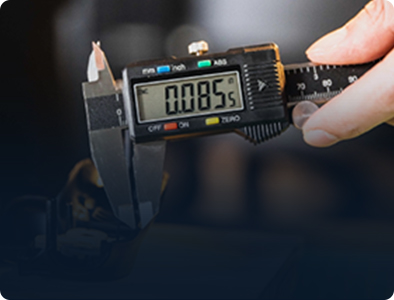
- Cutting accuracy — ±0.1mm is the Singapore market standard. Tighter (±0.05mm) is available from precision shops.
- In-house inspection — CMM, optical measurement, height gauges. Ask whether first-article inspection is standard or extra.
🚚 Service (Will they deliver on time?)
- Lead time commitment — 24–48 hours for standard orders, 3–7 working days for multi-process. Anything beyond two weeks for a normal part is a warning sign.
- Quote turnaround — A real quote in 24 hours signals a structured process. A week-long wait usually means manual workflows.
- Communication & project management — Single point of contact? English-speaking engineer? WhatsApp / email response time?

🛡️ Risk (What happens when things go wrong?)
- bizSAFE Level 3 or higher — Singapore’s WSH Council certification. Required for many government and large enterprise contracts.
- NDA and IP protection — Especially for proprietary designs, semiconductor, and medical projects.
- Years in business & financial stability — 10+ years suggests they’ll still be there for your reorder. New shops can be excellent but carry continuity risk.
For our own quality control workflow, see our quality assurance process page.
Understanding Singapore-Specific Certifications
“ISO certified” is a phrase that gets thrown around loosely. Here’s what the certifications actually mean for your project — and which are truly Singapore-specific.
ISO 9001:2015 — Quality Management System
The international standard for quality management. An ISO 9001 supplier has documented procedures for everything from incoming material checks to corrective action when something goes wrong. This is the baseline — for any serious industrial buyer, treat it as a minimum filter, not a differentiator.
bizSAFE — Singapore’s Workplace Safety Certification
Issued by the Singapore Workplace Safety and Health (WSH) Council, bizSAFE has five levels: Level 1, 2, 3, Star, and Partner. Level 3 or higher is the practical threshold for industrial fabrication work in Singapore. Many government tenders and large enterprise contracts (especially MNCs) require bizSAFE Star.
What this means as a buyer: a fabricator with bizSAFE has documented safety management, trained workers, and lower risk of operational disruption from workplace incidents. It also signals operational maturity beyond just having ISO 9001.
ISO 14001 — Environmental Management
Increasingly required by semiconductor MNCs and ESG-conscious buyers. Covers waste management, chemical handling, and environmental impact.
ISO 45001 (replacing OHSAS 18001) — Occupational Health & Safety
The international counterpart to bizSAFE. Useful if you’re sourcing from Singapore for export to markets that don’t recognise local certifications.
Industry-Specific Certifications
- AS9100 — Aerospace quality system (required for aerospace components)
- ISO 13485 — Medical devices quality system
- IATF 16949 — Automotive quality system
Don’t stop at “ISO certified” — ask which standard, which version, and what scope. A certificate covering “machining” doesn’t necessarily cover “welded sub-assemblies.” A 2008-vintage ISO 9001 is no longer valid (the current version is 2015).
Where to Find Fabricators in Singapore: The Geographic Map
Singapore’s sheet metal fabrication ecosystem clusters around specific industrial zones, and the geography correlates strongly with what type of work each area specialises in.
Tuas
Heavy and marine fabrication. Large plate work, ship structures, oil & gas modules. Big yards, heavy cranes, deep-water access.
Jurong / Pioneer
Mid-to-large industrial. Semiconductor equipment, automation housings, general engineering. Highest concentration of Tier 1 and Tier 2 fabricators.
Kranji / Sungei Kadut / Kian Teck
Established SME fabricators. Many shops founded 20–30 years ago serving general manufacturing and construction.
Ubi / Eunos / Kaki Bukit
Precision and quick-turn work. Smaller footprint, faster response, often handling prototypes, semiconductor parts, and corporate gifts alongside industrial work.
Loyang / Changi North
Aerospace and high-precision. Suppliers serving the aerospace cluster around Seletar and Changi, with tighter tolerances and traceability documentation.
Serangoon North / Hougang
Mixed light industrial. Smaller shops, electronics enclosures, signage, mid-volume custom parts.
Distance matters more than buyers usually realise. For projects involving multiple sample iterations, face-to-face drawing reviews, or urgent same-day pickups, choosing a fabricator within 30 minutes of your office can save days over a project lifecycle. For pure production runs with stable specs, location is far less critical.
5 Types of Suppliers — Which One Fits Your Project?
Beyond the four tiers, suppliers also segment by operating model. Match the model to your project type:
| Type | Best For | Trade-offs |
|---|---|---|
| A. Large Heavy Fabricators | Steel structures, marine, large enclosures, government infrastructure projects | Slower quoting, higher MOQ, less flexibility on small jobs |
| B. Mid-Sized Generalists | Industrial equipment, control panels, electronics enclosures, mid-volume production | Solid all-rounder but may not specialise in any one area |
| C. Precision Specialists | Medical, semiconductor, aerospace, anything requiring ±0.05mm or full traceability | Higher unit cost, narrower material range |
| D. Quick-Turn Prototype Shops | R&D iterations, small-batch trials, multi-material projects, urgent samples | Less suited to high-volume contract manufacturing |
| E. Online / Platform Fabricators (Xometry, Hubs, etc.) | Standardised parts, instant quoting, when you have no preferred local supplier | No local audit possible, longer shipping, less control over which factory makes the part |
Red Flags: When to Walk Away from a Supplier
These are the warning signs we’ve seen lead to project disasters. If two or more of these show up during evaluation, find a different supplier.
Refuses to sign an NDA
For any proprietary design, a supplier’s reluctance to sign a basic NDA signals either inexperience with confidential work or a casual attitude toward IP that will catch up with you later.
Quote is 30%+ below all other quotes
Singapore labour, material, and overhead costs put a floor under realistic pricing. A dramatic outlier usually means missing scope (no post-processing, no inspection) or material substitution you didn’t authorise.
Won’t show you the factory or refuses audit
Established fabricators in Singapore welcome client visits. If a supplier dodges factory tours or quality audits, ask why.
Accepts precision projects without ISO 9001
A small workshop quoting medical or semiconductor components without any documented quality system is taking on work it isn’t equipped to deliver. Mistakes will be invisible until acceptance testing.
Quote line items are vague
“Sheet metal fabrication: S$XXX” with no breakdown of material, cutting, bending, finishing, and inspection is not a real quote — it’s a placeholder. Insist on itemisation.
Proposes design changes without explaining why
Good suppliers do suggest DFM (design for manufacturability) improvements. But changes that “just simplify production” without a documented rationale often mean the original spec is beyond the supplier’s actual capability.
No written quality agreement for production orders
For ongoing production, a written agreement covering inspection criteria, defect rates, and rework procedures protects both sides. A supplier resistant to this is signalling they want flexibility you may not like later.
The RFQ Template: What to Include in Your Request
The quality of the quote you receive is directly proportional to the quality of the request you send. Here’s a template you can copy:
Required delivery date: ____________________
Delivery location: _______________________
Part specification:
• Material grade: ____________ (e.g. SS304, AL6061-T6, MS1.5)
• Thickness: ____________ mm
• Quantity (this order): ____________ pieces
• Quantity (annual projected): ____________ pieces
• Drawings attached: DXF / STEP / PDF ✓
Tolerance & finish:
• General tolerance: ISO 2768-m / ____________
• Critical dimensions tolerance: ____________
• Edge finish: deburred / brushed / mill finish / ____________
• Surface treatment: none / powder coat / anodise / ____________
Inspection & documentation:
• First-article inspection: Y / N
• Mill certificate / material cert: Y / N
• Dimensional inspection report: Y / N
• Other documentation: ____________
Commercial:
• NDA required before sharing files: Y / N
• Payment terms expected: ____________
• Packaging requirements: ____________
For more on file preparation specifically, see our CAD file checklist for accurate quotes.
Local vs Overseas Fabrication: The Real Trade-off
Buyers often weigh Singapore local fabrication against Malaysia (Johor Bahru) or China alternatives based on unit price alone. The full comparison looks different:
| Factor | Singapore Local | Malaysia (JB) | China |
|---|---|---|---|
| Unit price | Highest | 20–30% lower | 40–60% lower |
| Lead time | 1–7 days | 1–2 weeks | 3–6 weeks incl. shipping |
| Minimum order | 1 piece | Often higher | Often much higher |
| Communication | Same timezone, English/Mandarin | Same timezone, English/Malay | Timezone gap, language barrier |
| Audit feasibility | Same-day visit | 1-day trip | Multi-day trip, visa needed |
| Hidden costs | Few | Customs, transport | Customs, freight, QC trips, rework risk |
For a deeper breakdown, see our existing analysis on local vs overseas metal fabrication in Singapore.
Rule of thumb: Local Singapore is best for prototypes, R&D, urgent orders, low-volume precision work, and projects requiring frequent design iteration. Overseas wins on high-volume, stable-spec production where lead time isn’t tight.
After Shortlisting: 5 Questions to Ask in the First Meeting
You’ve narrowed the list to 2–3 candidates. The first meeting (or call) is where you separate the marketing from the operation. Five questions that get you behind the brochure:
- “Can you show me a similar project you’ve delivered?” — Look for relevance, not volume. A supplier who has made 50 medical brackets is more valuable than one who has made 10,000 unrelated parts.
- “What’s your standard first-article inspection process?” — Vague answers mean it isn’t really standard.
- “If my main contact is unavailable, who handles the project?” — Tests whether the supplier has a real team or relies on one person.
- “What happens if you can’t meet the agreed lead time?” — A confident answer (notification timing, priority adjustment, partial delivery) signals operational maturity.
- “How do you handle mid-project design changes?” — Tests change control processes. “Just send the new drawing” is a warning sign for any non-trivial project.
Frequently Asked Questions
What’s the difference between sheet metal fabrication and metal fabrication?
“Metal fabrication” is the broader category that includes structural steel work, heavy plate fabrication, machining, and casting. “Sheet metal fabrication” specifically refers to working with thinner sheet material (typically under 16mm) through cutting, bending, welding, and finishing processes. Most enclosures, panels, brackets, and electronic housings fall under sheet metal fabrication.
How many sheet metal fabrication companies are there in Singapore?
Singapore has an estimated 200+ active sheet metal fabrication companies, ranging from large heritage operations founded in the 1960s to specialised quick-turn shops. The industry is concentrated in industrial zones including Tuas, Jurong, Kranji, Ubi, and Loyang.
Do I need an ISO 9001 certified supplier for my project?
For one-off prototypes, signage, or non-critical parts: not strictly necessary. For ongoing production, components used in regulated industries (medical, aerospace, semiconductor), or any application where part failure has consequences: yes, ISO 9001 should be a minimum filter. For medical devices, look for ISO 13485 additionally; for aerospace, AS9100.
What is bizSAFE and why does it matter when choosing a fabricator?
bizSAFE is Singapore’s workplace safety certification programme, run by the WSH Council. It has five levels (1, 2, 3, Star, Partner). For industrial sheet metal fabrication, Level 3 or higher indicates documented safety management and trained workers. Many government tenders and MNC contracts require bizSAFE Star as a procurement prerequisite.
Can sheet metal fabricators in Singapore handle prototype or small-batch orders?
Yes — Tier 3 quick-turn shops are specifically built around prototype and small-batch work, often accepting single-piece orders. Tier 1 and Tier 2 larger fabricators may set higher minimum order quantities (MOQs) or charge significant setup fees that make small orders uneconomical.
How long does a typical sheet metal fabrication project take in Singapore?
Simple cutting-only orders: 24–48 hours. Multi-process orders involving cutting, bending, and welding: 3–7 working days. Complex assemblies with surface finishing and inspection documentation: 1–3 weeks. Lead time scales with project complexity, batch size, and how much of the work is outsourced versus done in-house at the same supplier.
Get a Fit Assessment in 24 Hours
Three takeaways from this guide:
- Match supplier tier to project type — a precision prototype shop and a heavy fabricator are not interchangeable.
- ISO 9001 + bizSAFE Level 3 is the practical baseline for serious industrial work in Singapore.
- A good RFQ gets a real quote in 24 hours — material grade, thickness, quantity, tolerance, finish, inspection, documentation.