
Laser Glass Cutting

Precision Glass Cutting in Singapore

Chip-free laser cutting for float glass, borosilicate, display glass, optical glass and more. Clean edges without mechanical stress — from thin 0.3 mm film glass to 19 mm thick panels, all processed in our Singapore facility.

Tolerance
± 0 mm
Max glass thickness
0 mm
Typical Turnaround
0 h
Glass types
0 +

Glass Cutting Samples & Project Gallery

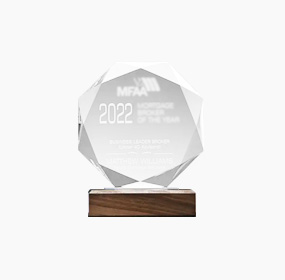
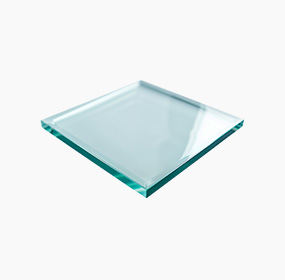
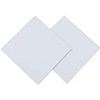
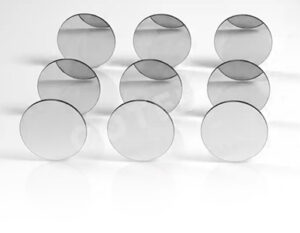
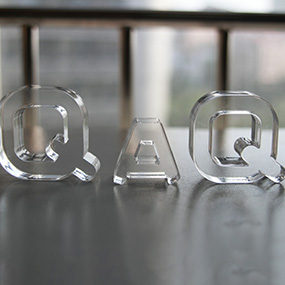
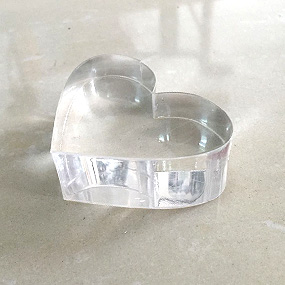
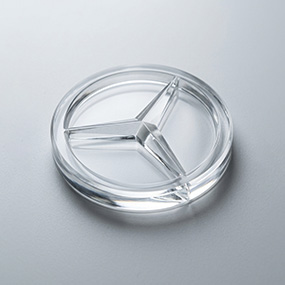
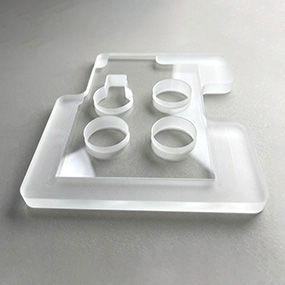
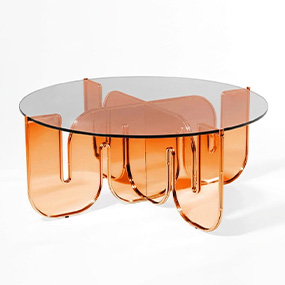
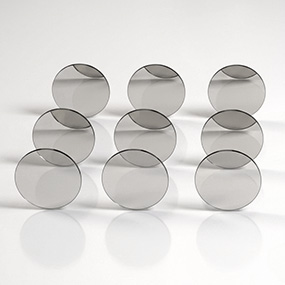
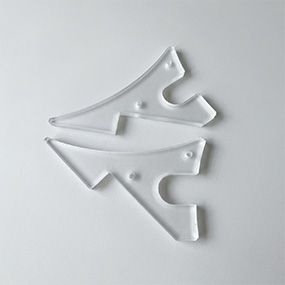
Explore precision glass cutting samples for display panels, cover glass, optical windows, borosilicate glass, quartz components, and custom glass prototypes. Our laser glass cutting service supports clean edges, fine details, and small-batch production for electronics, laboratory, and industrial applications in Singapore.

What We Do

Cutting Capabilities

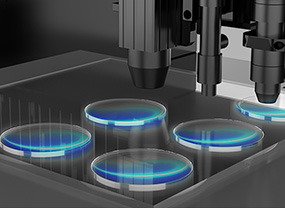
Our CO₂ laser system is optimised for glass — controlled thermal scribing and full-cut modes deliver chip-free edges without the micro-cracks of mechanical cutting.

-01/±0.05mm

Cutting Tolerance

standard for optical glass on request

Dimensional accuracy across float, borosilicate and display glass in both scribing and full-cut modes.

2440×1220 mm

Max Sheet Size

standard architectural sheet

Full standard glass sheet processed in one pass. Minimises handling and repositioning errors.

0.3 – 19mm/full-cut

Material Thickness

scribing available for thicker stock

Thin 0.3 mm display glass to 19 mm architectural panels. Parameters adjusted per glass type and thickness.

Ra 1.6μm

Edge Quality

edge roughness — optical-grade finish

Chip-free, fire-polished edges with no micro-crack propagation. Significantly better than diamond wheel or waterjet on glass.

150W CO₂

Laser Type

10.6 μm — glass-optimised wavelength

CO₂ laser at 10.6 μm wavelength — absorbed efficiently by glass. No plasma formation, minimal HAZ.

Any 2D

Complex Shapes

profile including internal holes and curves

Circles, arcs, internal cutouts, custom profiles — direct from DXF. No mechanical tooling or fixture changes.

Materials

Glass Types We Cut

10+ glass types processed in-house. Each material has different thermal properties — our parameters are tuned per type to prevent stress fractures and edge chipping.

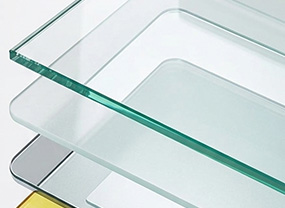
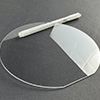
Clear and tinted float glass used for general-purpose precision glass cutting.
Most Popular

Float Glass

2 – 19mm

Clear and tinted soda-lime float.

Windows, partitions, display cases. Most cost-effective glass for general cutting.

Low-expansion glass suitable for laboratory, optical and technical components.
High Demand

Borosilicate Glass

0.5 – 10mm

Pyrex / Schott Duran

Low thermal expansion — lab equipment, sight glasses, semiconductor process chambers.

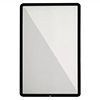
Thin display glass used for LCD, OLED and electronic panel applications.
Display

Display / TFT Glass

0.3 – 1.1mm

Corning Eagle XG, Schott AF32

Ultra-thin LCD/OLED substrates. Scribe-and-break mode for clean separation.

High-purity glass used for semiconductor, optical and high-temperature applications.
Semiconductor

Quartz / Fused Silica

0.5 – 8mm

High-purity SiO₂

Semiconductor process tubes, optical windows. Requires specialised CO₂ parameters.

Chemically strengthened glass used for touchscreens and durable display covers.
Touchscreen

Aluminosilicate Glass

0.3 – 2mm

Chemically strengthened (pre-temper).

Cover glass for touchscreens and industrial displays.

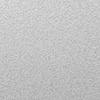
Textured glass used for architectural, lighting and decorative applications.
Architectural

Frosted / Patterned Glass

3 – 10mm

Acid-etched or rolled pattern

Architectural privacy panels, lighting diffusers. Cut from frosted face up.

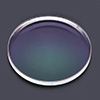
Precision glass used for lenses, filters and optical components.
Optical

Optical Glass

0.5 – 6mm

N-BK7, N-SF11 and other optical grade

Lenses, filters, prism blanks — requires fire-polished edges.

Reflective glass used for decorative, optical and custom mirror parts.
Decorative

Mirror Glass

2 – 6mm

Silver or aluminium-backed mirror

Custom-shape mirrors for optics, décor and medical imaging.

Don’t see your glass type? Contact us — we process many speciality glass compositions and can advise on the right cutting mode.

Where Glass Cutting is Used

From single optical components to production display panels — Singapore industries rely on our glass cutting for precise, chip-free results.

Semiconductor & Electronics

Process Chamber Windows & Substrates

Quartz windows
Sight glasses

TFT substrates

Quartz process tube sections, borosilicate sight glasses, and thin display substrates for semiconductor equipment. Chip-free edges critical to avoid particle contamination.

Semiconductor & Electronics

Cover Glass & Display Panels

Cover glass Touchscreen blanks LCD component

Custom-size display cover glass, touchscreen blanks, and LCD module components. Ultra-thin glass (0.3–0.7 mm) handled with scribe-and-break for burr-free edges.

Optics & Photonics

Optical Windows & Filter Blanks

Optical windows Filter blanks Prism blanks

N-BK7, N-SF11 and fused silica optical blanks for cameras, sensors, and laser systems. Fire-polished edges reduce scatter and improve transmission.

Medical & Laboratory

Lab Equipment & Diagnostic Components

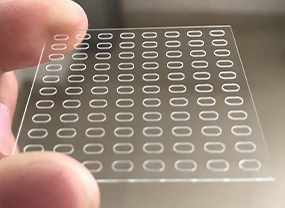
Microfluidic chips Diagnostic windows Cover slips

Borosilicate cover slips, microfluidic chip substrates, and diagnostic cartridge windows. Clean-room compatible handling available.

Architecture & Interior

Custom Architectural Glass Panels

Partition panels Decorative mirrors Furniture glass

Float and frosted glass panels for partitions, signage, furniture and decorative installations. Complex shapes — circles, arcs, custom contours — cut cleanly without diamond wheel chipping.

Lighting & Solar

Lighting Diffusers & Solar Cover Glass

Lighting diffusers PV cover glass LED panels

Patterned glass diffusers for LED luminaires, and cover glass blanks for photovoltaic modules. Consistent cut dimensions enable automated downstream assembly.

From Drawing to Delivery

Six steps, transparent at every stage. Most orders quote within 24 hours.

What Makes Our Glass Cutting Different

Glass is unforgiving — one wrong parameter and the sheet cracks. Our process is tuned per material, not one-size-fits-all.

Laser Cutting vs Other Glass Cutting Methods

Understand why laser cutting outperforms mechanical methods on brittle glass.

Criterion
Laser Cutting (Ours)
Diamond Wheel
Waterjet
Mechanical Saw
Dimensional tolerance
-
0.1mm
±0.2–0.5mm
±0.2mm
±0.5–1mm
Edge chipping
-
Chip-free
Minor chips typical
Minimal
Heavy chipping
Internal cutouts
-
Yes — any shape
Not possible
Yes
Straight cuts only
Ultra-thin glass (<1mm)
-
Yes (0.3mm+)
Fragile, high loss
Water pressure damages
Not suitable
Micro-crack risk
-
Very low
High subsurface cracks
Low
High
Setup / tooling cost
-
None
Wheel dressing needed
None
Blade changes

Featured Projects

Glass Cutting Work We've Delivered

A selection of recent glass cutting projects — spanning optical, display, and architectural applications.

Services That Work Well Together

Glass cutting is often the first step. Here’s what pairs well downstream.

FAQ

Glass Cutting Questions

These are some of the common questions customers ask before sending drawings or requesting quotation.

No — tempered glass cannot be cut after toughening. The internal stress that gives it strength causes the entire sheet to shatter when the surface is scored. Glass must be cut to final shape first, then sent for tempering. We can cut annealed float glass to your dimensions before it goes to a tempering furnace.

We regularly cut glass down to 0.3 mm (300 μm) — typical for TFT display substrates and ultra-thin cover glass. At this thickness we use vacuum-chuck fixturing and scribe-and-break mode to prevent flexural breakage during handling. For glass below 0.5 mm, please contact us to discuss handling and packaging requirements for your application.

Yes — this is one of the key advantages of laser cutting over diamond wheel or mechanical saw. We can cut any 2D profile from your DXF file: circles, arcs, polygons, slots, internal holes, and fully custom contours. Internal cutouts (holes within a sheet) are possible from approximately 10 mm diameter and larger. Tight concave corners may require a minimum radius depending on glass thickness.

Both options work. We stock common float glass in 3 mm, 4 mm, 6 mm, and 8 mm thicknesses. For speciality glass — borosilicate, quartz, optical grades, display substrates — we can source it or you can supply your own sheets. If you supply material, ship it flat-packed with foam interleaving and include your order reference number.

For standard float glass shapes from stock, we can often deliver same-day or next-day for small quantities (under 20 pcs). For speciality glass that needs to be sourced, add 3–5 working days for material procurement. Production batches of 100–500 pcs are typically completed in 3–5 working days. Your quote will always confirm the delivery date based on current queue and material availability.

Small pieces are wrapped individually in foam and packed upright in double-wall cartons. Larger panels are shipped in wooden crates with corner protection and foam interleaving between each sheet. For ultra-thin or optical glass, we use anti-static foam and ESD-safe packaging on request. We can also arrange white-glove local delivery for high-value or fragile shipments.

Blog

Engineering Blog

Get a Free Quote Today

Send us your drawing and material requirements. Our team will review the job, recommend the right process path, and send a detailed quote — usually within 24 to 48 hours.


Confidentiality Note

We understand the value of your design files. The information you submit will be used only for project evaluation, quotation and production communication. We take customer confidentiality, data security and intellectual property protection seriously.