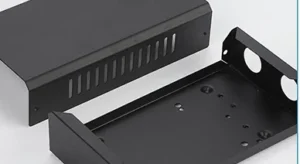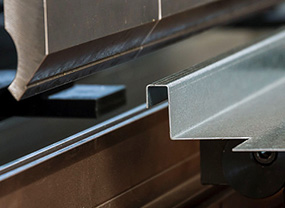
Choose laser cutting for thin-to-medium sheet metal, narrow kerf, small holes, dense features and parts needing tighter dimensional control. Choose plasma cutting for medium-to-thick conductive metal when structural-part economics, fast perimeter cutting and weld preparation matter more than very fine detail or cosmetic edges. Both are thermal processes, and neither has one universal thickness, tolerance or cost advantage.
Laser and plasma cutting both transform a CAD profile into a metal part without dedicated dies, but their process physics and economic strengths are different. Laser concentrates light into a small kerf. Plasma uses an electrical arc and ionised gas to melt conductive metal. That difference affects material limits, hole quality, edge angle, heat input, consumables and the thickness at which each process is competitive.
For Singapore buyers sourcing control panels, machine brackets, structural baseplates, frames or marine replacement parts, the correct choice starts with the drawing and delivered condition. A process that is inexpensive per metre can become expensive after drilling, grinding and inspection are added.
This guide supports buyers evaluating laser metal cutting services in Singapore and deciding when another thermal cutting route deserves comparison.
How Laser and Plasma Cutting Work
Laser cutting
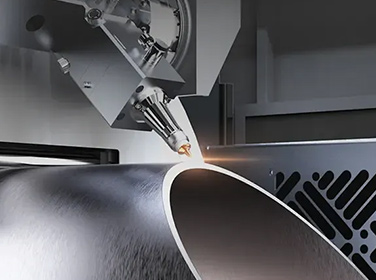
A focused laser beam heats the workpiece while an assist gas ejects molten or reacted material. Fibre laser is widely used for modern sheet-metal production.
- Thermal process
- Narrow kerf
- Fine detail and small features
- Compatible metal and selected non-metal routes
Plasma cutting
An electrical arc ionises a gas stream, creating a high-temperature plasma jet that melts and removes electrically conductive material.
- Thermal process
- Conductive metals only
- Strong medium-to-thick plate capability
- Consumable electrode and nozzle system
Laser Cutting vs Plasma Cutting at a Glance
| Decision factor | Laser cutting | Plasma cutting |
|---|---|---|
| Energy source | Focused light with assist gas | Electrical arc with ionised gas |
| Eligible materials | Metals and selected non-metals, depending on laser type | Electrically conductive metals |
| Thin sheet | Usually the stronger choice for speed and detail | Possible, but kerf and heat input may be less favourable |
| Medium-to-thick plate | Depends strongly on power, gas and edge requirement | Often economically attractive for structural metal |
| Kerf | Usually narrower | Usually wider |
| Small holes and slots | Usually better suited to dense, fine features | Equipment-specific; high-definition hole technology can improve results |
| Cut-edge angle | Generally easier to control on suitable sheet | Angularity is a major process and inspection consideration |
| Heat-affected zone | Present, usually localised under controlled conditions | Present; scale depends on amperage, speed, material and thickness |
| Dross | Can occur with unsuitable gas, focus or speed | Common quality-control item influenced by speed, height and consumables |
| Bevel cutting | Requires suitable multi-axis or specialist equipment | Modern CNC systems can be effective for weld-ready bevels |
| Equipment investment | Generally higher | Generally lower, but capability varies widely |
| Typical buyer use | Precision sheet-metal parts, panels, enclosures and brackets | Structural plate, bases, frames, profiles and welded fabrication |
These are selection tendencies, not guaranteed specifications. Laser power has increased, while high-definition plasma systems have improved edge quality, holes and bevels. The overlap between the two processes is therefore wide and equipment-specific.
Plasma Cutting Is Not One Capability Level
A quotation that says only “plasma cut” is incomplete. The expected result depends on the process level:
Do not apply a high-definition system’s sample tolerance to a manual or entry-level CNC process. Request the actual machine type, cutting head, thickness range and measured sample relevant to your part.
Material Selection: Mild Steel, Stainless and Aluminium
Mild steel
Laser is usually the first process to evaluate for thin and medium sheet containing many holes, narrow slots or detailed profiles. Typical applications include electrical panels, machine covers, brackets and parts that continue to CNC bending.
Plasma is strong for medium-to-thick structural plate, bases, frame components and weldments where fast perimeter cutting and economical plate processing are more important than very fine geometry. Oxygen-based laser cutting and some plasma processes can leave an oxidised edge, so welding, coating and bonding requirements should identify whether edge cleaning is needed.
Stainless steel
Laser commonly suits precision stainless sheet, cosmetic panels, dense features and assemblies with controlled fit. Nitrogen-assisted cutting can avoid an oxidised cut face when the correct equipment and settings are used.
Plasma can be practical for thicker stainless structures and large profiles. Gas selection and process control affect colour, dross, angularity and the condition of the edge for later welding. See our stainless steel laser cutting guide for grade, thickness and edge-quality considerations.
Aluminium, copper and brass
Modern suitable fibre lasers can process aluminium, copper and brass; reflectivity should not be used as an automatic rejection. Plasma can also cut appropriate conductive non-ferrous materials, but the result depends on gas, current, thickness, equipment and the required edge.
For thin aluminium enclosures or detailed electrical parts, laser usually has the stronger feature and kerf advantage. For large, thicker aluminium profiles with less demanding detail, plasma may deserve comparison. Actual alloy and downstream weld or finish requirements must be stated.
Which Process Is Better by Thickness?
There is no permanent global crossover thickness. Published comparisons often show plasma gaining speed and operating-cost advantages in double-digit-millimetre metal, but the crossover moves with laser power, plasma system, material, gas, part geometry and required cut quality.
For heat-sensitive or non-conductive material, read our separate laser cutting vs waterjet comparison. Waterjet is a cold process; both laser and plasma create thermal effects.
Tolerance: Do Not Compare Machine Brochures
Laser generally provides the stronger route for tighter sheet-metal tolerance and fine geometry. Modern high-definition plasma can produce useful precision for many structural and welded applications. Neither statement is a purchase-order tolerance.
Laser-cut part accuracy depends on:
- machine motion, focus and beam delivery;
- material grade, thickness and flatness;
- assist gas, piercing and thermal accumulation;
- kerf compensation, corner strategy and nesting;
- part size, residual stress and measurement method.
Plasma-cut part accuracy depends on:
- power source, torch and CNC table motion;
- torch height, arc voltage and cutting direction;
- electrode and nozzle wear;
- gas, speed, amperage and material thickness;
- cut-edge angularity, hole technology and software compensation;
- the point on the sloped edge where the dimension is measured.
| Drawing requirement | Laser review | Plasma review |
|---|---|---|
| Small hole | Piercing, roundness, thickness-to-hole relationship and heat | Top/bottom diameter, lead-in, angularity and supported hole technology |
| Narrow slot | Kerf, focus, corner heat and slag removal | Arc width, stability and realistic slot width |
| Perpendicular edge | Focus, speed, gas and thickness | Torch height, cutting direction and angularity class |
| Large plate profile | Flatness, heat movement and table travel | Table motion, thermal movement and plate support |
| Weld bevel | Suitable bevel head or secondary operation | Multi-axis torch, bevel program and edge preparation |
| Tight machined feature | Consider leaving machining allowance instead of specifying the thermal cut as the final precision surface | |
Our laser cutting tolerance guide explains how buyers should specify datums, critical dimensions, holes and inspection requirements.
Small Holes and Detailed Profiles
Laser normally has the advantage for dense patterns, small holes, narrow slots, sharp internal detail and closely nested small parts. A narrow kerf removes less material and allows features that may be impractical for a larger plasma arc.
Plasma is capable of cutting holes. High-definition systems use specialised control of current, gas, motion and lead-in/lead-out to improve bolt-hole quality. The result is still tied to equipment and the hole-diameter-to-thickness relationship. Do not assume that every CNC plasma supplier provides the same hole technology.
Edge Quality, HAZ and Dross
Both processes melt metal and can create a heat-affected region. The relevant question is whether the delivered edge meets welding, coating, dimensional, cosmetic and service requirements.
| Edge condition | Laser cutting | Plasma cutting |
|---|---|---|
| Kerf width | Usually narrower | Usually wider |
| Cut lines | Fine thermal striations under suitable settings | Arc-related striations; appearance changes through thickness |
| Angularity | Generally lower on suitable sheet | Major control point; cutting direction can affect the good side |
| Top edge | Possible piercing splash or heat effect | Possible top-edge rounding and spatter |
| Bottom edge | Possible dross when speed, gas or focus is unsuitable | Possible low-speed or high-speed dross |
| Chemical condition | Oxide or heat tint depends on material and assist gas | Oxide, nitride and colour depend on gas and material |
| Post-processing | Deburring, dross or oxide removal where required | Slag removal, grinding, drilling or edge preparation where required |
Do not specify only “clean edge.” Define maximum dross, acceptable angularity, whether an oxidised edge is allowed, and whether the cut face is final, welded, coated or machined. See our guide to deburring and finishing laser-cut parts for downstream planning.
Laser vs Plasma Cutting Cost
A job-shop buyer should compare delivered part cost rather than machine purchase price. Equipment investment still affects supplier economics, but machine time is only one line in the finished part.
Laser often has the lower total cost for thin sheet, high quantities of small parts, detailed profiles, many holes and jobs that continue directly into bending. Tight nesting and reduced secondary drilling can offset the higher equipment investment.
Plasma may have the lower total cost for medium-to-thick structural metal, large outer profiles, welded assemblies and jobs where a suitable system can cut a required bevel. Lower machine and consumable economics can be lost if every hole must be drilled and every edge extensively ground, so quote the complete route.
For laser-specific drivers, read our laser cutting cost guide for Singapore.
Choose for the Final Fabrication Route
Common Singapore Applications
| Application | First process to evaluate | Why |
|---|---|---|
| Precision control panel | Laser | Detailed cut-outs, small holes and appearance |
| Small bent bracket | Laser | Feature control and direct integration with bending |
| Dense-hole enclosure | Laser | Narrow kerf and efficient internal features |
| Thick machine baseplate | Compare both | Balance hole machining, flatness, edge and plate-cutting cost |
| Large welded frame components | Plasma comparison | Structural thickness and possible bevel preparation |
| Marine repair plate | Plasma or other thick-plate route | Large profiles and structural fabrication, subject to specification |
| Cosmetic stainless equipment face | Laser | Fine features and controlled visible edges |
| Weld-ready bevel plate | High-definition plasma or specialist bevel process | May reduce manual edge preparation if equipment is suitable |
Local processing can simplify drawing clarification, first-article review and coordination between cutting, bending and welding. The preferred route still depends on the actual supplier equipment. Our Singapore sheet-metal supplier guide explains how to compare fabrication scope beyond the cutting table.
RFQ Checklist for Laser or Plasma Parts
Send or confirm:
- Drawing and revision
- Metal grade
- Thickness
- Plate or sheet condition
- Quantity and repeat forecast
- Smallest hole
- Narrowest slot
- Critical dimensions and datums
- Edge angularity
- Dross and burr requirement
- HAZ or oxide restrictions
- Weld-bevel requirement
- Machining allowance
- Downstream bending and welding
- Inspection scope
- Packaging and Singapore delivery
- Manual, conventional or high-definition plasma
- Local or subcontracted process
Both processes can start from clean two-dimensional CAD geometry, but suppliers apply their own kerf compensation, lead-ins and corner strategies. Do not offset the nominal profile unless requested. Buyers new to laser procurement can review the laser cutting buyer’s guide.
Frequently Asked Questions
Is plasma cutting cheaper than laser cutting?
Plasma often has a cost advantage on suitable medium-to-thick structural metal. Laser commonly costs less for thin sheet, detailed parts and dense holes because it can reduce machine time and secondary drilling. Compare the delivered part, not only cutting cost.
Is laser cutting more accurate than plasma?
Laser generally provides tighter control and finer features on suitable sheet. High-definition CNC plasma can meet many structural and welded-part requirements, but performance depends on the actual system, thickness and geometry.
Which process is better for thick steel?
Plasma often becomes more attractive as structural-steel thickness increases, while high-power lasers continue to expand their range. Required holes, edge angle, speed, HAZ and downstream work determine the real crossover.
Can plasma cut stainless steel and aluminium?
Yes, suitable plasma systems can cut stainless steel and aluminium. Gas selection, current, thickness and equipment affect colour, edge angle, dross and downstream suitability.
Does plasma cutting create a heat-affected zone?
Yes. Plasma and laser are both thermal processes. HAZ size and effect depend on material, thickness, current, speed and geometry. If no thermal effect is permitted, evaluate waterjet or another cold process.
Is plasma suitable for small holes?
It can be, particularly with high-definition systems and dedicated hole technology. Very small holes and dense features still tend to favour laser, and the supplier should confirm the hole-to-thickness relationship.
Can the same DXF be quoted for laser and plasma?
Usually yes. Send nominal closed geometry with correct units and let each supplier apply process-specific kerf, lead-in and corner compensation. Identify critical dimensions separately.
Technical references
Review Your Laser-Cut Metal Part
Send the drawing, material, thickness, quantity, critical dimensions and downstream fabrication requirements. We can review whether the part fits our laser cutting process and define the appropriate quotation scope.