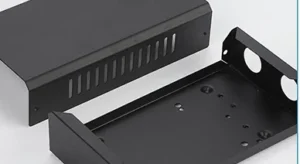
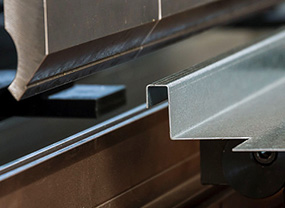
Choose laser cutting for fast production, narrow kerf and fine internal features in suitable thin-to-medium sheet materials. Choose waterjet when heat input is unacceptable, the section is very thick, or the material is difficult to process thermally, such as stone, certain glass, ceramics or composites. Neither process has one universal tolerance or cost advantage: compare the actual machine, material, thickness, cut-quality setting and complete downstream route.
Laser cutting and abrasive waterjet can both produce complex two-dimensional parts directly from CAD data, but they remove material in fundamentally different ways. Laser is a thermal process. Waterjet is a cold erosion process. That difference influences material compatibility, edge condition, cutting speed, minimum feature size, distortion risk and total cost.
For buyers in Singapore, the most useful question is not “Which machine is better?” It is “Which process gives this drawing enough quality margin at the lowest complete project cost?” A thin stainless enclosure, a thick titanium blank and a glass panel may require three different answers.
This comparison supports buyers evaluating laser metal cutting services in Singapore. If the question is which laser source suits a compatible material, use our separate fibre vs CO2 laser cutting guide.
How Laser Cutting and Waterjet Cutting Work
Laser cutting
A focused beam heats the material while an assist gas helps eject molten or reacted material from the kerf. The laser source, power, focus, gas and cutting parameters must suit the material.
- Thermal process
- Fast on suitable sheet materials
- Narrow kerf and fine detail
- Possible heat-affected edge
Waterjet cutting
A high-pressure water stream cuts soft materials; abrasive is normally added for metals and other hard materials. Material is removed through erosion rather than melting.
- Cold cutting process
- Very broad material range
- Suitable for thick sections
- Possible taper and jet-lag effects
Waterjet manufacturers describe abrasive waterjet as a cold process without a thermal heat-affected zone. That is a major advantage for heat-sensitive materials and parts that will be machined after cutting. It does not mean the finished edge is automatically perfect: cutting speed, thickness, nozzle condition, fixturing, entry strategy and taper compensation still affect the result.
Laser Cutting vs Waterjet at a Glance
| Factor | Laser cutting | Waterjet cutting |
|---|---|---|
| Process | Thermal cutting with a focused beam and assist gas | Cold erosion with water or water plus abrasive |
| Heat-affected zone | May be present; scale depends on process and material | No thermal heat-affected zone |
| Material range | Strong on compatible metals and selected non-metals | Very broad, including many metals, stone, glass and composites |
| Thin-sheet speed | Often faster for suitable production sheet | Often slower at an equivalent finish requirement |
| Thick sections | Limited by laser, material and required edge quality | Often attractive for thick and difficult materials |
| Small features | Usually favours fine contours, narrow slots and dense holes | Limited by nozzle, kerf, lead-in and jet behaviour |
| Kerf | Usually narrower | Usually wider, depending on nozzle and process |
| Edge effects | Possible oxide, recast, dross, heat tint or thermal taper | Possible striation, taper, jet lag, wet residue or abrasive embedment |
| Reflective metals | Modern suitable fibre systems can process many reflective alloys; capability must be confirmed | Optical reflectivity is not the cutting mechanism |
| Operating inputs | Electricity, assist gas, optics, extraction and machine time | Water, abrasive, nozzle wear, pump maintenance and machine time |
| Waste handling | Fume extraction, dust, slag and scrap skeleton | Spent abrasive, water, sludge, wet parts and scrap skeleton |
| Best-fit question | Can the part tolerate a controlled thermal process? | Does eliminating heat justify slower cutting or added wet-process handling? |
Which Materials Suit Each Process?
| Material or application | First process to evaluate | Reason and qualification |
|---|---|---|
| Thin-to-medium carbon steel sheet | Laser | High speed and efficient nesting; edge oxidation and dross depend on gas and settings |
| Thin-to-medium stainless steel | Laser | Good detail and production speed with the appropriate system and assist gas |
| Aluminium sheet | Laser | Modern fibre systems can be productive; alloy, thickness and edge requirement still matter |
| Very thick steel or alloy plate | Waterjet comparison | Cold cutting and broad thickness capability may outweigh slower speed |
| Titanium, tool steel or heat-sensitive alloy | Compare both | Waterjet avoids thermal change; laser may remain efficient when the approved route permits heat input |
| Clear acrylic display parts | CO2 laser | Laser can produce the clear, glossy edge often wanted for displays |
| Polycarbonate or heat-sensitive plastic | Test and compare | Laser may discolour or melt; waterjet introduces wet processing and support considerations |
| Stone and architectural tile | Waterjet | Not normal laser-cutting materials; piercing and brittle-edge behaviour still need control |
| Selected glass and ceramics | Waterjet or specialist process | Cold cutting can be useful, but cracks, chipping and piercing method require validation |
| Composites and laminates | Waterjet comparison | No thermal degradation, but delamination, water exposure and abrasive effects must be tested |
| Rubber, foam or fabric | Depends on material | Pure waterjet or a suitable laser may work; contamination, char and water absorption determine the route |
Material compatibility alone does not finish the decision. Grade, thickness, coating, reinforcement, flammability, fumes and downstream use all matter. Unknown plastics should not be laser processed until their composition and safe-processing requirements are confirmed.
For transparent display components where appearance matters, our acrylic laser cutting edge-quality guide explains how material grade, thickness and finishing affect the delivered edge.
Heat-Affected Zone: Important, but Not the Only Requirement
The principal technical advantage of waterjet is the absence of a thermal heat-affected zone. This can matter when heat could alter hardness, microstructure, corrosion behaviour, resin condition or machining performance near the edge. Hardened steels, titanium alloys, composites and some precision blanks may benefit.
Laser cutting introduces controlled heat, but the practical effect varies greatly with material, thickness, beam, speed, gas and geometry. A small heat-affected region may be acceptable for a sheet-metal bracket and unacceptable for a validated performance edge. The drawing or process specification should state what matters rather than assuming that every visible laser edge is defective.
Which Process Has Better Tolerance?
There is no responsible universal answer. Published machine positioning accuracy is not the same as guaranteed finished-part tolerance. The part result includes material movement, kerf behaviour, cutting speed, thickness, feature geometry, setup and inspection method.
For laser cutting, review:
- laser source, power and machine condition;
- material grade, thickness and flatness;
- focus position, assist gas and thermal accumulation;
- piercing, corner control and small-feature settings;
- edge taper, dross and the measurement height;
- part size, nesting and residual sheet stress.
For waterjet cutting, review:
- machine and cutting-head configuration;
- nozzle condition, abrasive flow and stand-off;
- material thickness and cutting-quality setting;
- stream lag through curves and corners;
- top-to-bottom taper and available compensation;
- fixturing, entry method and measurement height.
Modern multi-axis waterjet heads can compensate for natural taper, but that capability is equipment-specific and should not be assumed in every quotation. For laser-cut drawings, our laser cutting tolerance guide explains how to identify datums, critical dimensions, holes and inspection requirements.
Small Holes, Kerf and Fine Features
Laser normally has the advantage when a thin sheet contains dense holes, narrow slots, tight spacing or intricate outlines. Its kerf is generally smaller, and production systems can move quickly between many internal features. The smallest reliable hole still depends on thickness, material, piercing and the required roundness.
Waterjet feature size is linked to the cutting stream and nozzle system. Internal contours need a lead-in, and very small holes can be limited by piercing damage, kerf width or stream behaviour. For thick plate, however, waterjet can produce useful near-net-shape blanks that would be outside the practical range of a particular laser system.
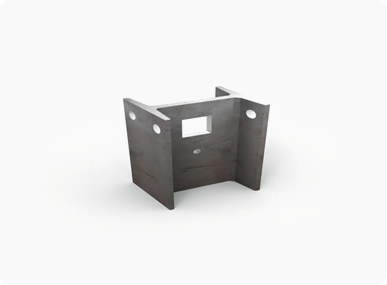
Edge Quality and Taper
| Observed condition | Laser-cut edge | Waterjet-cut edge |
|---|---|---|
| Typical texture | Thermal cut lines; appearance varies with gas, speed and material | Erosion striations that usually increase toward the lower edge at faster settings |
| Thermal effect | Possible heat tint, oxide or local metallurgical change | No thermal HAZ |
| Taper | Can occur, especially as thickness and process difficulty increase | Natural jet behaviour can create taper; advanced heads may compensate |
| Residue | Dross, oxide or recast may require removal | Water, abrasive or slurry may require cleaning and drying |
| Brittle material risk | Thermal stress, cracking or unsuitable absorption | Piercing cracks, chipping or delamination can still occur |
| Inspection focus | Top and bottom dimensions, dross, HAZ, taper and flatness | Top and bottom dimensions, taper, entry point, striation and cleanliness |
Do not specify “smooth edge” without a measurable acceptance method. State whether the part needs a functional cut edge, a cosmetic edge, machining allowance, maximum taper, burr limit or post-cut finishing. A photograph alone may not capture bottom-edge geometry.
Laser Cutting vs Waterjet Cost
Cost changes with material, thickness, quantity, geometry and required cut quality. A faster cutting speed can lower machine time, but an apparently cheaper cut may become more expensive after cleaning, machining or rejected parts are included.
Laser often has the cost advantage for:
- thin sheet and suitable medium-thickness material;
- large quantities of relatively small parts;
- parts with many holes and detailed profiles;
- work that continues directly to bending or sheet-metal assembly;
- applications where controlled thermal edges are acceptable.
Waterjet may produce the lower complete cost when:
- the material is too thick or unsuitable for the available laser;
- thermal damage would create scrap or expensive edge removal;
- a broad mix of hard, soft or non-reflective properties must be processed;
- the objective is a cold-cut near-net blank for later CNC machining;
- eliminating a thermally hardened edge simplifies secondary work.
For laser-specific quotation factors, see our laser cutting cost guide for Singapore. Avoid comparing a waterjet near-net blank with a fully deburred and inspected laser-cut part unless both quotations describe the same delivered condition.
A Six-Step Process Selection Workflow
Questions to Ask a Singapore Cutting Supplier
Include these points in the RFQ:
- Process performed locally or subcontracted
- Machine and cutting-head type
- Material source and grade
- Maximum supported thickness
- Top, bottom or mid-edge measurement
- Taper-compensation capability
- Laser assist gas
- Waterjet abrasive and cleaning scope
- Deburring or edge finishing
- Near-net or finished profile
- CNC machining allowance
- Inspection method
- Sample or first-article approval
- Material certificate requirement
- Packaging and corrosion protection
- Singapore delivery or collection
For an efficient laser quotation, send a clean DXF with material, thickness, quantity and clearly identified critical tolerances. Our CAD file preparation guide explains the drawing checks that reduce quotation delays. Buyers new to the process can also review the Singapore laser cutting buyer’s guide.
Frequently Asked Questions
Is waterjet more accurate than laser cutting?
Not universally. Finished-part accuracy depends on the machine, material, thickness, cutting-quality setting, geometry, compensation and inspection method. Laser often suits fine thin-sheet features; advanced waterjet can achieve tight results, including on thick material, when the correct equipment and setup are used.
Is waterjet cutting more expensive than laser cutting?
Waterjet is often slower and consumes abrasive, while laser uses power and assist gas. Laser commonly costs less for suitable thin sheet, but waterjet can lower total cost when it prevents thermal damage or reduces later machining. Compare complete delivered scope.
Which process is better for thick stainless steel?
Waterjet becomes more attractive as thickness exceeds the practical capability or acceptable edge quality of the available laser. The answer depends on plate thickness, required taper, HAZ allowance, machining plan and supplier equipment.
Does waterjet cutting create a heat-affected zone?
No thermal heat-affected zone is created because waterjet removes material by cold erosion rather than melting. Other edge considerations such as taper, striation, piercing and abrasive residue still remain.
Which process gives a smaller kerf?
Laser usually produces a narrower kerf than conventional abrasive waterjet, especially in thin sheet. Actual kerf depends on laser focus and parameters or the waterjet nozzle and cutting conditions.
Is laser or waterjet better for aluminium?
Laser is often productive for suitable thin-to-medium aluminium on an appropriate fibre system. Waterjet is worth comparing for very thick plate, zero-HAZ requirements or near-net blanks intended for later machining.
Can the same DXF file be used for laser and waterjet?
The same clean two-dimensional geometry can usually support quotation for both, but suppliers may apply different kerf compensation, lead-ins, corner strategies and feature limits. Do not alter the nominal geometry to compensate unless the supplier requests it.
Technical references
Review Your Laser Cutting Requirement
Send your drawing, material grade, thickness, quantity, critical tolerances and edge requirements. We can review whether the part fits our laser cutting process and define the appropriate quotation scope.