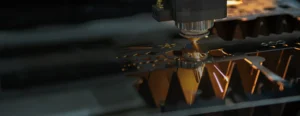
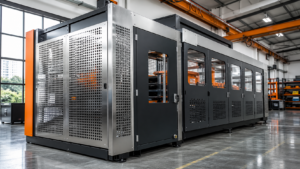
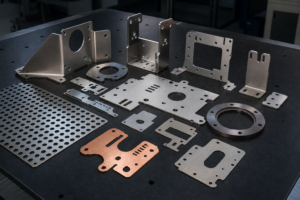
Laser cutting for industrial automation parts is a precision sheet metal fabrication process used to manufacture machine covers, frames, mounting brackets, equipment panels, guards, base plates and enclosures from CAD drawings. Lumen Future supports automation equipment builders, system integrators, production engineers and maintenance teams in Singapore with laser cutting and multi-process fabrication services for prototype, low-volume and repeat-order parts.
Laser cutting is widely used to produce industrial automation parts such as machine covers, brackets, frames, control panels and enclosures. Most finished parts also require CNC bending, welding, deburring, engraving or surface finishing. For accurate quotations, buyers should provide the material, thickness, drawing revision, quantity, critical dimensions, surface finish and required delivery date.
What Automation Parts Can Be Made With Laser Cutting?
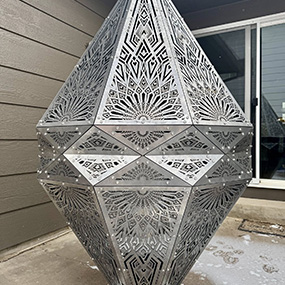
Industrial automation systems use a wide range of custom sheet metal components. Some parts protect operators and electrical equipment, while others support sensors, motors, actuators, cameras, control devices or structural assemblies. Laser cutting is suitable for these applications because it can produce accurate profiles, slots, openings, ventilation patterns and mounting features directly from digital drawings.
For Singapore automation companies, laser cutting is especially useful during equipment development, machine modification and production-line upgrades. Design files can be revised without creating dedicated cutting tools, which makes the process practical for one-off prototypes, engineering samples, small batches and repeat orders.
| Part Type | Typical Function | Common Processes |
|---|---|---|
| Machine covers | Protect moving, hot or electrical components | Laser cutting, bending, welding, finishing |
| Safety guards | Separate operators from hazardous zones | Laser cutting, bending, assembly, deburring |
| Mounting brackets | Support sensors, motors, cameras and actuators | Laser cutting, bending, engraving |
| Equipment panels | Mount switches, screens, connectors and indicators | Laser cutting, engraving, deburring |
| Machine frames | Support mechanical and automation assemblies | Laser cutting, welding, grinding |
| Custom enclosures | Protect control, electrical or inspection systems | Laser cutting, bending, welding, coating |
| Base plates | Mount equipment, fixtures and subassemblies | Laser cutting, drilling, engraving |
| Jigs and fixtures | Position, inspect or hold components | Laser cutting, engraving, finishing |
Lumen Future supports industrial automation parts fabrication in Singapore for equipment builders, system integrators and engineering teams that require custom components from drawings.
Machine Covers and Safety Guards
Machine covers and safety guards are among the most common laser-cut automation parts. They help protect operators from moving mechanisms, electrical assemblies, sharp components, heat, debris and process hazards. A cover may also improve equipment appearance, reduce contamination and provide organised access for maintenance.
A machine cover is not only a visual enclosure. It must provide suitable access, ventilation, clearance and safe handling without interfering with moving components, sensors, cables, hinges or maintenance points. For this reason, the drawing should consider the complete machine assembly rather than only the outer appearance.
Common Design Features
- Removable access panels
- Hinged doors and service openings
- Ventilation slots and fan cut-outs
- Transparent viewing windows
- Cable entry openings
- Emergency stop and control access
- Mounting flanges and folded edges
- Locks, handles and fastening points
Machine guards may combine sheet metal with acrylic or polycarbonate viewing panels. Where transparent windows are required, designers should define the window material, thickness, mounting method and required visibility area. The metal frame and transparent panel must be coordinated so that fasteners, hinges and clearances align correctly.
Machine covers often fail because assembly details are not considered.
Typical problems include holes located too close to bend lines, insufficient clearance for moving components, doors that interfere with surrounding structures, inadequate ventilation, sharp unfinished edges and window openings that do not match the final assembly.
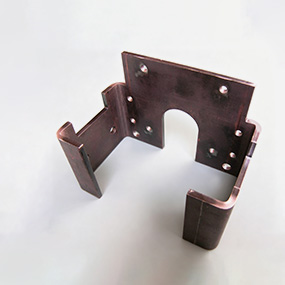
Frames and Structural Components
Automation systems often require machine frames, equipment bases, support structures, conveyor frames, robotic cell structures and welded assemblies. Laser cutting can produce the plates, gussets, joining tabs, base plates, reinforcement plates and brackets used within these assemblies.
However, laser cutting alone does not determine final frame accuracy. Weld sequence, fixture design, heat input, joint preparation and assembly control can influence straightness, squareness and dimensional stability. Where critical interfaces are involved, the drawing should clearly identify mounting surfaces, rail positions, motor interfaces, equipment footprints and alignment requirements.
Typical Structural Parts
- Machine base plates
- Welded side frames
- Conveyor support plates
- Robot cell structural panels
- Reinforcing ribs and gussets
- Equipment mounting plates
- Adjustable foot plates
- Structural connection brackets
The design should also consider machine load, vibration, levelling, floor anchoring, maintenance access and cable routing. In many projects, the best result comes from combining laser-cut sheet metal with tube or profile structures rather than attempting to build every part from flat plate.
Brackets and Mounting Plates
Brackets and mounting plates are frequently required during machine design, system integration and production-line modification. They may appear simple, but their hole positions, bend angles and stiffness can directly affect sensor alignment, actuator movement, camera position and assembly performance.
Common Automation Brackets
- Sensor mounting brackets
- Motor mounting plates
- Actuator support brackets
- Camera and vision-system brackets
- Cable tray supports
- Photoelectric sensor mounts
- Control component plates
- Adapter plates for revised equipment
Specify the information that affects fit and alignment.
Long slots can provide adjustment during installation, but they should not be used as a substitute for correct dimensioning. Where alignment is critical, the drawing should distinguish between adjustment features and fixed datum locations.
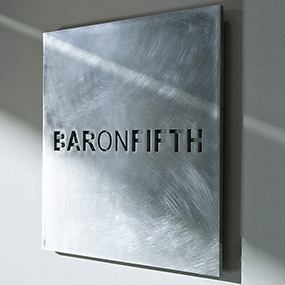
Control Panels and Equipment Panels
Automation panels may contain openings for HMI screens, push buttons, emergency stops, connectors, ventilation fans, displays, indicator lights, cable glands and access covers. Laser cutting is well suited to these components because different opening shapes can be produced from the same digital file.
Laser engraving can be added for equipment labels, port identification, scales, serial numbers, part numbers and assembly marks. This is useful where labels must remain clear and consistent throughout equipment installation and maintenance.
Typical Panel Features
- HMI and display openings
- Push-button and selector-switch holes
- Emergency-stop cut-outs
- Ventilation slots
- Fan and filter openings
- Connector and cable gland openings
- Access doors and removable plates
- Engraved terminal and function labels
When preparing a panel drawing, identify the external face, internal face and orientation. This prevents mirrored openings or engraving errors. Where a panel will be bent, the flat pattern should be coordinated with the finished folded dimensions.
For permanent equipment identification, review our guide to laser engraving for metal and non-metal parts.
Custom Enclosures for Automation Equipment
Custom enclosures protect control systems, electronics, sensors, inspection devices and mechanical assemblies. Unlike standard off-the-shelf boxes, custom enclosures can be designed around the exact equipment layout, connector position, cable route and mounting method.
Common Enclosure Types
- Electrical control boxes
- Inspection-system housings
- Sensor enclosures
- Machine-side control cabinets
- Portable equipment housings
- Robotic cell enclosures
- Vision-system covers
- Custom electronics housings
| Material | Advantages | Typical Use |
|---|---|---|
| Mild steel | Strong, cost-effective and suitable for powder coating | General machine enclosures and guards |
| Stainless steel 304 | Corrosion-resistant and easy to clean | Food, medical, humid and clean environments |
| Stainless steel 316 | Higher corrosion resistance | Chemical or demanding industrial environments |
| Aluminum 5052 | Lightweight with good bendability | Portable equipment and lightweight enclosures |
| Acrylic | Transparent and visually clear | Viewing windows and machine guards |
For lightweight folded enclosures, read our comparison of Aluminum 6061 vs 5052 for laser-cut parts. Where transparent covers or windows are required, review acrylic laser cutting and edge-quality considerations.
Why Automation Parts Usually Need More Than Laser Cutting
Laser cutting produces the flat profile, holes, slots and openings, but most finished automation components require additional operations. A machine cover, enclosure or welded frame is therefore better evaluated as a complete fabrication project rather than as a cutting-only job.
- Laser cutting: Produces profiles, holes, slots, openings and identification features.
- CNC bending: Forms covers, brackets, channels, boxes and folded edges.
- Welding or assembly: Joins frames, enclosures and structural components.
- Deburring and grinding: Removes sharp edges and improves welded surfaces.
- Laser engraving: Adds part numbers, labels, scales and traceability information.
- Surface finishing: Applies powder coating, brushing, plating or other finishes.
- Inspection: Confirms dimensions, fit-up and visual quality.
Laser Cutting
Laser cutting is used for external contours, holes, ventilation slots, access openings and custom shapes. It is especially suitable for design revisions because the cutting path is controlled from a digital file.
CNC Bending
Bending converts flat sheet into brackets, guards, channels and enclosure bodies. Bend radius, material thickness, grain direction, tooling and springback all influence the finished part. Review our guide to CNC bending tolerance, K-factor and springback.
Welding and Assembly
Welding is used for machine frames, structural supports and enclosed assemblies. Joint design, sequence and fixturing should be considered where distortion or alignment may affect installation.
Deburring and Surface Finishing
Automation components should be safe to handle and suitable for installation. Deburring removes sharp edges, while grinding and polishing can improve weld appearance and surface consistency. Learn more about polishing and deburring laser-cut parts in Singapore.
Choosing Materials for Automation Parts
Material selection affects strength, corrosion resistance, weight, bendability, surface finish, cost and long-term performance. The best option depends on the component function and operating environment.
Mild Steel
Mild steel is commonly used for machine frames, equipment bases, large covers and general-purpose guards. It offers good strength and cost efficiency and can be powder coated for appearance and corrosion protection.
Stainless Steel 304
Stainless steel 304 is suitable for machine parts that require corrosion resistance, cleanability or a durable unfinished appearance. It is frequently considered for food-processing, medical, laboratory and humid manufacturing environments.
Stainless Steel 316
Stainless steel 316 provides greater corrosion resistance for chemical exposure, marine environments or demanding process conditions. It should be selected when the operating environment justifies the additional material cost.
Aluminum 5052
Aluminum 5052 is commonly selected for lightweight folded covers, panels and enclosures because of its corrosion resistance and forming characteristics.
Aluminum 6061
Aluminum 6061 offers higher structural strength and is often used for rigid plates, machined components, base plates and structural interfaces. It is generally less suitable than 5052 for tight sheet-metal bending.
Design Guidelines for Laser-Cut Automation Parts
Design for manufacturability reduces rework, quotation delays and installation problems. The following checks are useful for machine covers, brackets, panels, frames and enclosures.
- Define the material and thickness. Avoid generic descriptions such as “stainless steel” without a grade.
- Identify critical mounting holes. Clearly show hole centres, diameters, slots and datum references.
- Mark bend direction. Indicate which side is inside, outside, front and back.
- Keep holes away from bend zones. Features too close to bends may deform or interfere with tooling.
- Allow welding and assembly access. Consider torch access, fastener access and sequence.
- Define the visible surface. This is important for brushing, engraving and cosmetic requirements.
- Separate critical and general dimensions. Apply tight tolerances only where function requires them.
- Specify the surface finish. State powder-coat colour, plating, brushing direction or raw finish.
- Provide the drawing revision. This reduces the risk of manufacturing obsolete files.
- Include an assembly drawing. Show the intended relationship between fabricated parts and the machine.
For file preparation, read how to prepare CAD files for laser cutting and how to choose between STEP, IGES and DXF files.
Tolerance and Fit-Up Considerations
Achievable tolerance depends on material type, thickness, part size, geometry, cutting process, bending sequence, welding requirements and the location of critical dimensions. Buyers should avoid applying one tight tolerance to every dimension because this can increase cost without improving equipment function.
Critical Dimensions
- Motor mounting holes
- Sensor and camera positions
- Guide-rail alignment features
- Bearing locations
- Connector and HMI openings
- Assembly datums
- Interface dimensions between parts
General Dimensions
- Decorative edges
- Non-functional cover dimensions
- General clearance zones
- Uncritical ventilation patterns
- Hidden non-interface surfaces
Bending introduces variation through material thickness, bend radius, tooling and springback. Welding can introduce heat distortion. Powder coating and plating can also affect tight holes, tabs and fit-up features. The drawing should therefore identify the finished functional requirement rather than relying only on flat-part dimensions.
Sensor bracket with adjustable alignment
A sensor bracket may use one fixed datum hole and one adjustment slot. The fixed hole controls the reference position, while the slot allows installation adjustment. Treating both features as loose adjustment slots may reduce repeatability.
Why Singapore Automation Companies Use Local Fabrication Support
Automation equipment projects often change during assembly, testing and installation. A bracket may require a new hole position, a guard may need additional clearance, or a control panel may require a revised connector opening. Local fabrication support can make these changes easier to coordinate.
Singapore-based support is particularly useful for equipment builders, system integrators and production teams operating around Ubi, Kaki Bukit, Tuas, Jurong, Woodlands, Ang Mo Kio, Changi and Tampines, where project schedules may depend on responsive drawing review and part revision.
Benefits of Local Coordination
- Faster engineering communication
- Easier clarification of drawings and revisions
- Support for urgent machine modifications
- Shorter feedback cycles during prototype testing
- Reduced risk of manufacturing from obsolete files
- Practical support for small batches and repeat orders
Local support does not replace proper documentation. Drawing revision, part number, material, finish and quantity should still be clearly controlled so that urgent production does not create traceability problems.
How to Choose a Machine Parts Supplier in Singapore
A machine parts supplier should be evaluated on more than cutting price. Automation components often require multiple processes and must fit existing equipment, so engineering support and process coordination can be as important as unit cost.
1. Drawing Review Capability
The supplier should check for missing dimensions, unclear bend directions, conflicting tolerances, material omissions and assembly risks before production.
2. Multi-Process Fabrication Capability
A supplier that can coordinate laser cutting, bending, welding, deburring, engraving and finishing can reduce handover errors between separate vendors.
3. Prototype and Repeat-Order Support
Automation projects often follow this sequence:
4. Understanding of Automation Applications
The supplier should consider sensor position, equipment movement, cable routing, maintenance access, safe edges and installation sequence—not only whether the flat part can be cut.
5. Revision and Traceability Control
Each order should identify the drawing revision, part number, material, finish, quantity and delivery requirement. Engraved part numbers can also improve equipment assembly and replacement-part management.
Typical Automation Parts and Project Scenarios
The following scenarios illustrate common automation fabrication requirements. They are representative examples rather than claims about a specific customer project.
Scenario 1: Machine Guard Enclosure
- Material: Mild steel with acrylic viewing panel
- Processes: Laser cutting, bending, welding and powder coating
- Key considerations: Door access, operator visibility, ventilation, moving-part clearance and safe edges
Scenario 2: Sensor Mounting Bracket
- Material: Stainless steel 304
- Processes: Laser cutting, bending and engraving
- Key considerations: Hole position, bend angle, sensor alignment and adjustment range
Scenario 3: Automation Control Panel
- Material: Aluminum 5052
- Processes: Laser cutting, bending and engraving
- Key considerations: HMI opening, connector cut-outs, external orientation and permanent labels
Scenario 4: Machine Frame Plates
- Material: Mild steel
- Processes: Laser cutting, welding and grinding
- Key considerations: Structural stability, assembly alignment, weld sequence and mounting interfaces
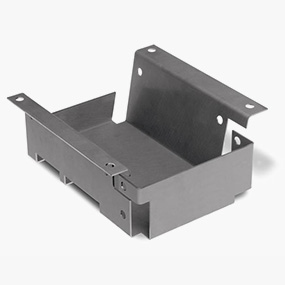
RFQ Checklist for Automation Parts
Complete RFQ information helps the supplier evaluate manufacturability, select the correct process and provide a more accurate quotation.
Part number:
Drawing revision:
Material grade:
Material thickness:
Required quantity:
Critical dimensions:
Bending requirements:
Welding requirements:
Surface finish:
Engraving or marking:
Assembly requirement:
Application:
Required delivery date:
Recommended File Formats
- DXF or DWG: Flat laser-cut profiles
- STEP or IGES: Formed parts, assemblies and 3D geometry
- PDF: Dimensions, tolerances, notes and finish requirements
- Assembly drawing: Fit-up, orientation and installation context
Before sending an RFQ, you can also review how to read a laser cutting quotation.
Frequently Asked Questions
What automation parts can be made with laser cutting?
Laser cutting can produce machine covers, safety guards, mounting brackets, equipment panels, frame plates, base plates, control-panel openings, enclosures, jigs and fixtures. Finished parts may also require bending, welding, deburring, engraving or surface finishing.
Can Lumen Future fabricate machine guards and covers?
Lumen Future supports custom sheet metal fabrication for machine guards and covers in Singapore based on customer drawings. The required processes may include laser cutting, CNC bending, welding, deburring, engraving and finishing.
Which material is best for automation equipment enclosures?
Mild steel is suitable for cost-effective powder-coated enclosures, stainless steel is used where corrosion resistance and cleanability are important, and aluminum 5052 is commonly selected for lightweight folded enclosures. The final choice depends on environment, strength, weight, finish and budget.
Can laser-cut parts also be bent and welded?
Yes. Many automation parts require a complete fabrication workflow that combines laser cutting with CNC bending, welding, deburring, grinding, engraving and surface finishing.
Can you manufacture one-off automation prototypes?
Prototype and low-volume fabrication can be evaluated based on the drawing, material, required processes and delivery schedule. Digital laser cutting is suitable for projects that may require design revisions before repeat production.
What drawings are required for automation parts?
Provide DXF or DWG files for flat profiles, STEP or IGES files for formed parts and assemblies, and PDF drawings for dimensions, tolerances, material, finish and notes. An assembly drawing is recommended where fit-up is important.
How accurate are laser-cut automation components?
Achievable accuracy depends on material, thickness, geometry, part size, cutting process and any later bending or welding. Critical dimensions should be identified so the complete fabrication process can be evaluated.
Can part numbers and control-panel labels be engraved?
Yes. Laser engraving can add part numbers, serial numbers, port labels, scales, assembly marks and other identification information to suitable materials.
Can local fabrication support urgent production-line modifications?
Local fabrication can support faster communication and drawing revisions for urgent modifications, subject to material availability, process requirements, production capacity and the requested delivery schedule.
How do I request a quotation for automation parts in Singapore?
Send the latest drawing revision, material grade, thickness, quantity, critical dimensions, required processes, surface finish, application and delivery requirement. Providing complete information improves quotation accuracy and reduces clarification time.
Need Custom Automation Parts in Singapore?
Send Lumen Future your drawings for machine covers, frames, brackets, panels, enclosures or other industrial automation components.
- Laser cutting for custom sheet metal parts
- CNC bending, welding and assembly support
- Deburring, engraving and finishing coordination
- Prototype, low-volume and repeat-order evaluation