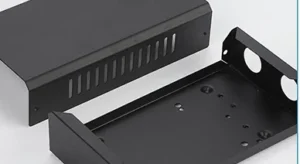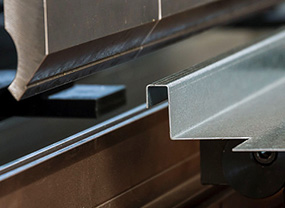
Choose laser cutting when designs are changing, quantities are uncertain, variants are frequent or dedicated tooling cannot yet be justified. Choose stamping when the design is stable, lifecycle demand is predictable and lower production cost can recover die design, manufacture, tryout, qualification and maintenance. There is no universal crossover quantity: calculate it from actual tooling and delivered unit costs over the expected product lifecycle.
“Prototype with laser, mass-produce with stamping” is a useful starting idea, but it is not a purchasing rule. Automated laser systems can remain economical at significant quantities, especially for high-mix demand and frequent engineering changes. A simple stamped part may justify tooling earlier than expected, while a complex family of changing variants may never reach an economic break-even point.
The decision should follow the product lifecycle, not one purchase order. Buyers need to consider total forecast demand, revision risk, die ownership, forming operations, material utilisation, inspection, spare parts and what happens if production stops earlier than planned.
This guide supports buyers evaluating laser metal cutting services in Singapore for prototypes, pilot builds, bridge production and repeat sheet-metal parts.
Laser Cutting and Stamping Are Different Production Systems
Laser cutting
A CNC laser follows digital geometry and cuts a profile directly from sheet or plate. No part-specific cutting die is normally required.
- Fast design changes
- Low dedicated tooling
- Efficient high-mix production
- Flat blanks for later forming
Metal stamping
A press and dedicated tooling cut, pierce, bend, draw, emboss or otherwise form sheet metal through one or multiple operations.
- High production rate after qualification
- Part-specific die investment
- Cutting and forming can be combined
- Tool wear and maintenance matter
Stamping is a broad category. A simple blanking die, a compound die, a progressive tool and a transfer system have very different investment, geometry and production economics. A quotation should identify the intended process rather than saying only “stamped part.”
What Can a Stamping Die Do That a Laser Cannot?
Laser cutting produces a two-dimensional profile and through-features. Stamping tooling may combine several operations:
- Blanking: separates the external part shape from sheet or strip.
- Piercing: punches holes and internal openings.
- Bending and forming: creates flanges, tabs, ribs and local shapes.
- Embossing or coining: forms raised, recessed or compressed features.
- Drawing: produces cup-like or deeper formed geometry.
- Progressive operations: moves strip through multiple stations before separating the finished part.
A laser-cut blank that needs only conventional flanges may continue to CNC bending and folding. A high-volume component with pierced, formed and coined features may gain more from dedicated stamping tooling.
Laser Cutting vs Stamping at a Glance
| Decision factor | Laser cutting | Metal stamping |
|---|---|---|
| Part-specific tooling | Normally none for the cutting profile | Usually required |
| Initial investment | Relatively low | Die design, manufacture, tryout and qualification |
| Design revision | Update the manufacturing file and review again | May require die modification or replacement |
| Prototype | Strong fit for one-off and iterative builds | Production tooling is rarely the first prototype route |
| Bridge production | Useful while demand and tooling mature | Pilot or soft tooling may be possible but is project-specific |
| Stable high volume | Automation can remain competitive | Potentially very low cycle and unit cost after tooling recovery |
| Part variants | Digital changeover supports a family of profiles | Each version may require tool changes or separate tooling |
| Cutting and forming | Requires separate forming operation | Can combine multiple operations in a die sequence |
| Material form | Primarily sheet or plate | Sheet, strip or coil |
| Thermal effect | Local HAZ may be present | Blanking itself is mechanical, not a thermal cut |
| Edge condition | Thermal cut lines, dross or oxide depending on process | Rollover, shear zone, fracture zone and burr |
| Maintenance | General equipment maintenance | Part-specific die sharpening, repair, storage and records |
| Best economic question | Can digital flexibility justify the machine time? | Can lifecycle demand recover tooling and change risk? |
There Is No Universal Stamping MOQ
Tables that assign laser to one quantity range and stamping to another hide the most important variables. Quantity is only useful when combined with part design, tooling scope, expected revisions and the total product lifetime.
A large quantity may still favour laser
- demand is divided across many similar variants;
- engineering changes are frequent;
- orders arrive in small releases rather than one stable run;
- the product lifecycle is short or uncertain;
- complex contours make the tooling difficult;
- on-demand production avoids finished-goods inventory;
- automated loading, nesting and sorting keep laser cost competitive.
A lower quantity may justify stamping evaluation
- the die is relatively simple;
- future repeat demand is contractually credible;
- several piercing and forming steps can be combined;
- laser cycle time is long for the individual part;
- stamped features reduce later bending or assembly;
- material strip layout and press capacity are favourable.
Calculate the Break-Even Quantity
The simplified formula works only when the stamped delivered unit cost is actually lower. The calculation should also consider:
- tool modification and repair;
- sample and qualification material;
- inspection fixtures and control plans;
- storage, transport and insurance of tooling;
- scrap during setup and production;
- product variants and forecast uncertainty;
- inventory carrying cost;
- secondary deburring, cleaning, tapping, bending or coating;
- the value of being able to change the design.
Do not insert a generic tooling price or market unit cost into an article and treat it as a quotation. Use supplier-specific figures for the actual strip layout, press, material and quality scope. For laser-specific inputs, see our laser cutting cost guide.
Choose by Product Lifecycle Stage
Laser is not limited to prototypes. AMADA case material describes laser use in high-mix, lower-volume production, while automated loading and material systems demonstrate that laser can also support continuous production. The correct economic boundary is project-specific.
A Laser Prototype Does Not Qualify the Stamping Process
A laser-cut prototype can confirm nominal outline and assembly intent, but the production stamping process creates different edges, stresses and failure modes. The stamped part needs its own first article and process validation.
| Characteristic | Laser-cut prototype | Stamped production part |
|---|---|---|
| Cut edge | Thermal cut face | Rollover, burnished shear zone, fracture zone and burr |
| Burr direction | Driven by laser process and exit side | Related to punch direction and die condition |
| Hole condition | Kerf, heat, thickness and piercing influence result | Punch, die clearance, alignment and wear influence result |
| Flatness | Heat and released sheet stress may affect shape | Blanking force, stripping, coil set and part release may affect shape |
| Local forming | Requires a later operation | May be integrated into the die sequence |
| Surface contact | Non-contact cutting, with sheet handling marks still possible | Feeding, holding and die contact can affect visible surfaces |
| Process evidence | Supports design learning | Requires stamping-specific first article and production control |
A product owner can approve a laser prototype as a design sample without approving it as a substitute for stamped production. The drawing and validation plan should identify which characteristics are process-sensitive.
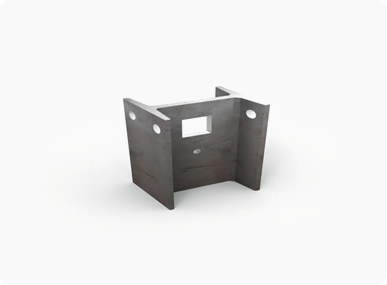
Redesign for Stamping Before Releasing the Die
A geometry that laser cuts successfully is not automatically ready for a progressive or compound die. The stamping supplier should review:
- minimum pierced holes and narrow slots;
- hole-to-edge and feature spacing;
- sharp corners and die strength;
- material thickness, strength and grain direction;
- punch-to-die clearance;
- required burr direction;
- strip layout, carrier and feed pitch;
- pilot features and station sequence;
- forming radius and springback;
- part release, scrap evacuation and surface protection;
- press tonnage and shut height;
- access for inspection and maintenance.
Do not send a laser nesting layout as the progressive-die strip design. A stamping strip needs material to carry and locate the part through the tool, and the most efficient orientation may be different.
Tolerance, Repeatability and Tool Wear
Stamping can produce excellent repeatability after a stable tool is qualified. Repeatability does not prove that the nominal tool geometry is correct, and it does not prevent dimensions from drifting as punches, dies, guides and strippers wear.
Stamped-part results depend on:
- die manufacture, alignment and clearance;
- material thickness, temper and strength;
- press alignment and feed accuracy;
- tool wear, sharpening and repair history;
- springback and forming sequence;
- coil set, strip movement and lubrication;
- measurement method and production temperature.
Laser-cut results depend on material, flatness, focus, gas, speed, heat, feature geometry and cut-path strategy. Neither process should receive a blanket tolerance across every dimension. Our laser cutting tolerance guide explains drawing requirements for the digital cutting route.
Edge Quality and Secondary Operations
| Downstream need | Laser route | Stamping route |
|---|---|---|
| Deburring | May need dross and sharp-edge removal | May need removal of blanking or piercing burr |
| Cleaning | Remove residues and prepare for finish | Remove lubricant, fines and handling contamination |
| Flatness | May need levelling after stress release | May need flattening or tool adjustment |
| Forming | Separate bending or forming operation | May be integrated into the die |
| Threads | Secondary tapping or hardware insertion | Secondary tapping, in-die tapping or hardware, depending on process |
| Surface finish | Coordinate oxide, heat tint and protective film | Coordinate die marks, lubricant and surface contact |
Compare the delivered component rather than assuming a press stroke produces a finished part. Cutting, forming, tapping, deburring, cleaning, plating, coating and inspection may all contribute more than expected.
When Laser Can Remain the Production Process
Laser may stay competitive throughout production when:
- the product family has many variants;
- engineering revisions remain frequent;
- annual demand arrives in small releases;
- the part is made to order rather than stocked;
- the lifecycle is short or forecast confidence is low;
- the contour is complex but does not need integrated forming;
- automated sheet handling and nesting control unit cost;
- long-term spare-parts demand is low but persistent.
This is common in automation equipment and capital machinery, where several revisions may exist at the same time. See our guide to laser cutting for industrial automation parts.
When to Evaluate Stamping
Stamping deserves a formal quote when most of the following are true:
- the design and interfaces are frozen;
- lifecycle demand is credible and repeatable;
- material grade and thickness are stable;
- part variants are limited;
- the die can combine useful cutting and forming operations;
- unit-cycle savings can recover tooling and qualification;
- tool maintenance, storage and ownership are documented;
- a supply-continuity route exists for tool downtime and end-of-life parts.
Tool Ownership Is a Commercial Requirement
Before paying for a die, the purchase agreement should clarify:
- who owns the tool and design data;
- where it is stored and insured;
- whether it can be moved to another supplier;
- who pays for maintenance and normal sharpening;
- how damage or major repair is handled;
- what records are kept after modifications;
- how inactivity and storage fees are treated;
- what happens at product end of life.
These terms can materially change the total cost of local versus overseas production. Our local vs overseas metal fabrication guide explains landed cost, communication, inventory and rework considerations.
A Practical Prototype-to-Production Workflow
Singapore Supply-Chain Considerations
Singapore product teams may prototype locally, source production stamping locally or regionally, and keep an alternate laser route for engineering changes and urgent shortages. The process plan should consider:
- tool design and repair response time;
- transport and customs for an overseas die;
- material coil and sheet availability;
- supplier minimum releases and inventory;
- communication during engineering changes;
- second-source feasibility;
- local first-article review;
- laser bridge production during tool downtime;
- long-term service-parts demand.
When comparing suppliers, confirm whether the quotation covers only cut or stamped blanks or includes bending, deburring, welding, finishing, inspection and delivery. See the Singapore sheet-metal supplier guide and how to read a laser cutting quotation.
RFQ Checklist
Provide and compare:
- Drawing and revision
- Material and temper
- Thickness
- Prototype quantity
- Annual forecast
- Expected lifecycle volume
- Number of variants
- Engineering-change probability
- Critical dimensions
- Burr direction
- Surface requirements
- Integrated forming features
- Laser delivered unit cost
- Stamping tooling breakdown
- Stamped delivered unit cost
- Qualification and inspection
- Tool ownership and storage
- Maintenance responsibility
- Bridge-production plan
- Spare-parts strategy
For laser prototypes, submit a clean DXF and a controlled engineering drawing. Our CAD file preparation guide explains units, duplicate lines, open contours and drawing notes that can delay quotation.
Frequently Asked Questions
At what quantity does stamping become cheaper than laser cutting?
There is no universal quantity. Calculate the crossover from actual tooling, qualification, maintenance and delivered unit costs over the expected lifecycle, including variants and engineering-change risk.
Is laser cutting only suitable for prototypes?
No. Automated laser cutting can support repeat and higher-volume production, especially where parts are varied, frequently revised or made in scheduled releases.
Should I make laser-cut prototypes before ordering a stamping die?
Usually this is a useful way to validate nominal geometry and assembly before committing to tooling. The design should still receive stamping-specific DFM before die release.
Can a laser-cut prototype qualify a stamped production part?
Not by itself. The stamped part has different edge, burr, stress, forming and tool-wear characteristics and needs its own first-article and production-process approval.
Which process has better tolerance and repeatability?
Both can be repeatable when controlled. Laser depends on material and cutting conditions; stamping depends on die manufacture, clearance, press, feed and wear. Tolerance must be agreed feature by feature.
What happens if the design changes after the die is built?
The die may be modified, partially rebuilt or replaced. The cost and feasibility depend on the feature and tool construction. Define engineering-change responsibility before issuing the tooling order.
Who should own and maintain the stamping die?
The commercial agreement should state ownership, storage location, transfer rights, maintenance, repair, insurance, records and end-of-life disposal. Paying for tooling does not automatically define every right.
Technical references
Plan Your Prototype or Bridge Production
Send the drawing, material, thickness, prototype quantity and production forecast. We can review laser-cut feasibility for prototypes, engineering builds, bridge production and repeat sheet-metal parts.