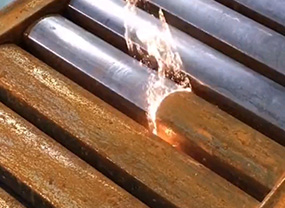
Laser cleaning is worth the investment only when your cleaning workload is high and consistent — typically above 500 hours per year. Below that, outsourcing to a service provider almost always wins on total cost. Equipment ranges from S$7,000–S$16,000 for entry-level handhelds up to S$108,000+ for industrial systems; service rates run S$80–S$300 per hour in Singapore depending on complexity. The right question isn’t “is laser cleaning good?” (it is — non-contact, non-abrasive, no chemicals). The right question is “do I have enough cleaning volume to amortise the equipment?“
A Singapore marine repair workshop owner ran the numbers last year. Sandblasting was costing the business roughly S$60,000 annually in media, labour, dust extraction, and disposal compliance. A 1500W handheld laser cleaner was advertised at S$30,000. The math seemed obvious — until twelve months after the purchase, when the equipment utilisation report showed it had been running just 15% of available hours. The savings didn’t materialise. The setup was sound, the operator was trained, the equipment worked perfectly — but the workload simply wasn’t there to justify ownership.
This is the trap most laser cleaning buyer’s guides won’t tell you about. They’re written by equipment manufacturers with one answer to “is it worth buying?” — yes. This guide takes the opposite approach: a neutral cost analysis from the perspective of someone deciding between buying equipment and outsourcing the service, written for Singapore industrial buyers facing real workload constraints.
For the broader picture on industrial laser services, our complete laser cutting buyer’s guide covers what each laser-based process is best for. For an in-depth comparison of laser cleaning against traditional methods, see our earlier laser cleaning vs traditional surface treatment guide.
Why Rust Removal Is an Expensive Problem in Singapore
Singapore’s environment is uniquely hard on metal. Year-round relative humidity averages around 84%, salt-laden air affects everything within several kilometres of the coast (which means almost everywhere), and the heat accelerates oxidation chemistry. For industrial operators, this turns rust removal from a one-time problem into a recurring operational cost.
Where rust removal becomes business-critical in Singapore:
- Marine and offshore — Ship hulls, deck equipment, offshore platforms, port infrastructure constantly battling corrosion. PSA, Sembcorp Marine, Keppel facilities all have substantial annual rust removal budgets.
- Oil & gas — Jurong Island refining and chemical complexes need periodic vessel and piping cleaning, often under strict cleanliness specifications.
- Heavy industry & construction — Structural steel, cranes, processing equipment — anything outdoor or semi-outdoor.
- Semiconductor equipment — Precision parts where oxidation affects performance, and where abrasive cleaning would damage the substrate.
- Heritage and restoration — Museums, restored heritage equipment, historic ironwork where mechanical or chemical cleaning would destroy what makes the piece valuable.
Industry rule of thumb: steel structures lose 2–4% of replacement value annually to corrosion-related maintenance in tropical climates. For a workshop with S$2M in steel assets, that’s S$40K–S$80K per year going to cleaning, repainting, and corrosion management. This is the budget that laser cleaning either captures (if you buy) or competes for (if you outsource).
The 4 Ways to Remove Rust (and Their Real Costs)
Before evaluating laser specifically, understand what it’s replacing. Four traditional methods remain in widespread use across Singapore:
| Method | Equipment Cost | Operating Cost/hr | Best For | Hidden Issues |
|---|---|---|---|---|
| Sandblasting / Abrasive Blasting | S$5K–S$30K | S$30–S$50 | Large structural surfaces, heavy rust | Dust compliance, media disposal, surface roughening |
| Chemical / Acid Cleaning | S$2K–S$10K | S$50–S$100 | Small precision parts, light corrosion | Hazardous waste, worker safety, substrate etching |
| Mechanical (Wire Brushing/Grinding) | S$200–S$2K | S$20–S$30 | Spot cleaning, accessible areas | Slow, surface damage, labour-intensive |
| Laser Cleaning | S$7K–S$300K+ | S$0.50–S$5 (electricity + minimal consumables) | Precision parts, high-frequency cleaning | High capital cost, operator training |
Two patterns emerge from this table:
- Laser flips the cost structure. Traditional methods are cheap to buy but expensive to operate (media, chemicals, disposal). Laser is expensive to buy but extremely cheap to operate. The break-even point is purely a function of usage hours.
- Compliance costs are the silent killer of traditional methods. Sandblasting dust extraction, chemical waste neutralisation, worker safety certifications — these don’t show in the equipment price but consume S$5K–S$20K annually for an active workshop.
How Laser Rust Removal Actually Works
A quick mechanism check before the financial analysis. Laser cleaning works on a principle called laser ablation:
Two operating modes are used commercially:
- Continuous Wave (CW) lasers — Higher power, faster cleaning rates, lower equipment cost. Best for heavy rust on robust substrates. A 1500W CW unit costs about half what a 500W pulse unit costs.
- Pulsed lasers — Higher peak power, near-zero heat damage to substrate. Best for thin sheet metal, delicate precision parts, heritage restoration. More expensive but irreplaceable for sensitive applications.
For Lumen Future’s specific capabilities, see our laser cleaning service page.
Laser vs Traditional: The Real Cost Comparison
Pure cost-per-hour comparisons mislead. The real question is total cost across realistic usage patterns. Three scenarios show how the math actually plays out over five years:
| 5-Year Total Cost Scenario | Sandblasting | Laser Owned | Laser Outsourced |
|---|---|---|---|
| Marine workshop (800 hr/yr cleaning) |
~S$200K total | ~S$80K total (winner) | ~S$640K total |
| Semiconductor service (150 hr/yr cleaning) |
Not applicable (damages parts) | ~S$45K total | ~S$22K total (winner) |
| Restoration shop (80 hr/yr cleaning) |
Not suitable | ~S$38K total | ~S$15K total (winner) |
The pattern is consistent: laser cleaning is the right technology for these applications — but whether to own the laser depends entirely on volume. At 800 hours per year, ownership wins by 8x over outsourcing. At 80 hours per year, outsourcing wins by 2.5x over ownership. The break-even point sits somewhere between 200 and 500 annual hours, depending on equipment grade and labour cost.
Equipment Investment: What It Actually Costs to Own
“Equipment price” is the most misleading number in the laser cleaning industry. The advertised machine price typically accounts for only 70-85% of the true investment.
Capital cost ranges by equipment class
But the sticker price is just the start. The full Total Cost of Ownership (TCO) adds:
- Operator training — S$2,000–S$5,000 (typically 2–4 weeks initial training plus ongoing competency)
- Workplace safety certification — S$1,000–S$3,000 annually (WSH Council requirements for class 4 laser operation)
- Maintenance — 5–10% of equipment value per year (laser source service, optics, cooling system)
- Operator labour — S$3,000–S$4,500/month if a dedicated operator is needed
- Workspace setup — Class 4 laser room, ventilation, interlocks, signage (S$3K–S$10K one-time)
- Insurance — Laser equipment liability + worker safety coverage
- Technology obsolescence — Laser tech is improving fast; 5-year-old equipment may already be 2x slower than current models
Real TCO observation: across surveyed Singapore industrial buyers, the average laser cleaning equipment utilisation rate after purchase is below 25% — meaning the machine sits idle 75% of available hours. If your projected utilisation is below this threshold, the per-hour cost of ownership rises dramatically above what initial ROI calculations suggested.
Outsourcing: The Service Option
The alternative to ownership is paying a specialist for cleaning work on a per-project basis. In Singapore, laser cleaning services typically run S$80–S$300 per hour, with the variation driven by:
- Part complexity and accessibility (flat surfaces are fast; intricate geometry is slow)
- Substrate material (steel is straightforward; aluminium, copper, and precious metals require different settings)
- Contamination type and thickness (light oxide is fast; heavy mill scale or thick paint is slower)
- Total project size (volume discounts typically start at 40+ hours)
- Transportation and setup (on-site service costs more than workshop-delivered parts)
Outsourcing wins economically when:
- Annual cleaning volume is below ~200 hours — equipment depreciation, training, and certification overhead can’t amortise.
- Cleaning projects are sporadic or one-off — heritage restoration projects, machinery overhaul, equipment commissioning.
- You haven’t validated whether laser is right for your application yet — outsourcing for one or two projects lets you test the result before committing capital.
- Cash flow constraints rule out S$30K+ upfront equipment investment even when projected volume would justify it.
For applications that fit this profile, our laser cleaning service handles project work from single-piece prototypes to multi-tonne industrial cleaning. For project planning and lead times, see our logistics and lead time overview.
The Buy vs Outsource Decision Matrix
A practical 5-dimension framework. Score your situation on each — if you lean “Buy” on at least 4 of 5, ownership likely pays off. Otherwise, outsourcing wins.
| Dimension | Lean Toward Buy | Lean Toward Outsource |
|---|---|---|
| Annual usage hours | 500+ hours/year, consistent | Under 200 hours/year, irregular |
| Application stability | Single dominant application, well-understood | Varied projects, new applications often |
| Technical capability | Existing laser-trained or willing-to-train staff | No laser experience, no dedicated operator |
| Capital availability | S$30K+ available without straining cash flow | Cash-flow sensitive, OpEx preferred |
| Time horizon | 5+ year stable business plan in same facility | Under 3-year horizon, or facility may relocate |
You should own equipment if:
You’re a marine workshop, large OEM, or established industrial fabricator with steady high-volume cleaning workload. The equipment pays itself off in 1-3 years, and operating cost drops to near zero per hour. Internal control of cleaning capacity is strategic.
You should outsource if:
You’re a restoration shop, R&D lab, multi-application contractor, or any business where cleaning is supportive rather than central. Ownership ties up capital that could be deployed elsewhere; service fees stay variable and tied to actual demand.
The honest answer for many Singapore SMEs: outsource until your volume builds to 500+ hours per year, then revisit the equipment question. Few decisions are reversible, and starting with service avoids the trap of an underutilised S$30K machine in the corner of your workshop.
Singapore Applications: Which Industries Are Switching
Five industries in Singapore are driving most laser cleaning adoption — each for different reasons:
Marine & Offshore
Ship hull cleaning, deck equipment, offshore platform maintenance. Driven primarily by environmental compliance — sandblasting in dock environments creates regulated dust that’s increasingly restricted. Laser eliminates both the dust and the abrasive waste, plus allows precise cleaning around sensitive equipment that abrasive blasting would damage.
Semiconductor Equipment
Process chamber components, gas delivery parts, vacuum hardware. Driven by cleanliness specifications that abrasive or chemical methods cannot meet without contaminating the substrate. Laser leaves no residue, no media, no chemicals — particles per cubic millimetre meet semiconductor cleanliness grade.
Heritage & Art Restoration
Architectural ironwork, museum artefacts, restored heritage equipment. Driven by the need for non-destructive cleaning — abrasives destroy patina and surface detail; chemicals etch the substrate. Laser removes only the contamination layer, preserving the original surface character.
Aerospace (Seletar precinct)
Aircraft component maintenance, MRO operations. Driven by aerospace certification requirements — strict process controls and documented cleanliness. Laser cleaning’s repeatability and lack of media contamination aligns well with aerospace QA workflows.
Heavy Equipment & Tooling
Moulds, dies, press tools, machinery components. Driven by precision requirements — abrasive cleaning damages mould surfaces requiring expensive re-polishing. Laser cleans without changing dimensions or surface finish, extending tooling lifetime.
The Hidden Costs Most Buyers Miss
If you’re seriously considering equipment purchase, these are the costs that don’t appear in vendor quotes but always show up in year-end accounting:
Workplace Safety Certification
Class 4 laser equipment (which most cleaning lasers are) requires WSH Council compliance, a designated Laser Safety Officer, and documented procedures. Initial setup: S$3,000–S$8,000. Annual maintenance: S$1,000–S$3,000.
Operator Training & Recertification
Initial training: 2–4 weeks plus competency assessment. Refresher training annually. Loss of trained operator costs roughly S$5,000 to re-train a replacement.
Workspace Modification
Laser-safe enclosure, interlocks, fume extraction, eyewear stations, signage. S$3,000–S$10,000 one-time. Lease-back issues if you move premises.
Insurance Premium Adjustments
Adding industrial laser equipment to workplace insurance increases premiums by 5–15%. Worker compensation policies often require additional clauses.
Maintenance Contracts
Out-of-warranty laser source service runs S$3,000–S$8,000 per major service event. Pulse lasers in particular have shorter source lifetimes than CW.
Technology Obsolescence
The laser cleaning market is improving fast — power-to-price ratios have roughly halved in the past 5 years. Equipment bought today may be 2x slower than the same price point in 3 years. Resale value drops accordingly.
Underutilisation Risk
The most expensive hidden cost. If actual utilisation falls below projections (industry average is well below 25% for SME buyers), per-hour effective cost rises dramatically — sometimes making equipment ownership more expensive per hour than outsourcing would have been.
How to Test Before You Commit
The lowest-risk path into laser cleaning isn’t a purchase decision — it’s a few outsourced projects that let you validate your assumptions before committing capital.
Step 1 — Quantify Your Real Workload
- List all items you currently clean over a 12-month period (parts, structures, frequencies).
- Estimate the cleaning hours per item — conservative is better.
- Sum to get realistic annual hours. Be ready to discount by 30–40% (most projections overestimate).
Step 2 — Outsource a Representative Pilot
- Pick 2–3 representative items from your list.
- Have them cleaned via a laser cleaning service to verify the technical result.
- Compare actual outcome to your specification — substrate condition, cleanliness grade, time, cost per piece.
Step 3 — Make the Investment Call
- If validated workload < 200 hours/year: stay outsourced.
- If 200–500 hours/year: review again in 6–12 months when workload may have grown.
- If > 500 hours/year with confirmed laser suitability: evaluate equipment purchase with full TCO modelling.
This sequence costs a few thousand dollars in outsourced cleaning fees but prevents the dramatically more expensive mistake of buying equipment that ends up underused.
For broader fabrication evaluation criteria when working with industrial service providers, see our sheet metal supplier guide and quality assurance overview.
See Laser Cleaning in Action
Before committing to either equipment or a service contract, watch our process demonstration videos showing laser cleaning on different materials and contamination types.
Watch Videos →Frequently Asked Questions
How much does laser rust removal cost per hour in Singapore?
Laser cleaning services in Singapore typically charge S$80–S$300 per hour, varying with part complexity, substrate material, contamination severity, and total project size. Volume discounts usually start at 40+ hours per project. Owned-equipment operating costs are dramatically lower — typically S$1–S$5 per hour for electricity and consumables — but only if you have the volume to amortise the capital cost.
Is laser cleaning safe for thin or delicate metal parts?
Yes — laser cleaning is the gentlest of all rust removal methods. Pulsed lasers in particular deposit energy so quickly that the contamination vaporises before significant heat conducts into the substrate. This makes laser the preferred process for thin sheet metal, semiconductor components, heritage restoration, and any application where abrasive or chemical methods would damage the underlying material.
Can laser cleaning completely replace sandblasting?
Not in every application. For large structural surfaces with heavy mill scale or thick paint coatings, sandblasting is still faster and cheaper. Laser excels on precision parts, sensitive substrates, environments where dust is restricted, and applications requiring repeatable cleanliness specifications. Many industrial operations end up using both — sandblasting for rough structural work, laser for precision components.
How long does laser cleaning operator training take?
Basic operation can be learned in 2–4 weeks. However, achieving consistent professional-quality cleaning on varied substrates and contamination types typically requires 3–6 months of supervised work. Class 4 laser safety certification is a separate requirement and must be renewed periodically. Total training investment is typically S$2,000–S$5,000 per operator including certification.
What’s the break-even point for owning a laser cleaning machine vs outsourcing?
For an entry-level handheld laser cleaner (S$10K–S$15K), break-even versus outsourcing typically falls in the 200–400 annual hours range, depending on outsourced service rate and internal labour costs. For a mid-range system (S$30K–S$50K), break-even rises to 500–800 annual hours. For industrial fixed systems above S$100K, you generally need 1,200+ annual hours for ownership to make financial sense.
Do I need workplace safety certification to operate a laser cleaner in Singapore?
Yes. Most industrial laser cleaners are Class 4 (the highest hazard classification) — they require workplace safety compliance under Singapore’s WSH Council regulations. This includes a designated Laser Safety Officer, controlled access zones, documented safe operating procedures, eye protection programmes, and regular training records. Initial certification setup runs S$3,000–S$8,000, with annual maintenance of S$1,000–S$3,000. This is a real cost that doesn’t appear in equipment vendor quotes.
Plan Your Cleaning Project
Download our capability brochures, material guides, and laser cleaning application sheets — useful for scoping projects and sharing internally with operations and finance teams.
Visit Download Center →Validate Before You Invest — Start With a Pilot Project
Three takeaways from this guide:
- Laser cleaning is excellent technology — the question is volume, not capability. The break-even point against outsourcing is typically 200-500 annual cleaning hours.
- Hidden ownership costs are larger than vendor quotes suggest. True TCO is 15-30% above sticker price across the equipment lifetime.
- Start with a pilot. Outsource 2-3 representative projects to validate the technical result and quantify real cleaning hours before committing to equipment.