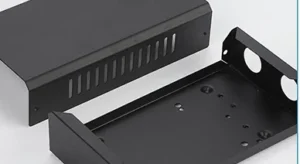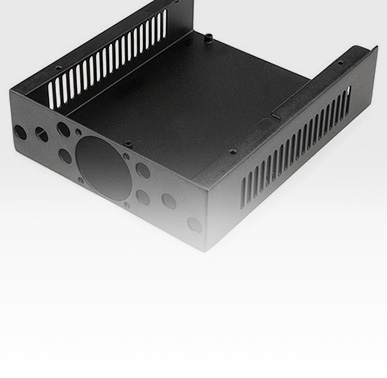
A sheet metal prototype can range from a simple laser-cut flat part to a bent, welded and finished assembly. For a usable quotation, send the production geometry, material and thickness, prototype quantity, critical tolerances, secondary operations, inspection requirements and required date. Cost and lead time depend on the complete delivered scope—not laser cutting alone.
Sheet metal prototyping helps engineering teams test fit, access, form, appearance and manufacturing decisions before committing to a larger batch. The objective is not always to reproduce every production detail on the first attempt. It is to build the right physical evidence for the next design decision.
What Counts as a Sheet Metal Prototype?
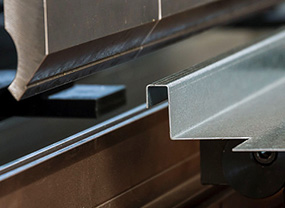
A one-off cut plate and a completed enclosure are not comparable quotations. Before contacting a supplier, define whether you need metal laser cutting only, CNC bending and folding, or a coordinated route that may include welding and assembly.
Define What the Prototype Must Prove
The same design may need different prototypes at different stages. A fit-check bracket does not automatically need the same finish, documentation and inspection as a production-intent qualification build.
| Prototype objective | Usually important | May be postponed if irrelevant |
|---|---|---|
| Fit and envelope | Production geometry, bends, mating features and assembly access | Final coating and non-critical cosmetic work |
| Functional test | Representative material, critical interfaces and load-sensitive geometry | Non-functional appearance details |
| Cosmetic review | Visible material, surface finish, grain direction, seams and edge condition | Some hidden internal details |
| Process validation | Production-intent route, measurement plan and controlled revision | Few critical operations can be omitted safely |
A faster prototype is not necessarily a better prototype. Remove only the operations that do not affect the question being tested. If coating changes fit, electrical contact, corrosion behaviour or friction, omitting it may make the test misleading.
Which Files Should You Send?
Flat laser-cut part
- DXF, DWG or another supplier-approved 2D production file;
- dimensioned PDF identifying critical dimensions and notes;
- material grade, nominal thickness and quantity;
- edge, deburring and finish requirements;
- matching part number and revision.
Bent sheet metal component
- STEP model or another agreed 3D solid format;
- dimensioned PDF with formed dimensions and bend intent;
- a flat pattern only when requested or approved by the supplier;
- material, thickness, alloy temper where applicable and surface direction;
- critical flange, hole and assembly relationships.
Welded or multi-part assembly
- top-level assembly model and drawing;
- individual part files and a bill of materials;
- weld locations, joining method, hardware and insert requirements;
- critical assembly datums, gaps and interfaces;
- finishing, masking, trial assembly and inspection requirements.
A DXF can describe a cutting path, but it normally does not define the complete formed or welded component. See our STEP vs IGES vs DXF guide and CAD file preparation guide for detailed export and file-quality checks.

Specify Material and Thickness Clearly
Descriptions such as “stainless steel,” “aluminium” or “16 gauge” are incomplete. A useful prototype RFQ identifies the grade or alloy, nominal thickness and relevant surface condition—for example, SS304 with a stated finish or 5052-H32 aluminium with a stated millimetre thickness.
Material substitution should be approved, even during prototyping. An alternative grade may allow a quick geometry check but may not represent stiffness, formability, weldability, corrosion resistance or final appearance. Where a legacy drawing uses gauge, use our sheet metal gauge chart as a reference and place the controlling millimetre thickness on the released drawing.
What Determines Sheet Metal Prototype Cost?
A single prototype still needs file review, programming, material handling and machine setup. These fixed activities are spread across fewer parts, so unit price normally falls when an identical approved part moves to repeat quantities.
| Cost component | What drives it | Information buyers should provide |
|---|---|---|
| Engineering and setup | File repair, DFM review, CAM, nesting, bend programming and first-piece checks | Controlled files and clear manufacturing intent |
| Material | Grade, thickness, minimum stock requirement, surface, certification and utilisation | Exact specification and whether substitution is allowed |
| Laser cutting | Cut length, pierces, small features, thickness, assist gas and edge requirement | Finished geometry and critical cut features |
| Bending | Number of bends, tooling access, sequence, part size and angle control | 3D model, bend direction and critical formed dimensions |
| Joining and hardware | Welding, fixtures, tapping, studs, inserts and trial assembly | BOM, joint details and mating requirements |
| Finishing | Deburring, brushing, polishing, passivation, anodising or coating | Visible faces, finish standard and masking |
| Inspection | Critical dimensions, reports, certificates, fixtures and third-party services | Acceptance criteria and evidence required |
| Delivery | Packaging, urgency, location, access window and collection arrangement | Required date and Singapore destination |
This guide does not provide a generic per-piece price because a flat blank, a multi-bend bracket and a welded enclosure have different delivered scopes. For cutting-specific quotation logic, read our laser cutting cost guide.
What Determines Prototype Lead Time?
Calendar time can be longer than laser machine time. Material sourcing, customer approval, multiple forming steps, welding fixtures, external finishing, inspection reports and delivery all sit on the critical path. Lumen Future’s logistics and lead-time page explains that schedules begin after drawing approval and must be confirmed for the actual job.
How to Reduce Cost Without Weakening the Test
- apply tight tolerances only to features that affect the prototype objective;
- postpone the final finish when it does not affect fit, function or the test;
- combine parts using the same approved material and thickness where practical;
- provide both prototype and expected repeat quantities for comparable quotations;
- use supplier-available material only after approving the exact substitution;
- avoid uncontrolled revisions after programming or production begins;
- define threads, inserts, welds, deburring and inspection before quotation.
How to Reduce Lead Time
- make the DXF, STEP, PDF and BOM revisions match;
- state material, thickness and finish without ambiguity;
- identify critical dimensions instead of requesting maximum precision everywhere;
- state whether alternative stock is permitted before the supplier quotes;
- respond promptly to DFM questions and approve changes in writing;
- confirm urgent capacity before placing the order;
- specify finishing, inspection and delivery requirements from the beginning.
How Many Prototype Parts Should You Order?
One piece may be sufficient for a simple envelope check, but it may be inadequate when two assemblies must be tested, a sample will be destroyed, several teams need parts or one approved reference must be retained. Base the quantity on the test plan rather than assuming that “prototype” always means one.
Inspection and the Feedback Loop
Supplier inspection commonly checks the released material, quantity, selected cut dimensions, bend direction, formed geometry, edges and visible surfaces. Customer evaluation checks the part in its real context: mounting, fastener access, connectors, cable paths, service clearance, appearance and function.
A prototype that reveals a design change can be successful because it prevents a larger incorrect batch. Production release still needs revision control, repeat-process planning and an appropriate inspection approach. See our laser cutting tolerance guide for drawing guidance.
Related case study
See how a representative laser-cut and bent equipment bracket moves through controlled files, DFM, cutting, deburring, bending and inspection before assembly evaluation.
Why Local Singapore Prototyping Can Help Iteration
Local fabrication can reduce cross-border transport and communication steps when a design needs repeated physical review. Same-time-zone DFM questions, local collection and direct delivery can make the feedback loop easier to coordinate.
It is not automatically the lowest-cost route for every part. Once a design is stable and production quantities increase, overseas or regional sourcing may deserve comparison. Evaluate landed cost, communication, inspection, rework and inventory—not unit price alone. Our local vs overseas fabrication guide provides a neutral framework.
Sheet metal prototype RFQ checklist
- Company and contact
- Delivery location
- Required date
- Prototype objective
- Part number and revision
- Prototype quantity
- Expected repeat quantity
- Material grade or alloy
- Thickness in mm
- Surface condition
- DXF or approved 2D file
- STEP model
- Dimensioned PDF
- Assembly and BOM
- Critical tolerances
- Bends and radii
- Threads and inserts
- Welding requirements
- Deburring and finish
- Inspection evidence
- Packaging
- Confidentiality requirement
Frequently Asked Questions
What files do I need for a sheet metal prototype?
For a flat part, an approved 2D production file plus a dimensioned PDF may be sufficient. Bent parts normally benefit from a STEP model and formed drawing. Assemblies also need individual part files, BOM and joining requirements.
How much does a sheet metal prototype cost in Singapore?
Cost depends on engineering setup, material, cutting, bending, welding, hardware, finishing, inspection, quantity and delivery. A complete file package is needed for a defensible quotation.
How long does sheet metal prototyping take?
Lead time depends on file readiness, material availability, process sequence, finishing, inspection and current capacity. Use the confirmed delivery date in the project quotation.
Can I order only one prototype part?
Some suitable projects can be made as a single piece. Consider whether assembly testing, destructive tests, simultaneous reviews, a retained reference or spares require more than one.
Do I need both DXF and STEP files?
A flat part may need only supplier-approved 2D geometry and a drawing. A bent or assembled component benefits from a 3D model because the flat file alone does not communicate the final form.
Should the prototype use the final production material?
Use production-intent material when alloy, strength, formability, corrosion, welding or appearance affects the test. A substitute may support an early geometry check only when its limitations are understood and approved.
Should the first prototype receive the final finish?
Include it when finish affects fit, corrosion, electrical contact, friction or cosmetic approval. It may be postponed for a fit-only prototype if that difference is recorded.
When should a prototype move to production?
After the test objectives are met, feedback is incorporated into controlled files, material and process are confirmed, and the production inspection and change-control approach is agreed.
Request a Sheet Metal Prototype Quote
Send your files, material, thickness, quantity, critical dimensions, process scope and required date. We can review open manufacturing questions and confirm a project-specific quotation and schedule.