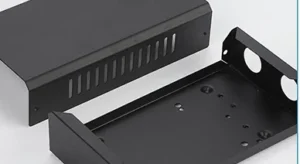
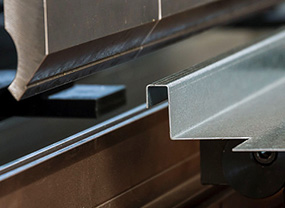
Stainless steel laser-cut quality depends on more than sheet thickness. Grade, actual thickness, surface finish, protective film, feature geometry, assist gas, laser setup and the required downstream process all affect the result. Nitrogen-assisted cutting is commonly selected when a bright, low-oxide edge is important, while other gas strategies may trade edge chemistry and appearance for productivity or cost. Buyers should specify the exact grade, thickness, cosmetic face, functional holes, edge condition and inspection stage instead of relying on one universal tolerance or maximum-thickness claim.
“Stainless steel, laser cut” is not a complete purchase specification. A brushed 304 control panel, a 316L food-equipment cover and a duplex marine bracket may share a 2D profile but require different material certificates, edge chemistry, surface protection and downstream fabrication. A part can be fully separated from the sheet and still be unsuitable for welding, passivation, cosmetic assembly or a precision locating function.
This guide explains how stainless grade, thickness, assist gas, hole geometry and surface finish influence tolerance and edge quality. It is intended for Singapore buyers sourcing panels, brackets, covers, machine parts, enclosures and other flat or subsequently formed components. For the service overview, see our metal cutting service.
What Stainless-Steel Buyers Should Specify
| Buyer decision | What must be specified | Why it matters |
|---|---|---|
| Stainless grade | 304/304L, 316/316L, 430, duplex or an exact standard designation | Corrosion, forming, welding, availability and material cost differ |
| Thickness | Nominal thickness and any functional thickness requirement | Changes speed, kerf, taper, dross and feature capability |
| Surface finish | 2B, BA, brushed, polished or another controlled finish | Affects appearance, protection, grain and handling |
| Protective film | Film type, protected side and removal instruction | Some films affect cutting, marking, heat and final cleanliness |
| Assist-gas outcome | Low-oxide edge, weld-prepared edge or qualified alternative | Gas strategy changes oxidation, appearance, cost and downstream work |
| Critical features | Locating holes, slots, tabs and datum edges | May need individual tolerance or secondary machining |
| Edge condition | As-cut, deburred, safe edge, weld-prepared or cosmetic | Determines post-processing and inspection |
| Inspection stage | As-cut or after bending, welding and finishing | Prevents conflicting acceptance results |
| Documentation | Material certificate, FAI, dimensional report or CoC | Evidence must be included in scope and price |
304, 316, 430 and Specialty Grades
304 and 304L
Common austenitic grades for equipment panels, covers, brackets, enclosures and general industrial parts. The lower-carbon 304L variant may be selected where the welding and corrosion design calls for it. It is not automatically superior for every cut-only component.
316 and 316L
Molybdenum-alloyed austenitic grades commonly selected for more demanding chloride, marine, food, pharmaceutical and process environments. Grade selection does not remove the need for good detailing, surface condition and cleaning.
430
A ferritic stainless grade used in selected indoor, appliance and decorative applications. Its corrosion, magnetic, forming and joining behaviour differs from 304 and 316, so it should not be treated as an unconditional low-cost substitute.
Duplex and specialty grades
Duplex, precipitation-hardening and heat-resistant grades require project-specific review. Do not copy a 304 process assumption to a different metallurgy without material and application checks.
Specify the standard designation and any required low-carbon suffix rather than a trade shorthand. If substitution is permitted, define who approves it and which corrosion, mechanical, welding and certification requirements the substitute must satisfy.
Choosing Stainless Steel for Singapore Conditions
Singapore projects may expose stainless parts to indoor humidity, coastal chlorides, cleaning chemicals, process liquids, food-contact routines or outdoor deposits. 316 or 316L can be a sensible starting point for some chloride-exposed applications, but it is not a guarantee against staining or localised corrosion. 304 remains widely used in appropriate indoor and general industrial conditions.
Long-term performance depends on the environment, grade, surface finish, crevice design, drainage, contamination and maintenance. A rough edge, trapped salt, embedded carbon-steel particles or an inaccessible joint can undermine a good alloy choice. worldstainless notes that inappropriate grade selection, fabrication, surface finish and cleaning can all contribute to tea staining and discolouration.
Typical Singapore project types include automation brackets, semiconductor-equipment panels, food-processing covers, laboratory fixtures, electronics enclosures, architectural panels, marine components and cleanroom equipment. These examples describe likely applications; the drawing and service environment still require individual review.
How Thickness Changes the Cutting Process
| Thickness condition | Typical process behaviour | Main quality risks | Buyer action |
|---|---|---|---|
| Thin relative to the process | Fast cutting and short thermal exposure | Small-part movement, heat-sensitive webs, sharp edges and sheet distortion | Identify delicate features and flatness requirements |
| Medium relative thickness | Stable production when grade, gas and parameters are qualified | Dross, lead-in marks, small-hole quality and taper | Define critical holes and final edge condition |
| Thick relative to the process | Slower melt removal, longer piercing and greater gas demand | Coarser striations, lower-edge dross, taper and heat accumulation | Approve a representative edge and critical features |
| Very thick or mechanically critical | Laser productivity and functional geometry may conflict | Wall angle, roughness, hole form and high rework cost | Compare machining, waterjet or another route |
“Thin” and “thick” are relative to the laser system, grade, part geometry, gas strategy and required edge quality. They are not universal millimetre limits. A maximum cut-through demonstration does not prove that every hole, taper, surface or tolerance remains acceptable at that thickness.
As thickness increases, buyers should expect the supplier to review cutting speed, pierce method, gas consumption, kerf, edge taper, striation pattern, lower-edge dross, hole quality, feature spacing and inspection. The design may remain laser-cuttable while a particular locating hole or weld edge needs a secondary operation.
Nitrogen, Oxygen and Other Gas Strategies
Nitrogen-assisted cutting
Nitrogen is commonly used as an inert assist gas for stainless steel. It helps eject molten metal without intentionally adding an oxidation reaction at the cut, supporting a bright, low-oxide edge. This can be valuable for visible parts, corrosion-sensitive service and components going to welding or finishing.
It is still inaccurate to call every nitrogen-cut edge perfectly oxide-free, burr-free or ready for every downstream operation. Gas purity, pressure, nozzle condition, focus, thickness, speed and material quality influence the result. As thickness increases, effective removal of molten material can require greater gas delivery and a narrower process window.
Oxygen-assisted or reactive cutting
Oxygen can contribute reaction heat and may change productivity or thickness capability on a given system. The trade-off is an oxidised and often discoloured edge. For corrosion, welding, coating, passivation or cosmetic requirements, that layer may need to be removed by a suitable qualified process.
Oxygen-assisted stainless cutting should not be described as universally prohibited. It should be selected only after the final edge requirement is understood. A hidden structural edge, a weld-prepared joint and a hygienic exposed edge may justify different routes.
Air and mixed-gas approaches
Some equipment uses compressed air or gas mixtures to balance productivity, gas cost, oxidation and burr. These are system-specific strategies. Buyers are usually better served by defining the required edge chemistry, appearance and downstream suitability, then allowing the supplier to propose a qualified process unless the gas itself is contractually controlled.
What Stainless-Steel Edge Quality Includes

Diagnosing Common Edge Conditions
| Edge condition | Possible causes | Buyer or process response |
|---|---|---|
| Heavy lower-edge dross | Speed, focus, gas flow, nozzle condition, material or thickness | Review process and define deburring acceptance |
| Coarse vertical striations | Parameter balance, thickness, focus or unstable melt removal | Approve a representative production edge |
| Strong taper | Beam delivery, focus, thickness or process limitation | Define wall requirement or machine the critical edge |
| Blue, brown or dark oxide | Reactive gas or oxygen exposure | Review corrosion, welding, cleaning and finishing needs |
| Heat mark around a small hole | Piercing and local heat accumulation | Increase feature size or use secondary drilling |
| Scratched decorative face | Handling, nesting, film, dirt or grain-direction error | Define cosmetic face, film and packaging |
| Incomplete cut or attached point | Process interruption, thickness variation, tab programming or contamination | Define inspection and rework rules |
| Sharp edge after cutting | Normal cut-edge condition | Add deburring or controlled edge-break requirement |
These are possible causes rather than one-to-one diagnoses. Increasing gas, reducing speed or moving focus may solve one symptom while worsening another. A process trial should review the complete feature, lower edge, surface and finished dimension.
Tolerance Must Be Reviewed by Feature
Stainless steel does not receive one tolerance merely because the material name is known. Overall size, hole diameter, hole position, slot width, taper and flatness are separate characteristics. Thickness, sheet stress, lower-edge dross, surface finish and deburring change how each is produced and measured.
| Feature | What buyers should specify |
|---|---|
| Overall profile | Finished size, general tolerance and inspection stage |
| Clearance hole | Diameter, acceptable taper, dross and fastener clearance |
| Locating hole | Position datum and whether secondary drilling or reaming is required |
| Slot | Mating tab, fit intent and measurement face |
| Cosmetic contour | Visible side, lead-in restriction and edge-appearance limit |
| Weld edge | Oxide, dross and weld-preparation requirement |
| Large thin panel | Flatness, support condition and packaging |
| Brushed panel | Grain direction, cosmetic face and protective film |
A machine’s positioning value is not a finished-part guarantee. The drawing should define functional features and inspection. See our laser cutting tolerances guide for Singapore buyers for datums, measurement planes, flatness and inspection planning.
Small Holes and Narrow Slots
A minimum-hole rule based only on material thickness is not universally reliable. Hole size, thickness, pierce method, gas, laser characteristics, surface finish and acceptance standard interact. A hole can be visibly open yet have taper, heat marks, lower-edge dross or insufficient roundness for location.
Classify features by function:
- Clearance opening: often suitable as laser cut when adequate fastener clearance is provided.
- Locating hole: may need position control and secondary drilling or reaming.
- Dowel or bearing bore: normally requires a machining process appropriate to fit and surface condition.
- Ventilation hole: appearance and open area may matter more than precision diameter.
- Narrow slot: evaluate taper, dross, corner geometry and mating-tab fit.
Do not tighten the whole part because one bore is critical. Laser cut the economical profile, then machine only the feature that requires a controlled cylindrical surface or precision fit.
Surface Finish, Grain and Protective Film
Stainless sheet may be supplied as 2B, bright annealed, brushed, polished, patterned or another surface. The finish affects appearance, availability, handling and downstream work. On a brushed panel, grain direction may need to align across multiple parts or follow the enclosure design.
Specify which face is cosmetic and whether small scratches, heat marks or film impressions are acceptable. Protective film reduces handling risk but does not make damage impossible. Film chemistry and condition may influence cutting, marking, smoke, heat and adhesive residue; the supplier must review whether it remains during processing.
For visible orders, include:
- Surface-finish designation and approved sample
- Grain direction shown on the nesting or drawing
- Cosmetic face and non-visible face
- Film removal or retention instruction
- Areas to be welded, engraved, brushed or polished
- Separator, corner-protection and packaging requirement
Corrosion Performance and Edge Treatment
Stainless steel relies on a chromium-rich passive surface for corrosion resistance. Oxidation, heat tint, roughness, embedded carbon-steel contamination and deposits can matter in aggressive service. Nitrogen laser cutting is often selected to reduce edge oxidation; IMOA’s austenitic stainless fabrication guidance notes that nitrogen prevents oxidation and associated loss of corrosion resistance during laser cutting.
That does not mean every nitrogen-cut edge is automatically approved for hygienic, pharmaceutical, marine or chemical service. Conversely, not every laser-cut stainless component needs pickling or passivation. The final environment, applicable standard, welding, surface contamination and cleaning plan determine whether grinding, pickling, passivation or another treatment is needed.
Plan the Next Fabrication Step
| Next process | Laser-cut edge question |
|---|---|
| Bending | Are holes and slots clear of bend-deformation zones, and is final geometry inspected after forming? |
| TIG or laser welding | Must oxide, dross, film or contamination be removed before joining? |
| Grinding or polishing | Will finished dimensions be measured after material removal? |
| Pickling or passivation | Is edge oxidation or fabrication contamination included in treatment scope? |
| Powder coating | Is the edge clean and suitable for the specified coating system? |
| Brushing | Must grain direction remain consistent across components? |
| Engraving or marking | Which face and location remain visible after forming and assembly? |
| Final assembly | Are locating holes laser cut or secondarily machined? |
For joined parts, compare laser welding and TIG welding for stainless steel. For safe edges and visible finishes, see our polishing and deburring guide. Formed parts should also be reviewed against CNC bending tolerance and springback.
What Drives Stainless-Steel Cutting Cost?
Material price is only one component. 316/316L, specialty grades and controlled finishes may cost more or have different stock availability. Nitrogen consumption, number of pierces, total cut length, small features, inspection, deburring and surface-protection requirements can dominate a low-volume order.
Stainless sheet + setup/programming + cutting time + assist gas + pierces + deburring/finishing + inspection/documentation + packagingCompare quotations using the same grade, thickness, finish, edge requirement, quantity and inspection scope. An illustrative market price is not a production quotation.Submit immediate quantity and forecast repeat volume. Nesting, material purchase and inspection planning differ between a prototype and a recurring production order. Our laser cutting cost guide explains the wider quotation structure.
A Practical Stainless-Steel RFQ Workflow
RFQ Checklist
Include these items
- Exact stainless grade
- Standard designation
- Approved substitutions
- Nominal thickness
- Surface finish
- Brushing or grain direction
- Protective-film instruction
- Cosmetic face
- Quantity
- Annual repeat volume
- DXF/STEP/PDF revision
- General tolerance
- Critical hole and slot tolerances
- Datums
- Measurement plane
- Flatness requirement
- Edge-taper requirement
- Burr and dross acceptance
- Edge-break requirement
- Assist-gas or outcome requirement
- Welding or bending
- Pickling/passivation scope
- Inspection method
- FAI or dimensional report
- Material certificate or CoC
- Part identification
- Packaging
- Singapore delivery address
Frequently Asked Questions
What stainless steel grades can be laser cut?
Many austenitic, ferritic, duplex and specialty grades can be processed, but grade, thickness, finish and quality requirements must be reviewed for the actual laser system.
Is 304 or 316 easier to laser cut?
Both are common laser-cut materials. The important procurement difference is normally application, availability, corrosion requirement and cost—not a universal claim that one always cuts better.
What is the maximum stainless-steel thickness?
There is no useful universal limit. Cut-through capability, acceptable edge quality, feature geometry and tolerance depend on the equipment and process. Confirm the drawing before quotation.
Why is nitrogen used for stainless steel?
Nitrogen ejects molten material while limiting intentional oxidation, helping produce a bright, low-oxide edge for suitable parts and downstream processes.
Can oxygen be used to cut stainless steel?
It can be used in selected processes, but forms an oxidised edge that may need removal for corrosion, welding, finishing or cosmetic requirements.
Is a nitrogen-cut edge completely oxide-free?
Do not assume so without an agreed acceptance method. Gas purity, process conditions and contamination affect the result.
What causes dross?
Possible factors include speed, focus, gas delivery, nozzle condition, material quality, thickness and geometry. Diagnosis should use the actual part.
Why do vertical lines appear on the edge?
Striations are a thermal-cutting texture influenced by melt flow, focus, speed, gas and thickness. Coarse waviness and fine regular lines should be evaluated differently.
Does thickness reduce tolerance?
Thickness changes kerf, taper, dross and feature behaviour, but part length, grade, geometry and inspection also matter. Tolerance should be reviewed by feature.
Can laser-cut holes locate pins?
Some may be suitable after qualification, but dowel and precision locating holes often need drilling or reaming to control size, position and cylindrical surface.
What is the minimum hole size?
It depends on thickness, grade, pierce, gas and acceptance criteria. Avoid a universal hole-to-thickness rule; submit the actual drawing for review.
Does laser cutting reduce corrosion resistance?
Edge oxidation, heat tint, roughness and contamination can matter. Nitrogen is commonly used to limit oxidation, while critical applications may require additional cleaning or treatment.
Does every cut edge need passivation?
No. The need depends on environment, edge chemistry, contamination, welding, applicable standards and customer requirements.
How should brushed stainless be specified?
State the finish, grain direction, cosmetic face, allowable marks, protective film and packaging. Use an approved sample for critical appearance.
Can protective film remain during cutting?
Only after the supplier reviews the film and process. Some films can affect heat, smoke, residue or marking.
Do laser-cut stainless parts need deburring?
Not every edge requires the same treatment. Add deburring when handling safety, assembly, welding or appearance requires it.
When should a cut feature be machined afterward?
Use secondary machining for precision bores, dowel holes, bearing fits, controlled faces or features whose taper and edge texture cannot meet function as cut.
Is 316 always better than 304 in Singapore?
No. 316 often improves resistance in chloride exposure, but grade selection depends on environment, finish, design, cleaning, cost and applicable requirements.
What files are required for quotation?
Send a clean DXF for 2D geometry, STEP for formed or assembly context and a controlled PDF for grade, thickness, finish, tolerances, datums and inspection.
How should cosmetic stainless parts be packaged?
Define film retention, separators, edge and corner protection, grain-face orientation and handling notes to prevent rubbing and scratches during local delivery.
Technical references
Need a Stainless-Steel Cutting Review?
Send the grade, thickness, finish, drawings, quantity, visible-face requirements and downstream process. Lumen Future can review the cutting route, edge condition and inspection scope before quotation.