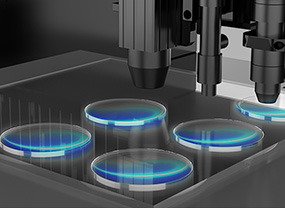
Sapphire is usually better when the part needs high hardness, scratch resistance and strong surface durability. Quartz is usually better when the part needs optical clarity, thermal stability and chemical resistance. Both materials are hard and brittle, so buyers should review thickness, edge quality, chipping risk, tolerance and final application before sapphire cutting or quartz cutting in Singapore.
Sapphire and quartz are both used in optical, semiconductor, sensor and precision engineering applications. They can look similar in some projects because both are clear, hard and used for high-value parts. However, they are not the same material, and they should not be selected only by appearance.
Sapphire is usually chosen when the part needs very high hardness, scratch resistance and wear resistance. Quartz is usually chosen when optical clarity, thermal stability and chemical resistance are more important.
For buyers in Singapore, the choice between sapphire and quartz often depends on the final use of the part. A sensor cover, optical window, semiconductor-related test part or laboratory component may need different material properties, different edge quality and different processing methods.
This guide explains the key differences between sapphire and quartz, when to choose each material, and what buyers should prepare before asking for sapphire cutting or quartz cutting in Singapore.
Key Takeaways
- Sapphire and quartz are both used for optical, semiconductor and sensor applications.
- Sapphire is harder and more scratch-resistant than quartz.
- Quartz is often chosen for optical clarity, thermal stability and chemical resistance.
- Both materials are brittle, so edge chipping and micro-cracks must be controlled.
- Laser cutting, laser scribing and grinding may be used depending on the part design.
- Buyers should provide material type, thickness, drawing file, edge quality requirement and final application before asking for a quote.
- For high-value optical or semiconductor-related parts, sample testing is recommended before batch production.
What Are Sapphire and Quartz Substrates?
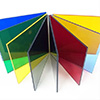
Sapphire and quartz are often used as substrates, windows, covers or small precision parts. In simple terms, a substrate is a base material used to support, protect or form part of an optical, sensor, electronic or engineering system.
Simple comparison before selecting a substrate
What Is Sapphire?
Sapphire is a crystalline form of aluminum oxide. It is very hard and has strong scratch resistance. This makes it useful when a part must stay clear and resist wear.
Sapphire is often used for:
- Optical windows
- Protective covers
- Sensor covers
- Wear-resistant transparent parts
- High-value engineering components
- Precision test parts
Sapphire is not usually chosen because it is the cheapest option. It is chosen when the application needs strong surface durability.
What Is Quartz?
Quartz is a silicon dioxide-based material. It is used in optical, thermal and chemical environments. Quartz is often chosen because it has good optical clarity, good thermal stability and strong chemical resistance.
Quartz is often used for:
- Optical substrates
- Laboratory components
- Sensor parts
- Semiconductor-related prototypes
- Transparent plates
- Parts used in heat or chemical exposure
Quartz is usually more practical than sapphire when extreme hardness is not the main requirement.
For a broader guide to hard glass and brittle materials, see Lumen Future’s guide to glass cutting for borosilicate, sapphire and MCG materials.
Sapphire vs Quartz: Key Material Differences
Sapphire and quartz are both used in high-value technical parts, but they solve different problems.
| Factor | Sapphire | Quartz |
|---|---|---|
| Main advantage | Very high hardness and scratch resistance | Optical clarity, thermal stability and chemical resistance |
| Common use | Protective windows, sensor covers, wear-resistant optical parts | Optical substrates, lab parts, semiconductor-related components |
| Hardness | Very high | Lower than sapphire |
| Scratch resistance | Excellent | Good, but lower than sapphire |
| Brittleness | Brittle and difficult to process | Brittle and can chip during processing |
| Edge risk | Chipping, micro-cracks and edge stress | Chipping, cracking and edge roughness |
| Processing difficulty | High | Medium to high |
| Cost tendency | Usually higher | Often lower than sapphire, depending on grade |
| Best for | Durability and scratch resistance | Optical, thermal and chemical stability |
Hardness, Brittleness and Chipping Risk
Hardness and Scratch Resistance
Hardness is one of the biggest differences between sapphire and quartz.
Sapphire is much harder than quartz. This means it is better when the part needs to resist scratches, wear or contact. If the part is used as a protective window or sensor cover, sapphire may be the better choice.
Quartz is not as hard as sapphire, but it can still work well in many optical and technical applications. If the part does not face heavy wear or frequent contact, quartz may be enough.
Surface durability matters most
The part may be scratched during use, protects a sensor or optical system, or must stay clear while resisting wear.
Optical or thermal needs matter most
Extreme hardness is not required, but optical clarity, thermal stability or chemical resistance is important.
Brittleness and Chipping Risk
Both sapphire and quartz are brittle. This means they can crack, chip or break if the design or process is not suitable.
Chipping is one of the most common problems when cutting hard brittle materials. Chipping means small pieces break away from the edge during cutting or separation. For ordinary parts, small chips may be acceptable. For optical parts, sensor parts or precision substrates, edge chips may cause problems.
Chipping can affect:
- Optical quality
- Assembly fit
- Sealing
- Handling safety
- Part strength
- Long-term reliability
- Appearance
Do not ask only, “Can this material be cut?”
A better question is: “Can this material be cut with the edge quality required for this application?”
Optical, Thermal and Chemical Requirements
Sapphire and quartz are often used because they can work in demanding environments. However, the reason for choosing each material may be different.
Optical Requirements
If the part must transmit light clearly, the optical requirement should be stated early. The buyer should explain whether the part is used as a window, cover, lens-related part, inspection component or sensor-facing surface.
Important details include:
- Which surface is the optical face
- Whether scratches are acceptable
- Whether edge chips are acceptable
- Whether the part will be coated
- Whether the part needs polishing
- Whether light transmission is critical
Thermal Requirements
Quartz is often chosen when thermal stability matters. Sapphire can also work in demanding conditions, but the right choice depends on the exact use case.
If the part will face heat, the buyer should describe the temperature environment instead of only naming the material.
Chemical Requirements
Quartz is often selected for chemical resistance. If the part will be used in a chemical environment, the buyer should explain what type of exposure is expected.
For high-value parts, material selection should be reviewed based on the actual application, not only a general material name.
When Should You Choose Sapphire?
Sapphire is usually a good choice when the part needs strength, surface durability and scratch resistance.
Sapphire may be suitable for:
- Protective optical windows
- Sensor covers
- Wear-resistant transparent parts
- High-durability optical components
- Precision engineering parts
- R&D samples that need a hard transparent surface
Sapphire is often selected when the part must protect an optical system, sensor or device while staying clear and resisting damage.
However, sapphire is also more difficult to process. Because it is very hard and brittle, edge chipping, micro-cracks and processing cost must be considered. If the design has very small holes, narrow slots or sharp corners, sample validation may be needed.
Sensor cover with high scratch risk
If a transparent sensor cover may face dust, contact, cleaning or abrasion, sapphire may be a better option than quartz because the surface is more resistant to scratching.
When Should You Choose Quartz?
Quartz is usually a good choice when the part needs optical clarity, thermal stability or chemical resistance.
Quartz may be suitable for:
- Optical substrates
- Laboratory parts
- Transparent plates
- Sensor-related parts
- Semiconductor-related prototypes
- High-temperature or chemical-exposure parts
- R&D samples
Quartz may be more practical than sapphire when the part does not need extreme scratch resistance. It can be a strong choice for optical, lab and semiconductor-related work.
However, quartz is still brittle. It can chip or crack if the cutting method, design or edge requirement is not suitable. Buyers should still review thickness, tolerance, edge quality and final use before production.
Optical or lab part where hardness is not the main need
If the part needs optical clarity and chemical resistance but will not face heavy wear, quartz may be a more practical option than sapphire.
Sapphire vs Quartz for Optical, Semiconductor and Sensor Applications
Sapphire and quartz are often used in similar industries, but the final application decides the better material.
Optical Windows
Optical windows protect an optical system while allowing light to pass through. Sapphire may be chosen when the window needs high scratch resistance or wear resistance. Quartz may be chosen when optical clarity, thermal stability or chemical resistance is more important.
For optical windows, buyers should specify:
- Material type
- Thickness
- Window size
- Optical face
- Edge quality
- Scratch requirement
- Whether polishing is needed
- Whether coating will be applied later
Sensor Covers
Sensor covers protect the sensor while allowing light, signals or inspection access. Sapphire is often used when the cover may face wear, dust, contact or cleaning. Quartz may be used when the cover needs optical clarity or chemical stability.
For sensor covers, surface scratches and edge chips may affect performance. The drawing should mark the critical surface clearly.
Semiconductor-Related Substrates
Sapphire and quartz may be used in semiconductor-related prototypes, test parts, carrier components, optical inspection fixtures or process development samples.
If a project needs formal semiconductor production controls, traceability, contamination control or special documentation, those requirements should be reviewed separately before production.
For general prototype and R&D work, the key points are usually:
- Thickness
- Flatness
- Edge quality
- Surface protection
- Chipping tolerance
- Dimensional tolerance
- Sample validation
Laboratory and R&D Components
Research teams may need small custom sapphire or quartz parts for testing. These parts may not be high-volume production parts, but they still need careful handling because the materials are brittle and costly.
Local processing support in Singapore can help when the project needs quick drawing review, small-batch cutting, sample testing and design changes.
Cutting, Scribing and Grinding Considerations
Sapphire and quartz can be processed in different ways. The right method depends on material type, thickness, geometry, tolerance, edge quality and final use.
For hard brittle materials, the processing method is just as important as the material choice.
Laser Cutting
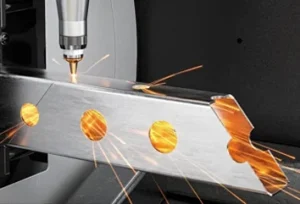
Laser cutting may be considered when the part geometry, thickness and material condition allow controlled separation. For hard brittle materials such as sapphire and quartz, laser cutting must be reviewed based on chipping risk, edge quality, micro-cracks and dimensional tolerance.
Laser cutting may be useful for:
- Custom shapes
- Small-batch parts
- Prototype substrates
- Optical windows
- Sensor covers
- Precision glass-related parts
However, not every sapphire or quartz part should be directly laser cut without review. If the part is thick, narrow, expensive or has strict edge quality requirements, sample testing is safer.
For process selection across different laser types, see Lumen Future’s guide to choosing the right laser process for different materials.
Laser Scribing
Laser scribing creates a controlled line or weakened path on the material. This can help guide separation. It may be used when direct full-depth cutting is not the best option for a brittle substrate.
Laser scribing may be considered for:
- Thin substrates
- Brittle materials
- Controlled breaking
- Small optical parts
- Wafer-like parts
- Parts where edge stress must be reduced
Laser scribing is not the same as full cutting. It is part of a controlled separation method. Buyers should ask whether scribing, cutting or another process is more suitable for the part.
Grinding and Edge Finishing
Grinding or edge finishing may be needed when the cut edge must meet stricter requirements for chipping, roughness, handling safety or assembly fit.
Edge finishing may help when:
- Edge chips are not acceptable
- The part must be handled safely
- The edge must fit into another component
- The optical part needs better edge quality
- The part will be sealed, mounted or assembled
Common Quality Challenges
Sapphire and quartz are high-value brittle materials. Their quality should be checked carefully after cutting, scribing or grinding.
| Challenge | What It Means | Why It Matters |
|---|---|---|
| Chipping | Small chips along the edge | Affects optical quality, fit and handling |
| Micro-cracks | Tiny cracks near the edge | May reduce reliability or cause later breakage |
| Edge roughness | Uneven or rough edge | Affects sealing, assembly and appearance |
| Dimensional error | Final size differs from drawing | Critical for optical or sensor assemblies |
| Surface scratches | Marks on the optical face | May affect optical performance |
| Breakage risk | Part cracks during processing | Higher risk for thin, narrow or complex shapes |
| Poor flatness | Part does not sit flat | May affect assembly or inspection |
The best way to reduce risk is to confirm the material, thickness, edge quality and final use before production.
Why Sample Validation Matters
Sample validation is important for sapphire and quartz because the material is brittle, costly and often used in high-value applications.
| Situation | Why It Matters |
|---|---|
| The material is expensive | A mistake can be costly |
| The part has tight tolerance | Size and edge quality must be checked |
| The part has small holes or narrow slots | Breakage or chipping risk may increase |
| Edge chips are not acceptable | Processing method must be tested |
| The part is used in optics or sensors | Surface and edge defects may affect performance |
| The quantity is high | Sample approval reduces production risk |
| The part will be assembled later | Fit and edge condition must be confirmed |
Check the actual part, not only the material name
- Confirm edge chips are within the accepted limit.
- Check micro-cracks near the edge under suitable light.
- Inspect the optical face for scratches or handling marks.
- Measure critical dimensions against the drawing.
- Confirm flatness if the part must sit in an assembly.
- Review the separation method if cutting or scribing marks affect the function.
Sample validation is not only about proving that sapphire or quartz can be cut. It is about confirming that the actual part, in the actual material and thickness, meets the required edge quality, tolerance and application needs.
What Buyers Should Prepare Before Requesting a Quote
A clear RFQ helps the supplier review sapphire or quartz cutting more accurately. Missing information can delay quotation because hard brittle materials need careful process review.
| Information to Provide | Why It Matters |
|---|---|
| Material type | Sapphire, quartz, fused quartz or other glass material |
| Thickness | Affects cutting, scribing and chipping risk |
| Drawing file | DXF/DWG for 2D profile; STEP if assembly review is needed |
| Quantity | Affects setup and sample testing plan |
| Edge requirement | Defines acceptable chipping or finishing |
| Optical face | Helps protect the critical surface from scratches |
| Tolerance | Important for optical and sensor assemblies |
| Application | Window, substrate, cover, fixture or R&D sample |
| Surface finish | Polished, ground, coated or raw surface |
| Sample validation need | Important for high-value or brittle parts |
If you are not sure whether your drawing is ready, see the guide on how to prepare CAD files for laser cutting and precision cutting.
Example RFQ Information
A strong sapphire or quartz cutting enquiry might look like this:
Thickness: 1.0 mm
Quantity: 10 pcs prototype
File: DXF attached, PDF drawing attached for dimensions
Application: Optical sensor cover
Critical surface: Front face must be protected from scratches
Edge requirement: Minor edge chips acceptable on non-visible side; no large chips
Tolerance: ±0.05 mm on outer size if feasible
Process: Supplier to advise laser cutting, laser scribing or grinding
Sample validation: Required before batch production
Delivery: Required in Singapore within 7–10 working days if feasible
This type of request helps the supplier understand the real project, not just the material name.
Sapphire and Quartz Processing in Singapore: Local Buyer Notes
For Singapore engineering teams, local sapphire and quartz processing support can be useful when a project needs drawing review, small-batch prototype cutting, sample validation and fast communication before final design approval.
Common Singapore Buyer Scenarios
Hard brittle materials are often used in projects where the material is expensive, the surface is important and the design may still change during development.
Optical Windows
Custom windows, covers and transparent parts where surface protection and edge quality matter.
Sensor Covers
Parts that protect a sensor while still allowing light, signals or inspection access.
Prototype Substrates
Small-batch sapphire or quartz samples for testing, validation and design changes.
Development Parts
Semiconductor-related prototypes, optical inspection parts and process development samples.
This is especially relevant for:
- Optics
- Sensors
- Semiconductor-related development
- Research laboratories
- Precision engineering
- Automation
- Medical technology development
- Inspection systems
- R&D projects
Local communication can help when:
- The drawing needs review
- The material is expensive
- The design may change
- The edge quality must be discussed
- The optical face must be protected
- Sample testing is needed before production
- The buyer needs local pickup, delivery or fast feedback
For hard brittle materials, supplier review is important. The project should not be evaluated only by size and thickness. The supplier should also understand edge quality, chipping risk, optical surface protection and final application.
Practical Quality Checklist
Use this checklist when reviewing sapphire or quartz samples.
| Quality Item | What to Check |
|---|---|
| Outer size | Matches the drawing |
| Edge chips | Within the accepted limit |
| Micro-cracks | No visible cracks near the edge |
| Surface scratches | Critical optical face is protected |
| Edge roughness | Acceptable for handling and assembly |
| Flatness | Suitable for the application |
| Hole or slot quality | No major cracks or chips |
| Breakage | No cracked or broken parts |
| Sample approval | Result is accepted before batch production |
For optical substrates, the critical surface should be checked under proper light. Small scratches or chips may not be obvious at first glance.
Frequently Asked Questions
What is the difference between sapphire and quartz?
Sapphire is much harder and more scratch-resistant. Quartz is often chosen for optical clarity, thermal stability and chemical resistance. The right choice depends on the final application.
Is sapphire harder than quartz?
Yes. Sapphire is much harder than quartz. This makes sapphire a strong choice for protective windows, sensor covers and parts that need high scratch resistance.
Is quartz better than sapphire for optical applications?
Quartz may be better when optical clarity, thermal stability or chemical resistance is more important than extreme scratch resistance. Sapphire may be better when the part needs high durability and strong surface protection.
Can sapphire be laser cut?
Sapphire may be processed by laser cutting, laser scribing or other methods depending on thickness, geometry, tolerance and edge quality. Because sapphire is hard and brittle, sample validation is recommended for high-value or strict-tolerance parts.
Can quartz be laser cut?
Quartz may be processed by laser cutting, laser scribing or grinding depending on the part design and quality requirement. The process should be reviewed based on thickness, edge quality, chipping risk and final application.
What is laser scribing for sapphire or quartz?
Laser scribing creates a controlled line or weakened path on the material. It may help guide separation when direct full-depth cutting is not the best option for a brittle substrate.
Why do sapphire and quartz chip during cutting?
Sapphire and quartz can chip because they are hard and brittle. Stress, heat, sharp corners, small features and unsuitable processing methods can increase chipping risk.
How can edge quality be improved?
Edge quality may be improved through better process selection, suitable design, controlled cutting or scribing, grinding, edge finishing and sample validation.
What file format should I send for sapphire or quartz cutting?
DXF or DWG files are useful for 2D profiles. A PDF drawing should be included for dimensions, tolerance and notes. If the part has assembly requirements, a STEP file may also help.
Is sample validation needed for sapphire and quartz parts?
Sample validation is recommended when the part is expensive, brittle, tight-tolerance, optical, sensor-related or semiconductor-related. It helps confirm edge quality, tolerance, chipping risk and processing method before batch production.
Related Guides
- Glass Cutting Singapore: Borosilicate, Sapphire & MCG Process Guide
- Fiber vs CO2 vs UV Laser: Choosing the Right Process for Your Material
- How to Prepare CAD Files for Laser Cutting
- Laser Cutting Services in Singapore: The Complete Buyer’s Guide
- Polishing & Deburring After Laser Cutting
Conclusion
Sapphire and quartz are both useful optical and engineering materials, but they are not interchangeable. Sapphire is usually chosen for high hardness, scratch resistance and wear resistance. Quartz is usually chosen for optical clarity, thermal stability and chemical resistance.
Both materials are hard and brittle, so the processing method matters. Laser cutting, laser scribing, grinding and edge finishing should be reviewed based on material type, thickness, geometry, edge quality, tolerance and final application.
Need Sapphire or Quartz Cutting in Singapore?
Send your drawing file, material type, thickness, quantity, edge quality requirement and application details to Lumen Future.
- Confirm material: sapphire, quartz, fused quartz or other hard brittle material.
- Clarify the critical surface: optical face, coating side, scratch-sensitive surface or assembly side.
- Review the process: laser cutting, laser scribing, grinding or sample validation may be needed.