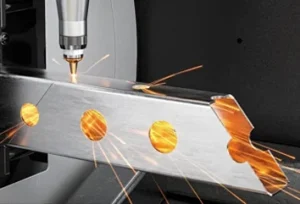
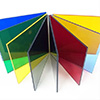
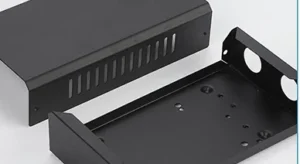
Laser cutting in Singapore typically starts at S$20–S$50 as a minimum charge, with simple metal parts ranging from S$5–S$20 per square decimetre, and per-minute machine time for non-metals running around S$3–S$4.50 per minute. The biggest cost drivers are material grade, thickness, total cutting length, batch size, and post-processing. Specialty materials (sapphire, PI film, titanium) and tight-tolerance parts sit above these ranges. Always compare quotes on the same scope — “cutting only” and “cutting + bending + inspection” are very different numbers.
A buyer recently sent us the same DXF — a 2mm stainless steel control panel, quantity 50 — and asked three Singapore suppliers to quote. The numbers came back at S$380, S$620, and S$1,150. Same drawing, same material, same quantity. The cheapest wasn’t the worst, and the most expensive wasn’t a rip-off. They were just quoting different scopes.
If you’re trying to budget a laser cutting project in Singapore, the hardest part isn’t finding suppliers — it’s understanding why their numbers look so different. This article gives you the real price anchors, the seven factors that move them, three worked examples, and the five traps that turn a “cheap” quote into an expensive one.
If you haven’t already read our complete laser cutting buyer’s guide for Singapore, that’s the right starting point for process and supplier basics. This piece focuses on one question: how much should you actually expect to pay?
The Short Answer: Singapore Laser Cutting Price Ranges in 2026
Singapore laser cutting prices fall into three rough bands depending on what you’re cutting. Here’s the market-level snapshot — actual quotes from suppliers will vary, but this is the territory you’re working in:
| Service Category | Minimum Charge | Typical Range | Pricing Basis |
|---|---|---|---|
| Acrylic, wood, fabric cutting | S$20–S$35 | S$3–S$4.50 / minute | Per machine minute |
| Metal sheet cutting (mild steel, stainless, aluminium) | S$35–S$80 | S$5–S$20 / dm² | Per piece or per area |
| Reflective metals (brass, copper) | S$50+ | +30–50% over mild steel | Per piece |
| Specialty materials (sapphire, glass, PI film, titanium) | Project-based quote | Higher — varies widely | Per project |
| Multi-process orders (cut + bend + weld + finish) | S$100+ | S$15–S$50 / piece typical | Per piece, all-in |
Two important caveats. First, these reflect general market behaviour as of 2026, drawing on public price lists from Singapore service providers — not a guaranteed quote for any specific job. Second, “S$15 per piece” can mean anything from a simple bracket to a complex multi-bend assembly. Material, thickness, and finishing change the number more than you’d expect.
The 7 Factors That Determine Your Final Price
Every quote you receive is built from these seven inputs. Suppliers weight them differently, which is why three quotes for the same part can land 3× apart.
1. Material Type & Grade
The biggest single variable. Stainless steel 316 costs roughly 30–40% more than 304. Sapphire costs orders of magnitude more than acrylic. Reflective metals (copper, brass) need slower cutting and more nitrogen — both push price up.
2. Thickness
Cost rises faster than thickness. Going from 2mm to 10mm stainless steel doesn’t double the price — it can quadruple it, because slower cutting speed eats more machine time per metre.
3. Total Cutting Length & Pierce Count
This is the factor most buyers miss. A part with 10 holes pays more than a part with 1 hole of the same area, because every hole needs a separate pierce (the moment the laser punches into the sheet). Intricate designs with hundreds of internal cutouts can cost 2–3× more than simple outlines.
4. Quantity (Setup Amortisation)
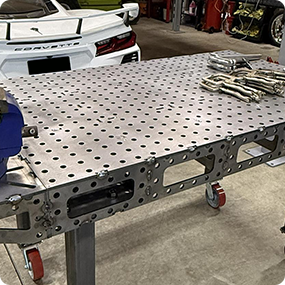
Setup time — programming, nesting, loading — is fixed per job. Spreading it across 1 piece versus 100 makes a huge difference in per-piece cost. This is why prototype quotes look “expensive” and bulk quotes feel “cheap.”
5. Tolerance & Edge Quality
Standard ISO 2768-m is built into the default rate. Asking for ±0.05mm, mirror-finish edges, or zero-burr requirements means slower cutting, more inspection, and a higher quote.
6. Post-Processing Chain
Where hidden costs live. Each additional step — deburring, bending, tapping, welding, polishing, surface treatment — adds material, labour, and queue time. Post-processing can easily exceed the cutting cost itself on finished parts.
7. Urgency
Standard turnaround in Singapore is 24–48 hours. Same-day or overnight orders typically carry a 20–50% surcharge because they jump the production queue and may push machine operators into overtime.
Laser Cutting Price by Material: Singapore Reference Rates
Below are typical price bands by material as observed across the Singapore market in 2026. These are reference ranges, not quotes — your actual price depends on the seven factors above.
Mild Steel / Carbon Steel
The cheapest mainstream metal to laser cut. Standard sheets are widely stocked. Expect S$5–S$12 per dm² for thin sheets (0.5–3mm), rising to S$15–S$30 per dm² for 6–10mm plates. Beyond 12mm, cost climbs steeply as cutting speeds drop.
Stainless Steel 304 vs 316
304 typically runs S$10–S$20 per dm² in 1–3mm thickness with nitrogen cutting. 316 sits 30–40% higher because of higher base material cost. For marine and food-grade parts, the upcharge is unavoidable. See our guide on stainless steel 304 vs 316 for Singapore environments.
Aluminium (5052, 6061)
Aluminium is highly reflective and requires high-power fiber lasers with nitrogen assist for clean edges. Expect S$8–S$18 per dm² for 1–5mm sheets. Common for drone frames, automation parts, and heat sinks.
Brass & Copper (Reflective Metals)
The most expensive of the common metals to cut, because the laser energy partly reflects back into the optics — requiring slower speeds and special handling. Add 30–50% over stainless steel as a rule of thumb.
Acrylic & Wood (Non-metals)
Usually priced per machine minute. CO₂ lasers cut these cleanly at S$3–S$4.50 per minute for 60–100W machines. A small acrylic signage piece often costs S$20–S$60 total including material.
PI Film, Glass, Sapphire & Other Specialty Materials
These require UV cold-processing lasers and are quoted per project, not per minute or dm². Cost depends heavily on material grade and tolerance — PI film for FPC outlines, for instance, typically requires zero heat-affected zone and is priced accordingly. See our PI film cutting service for project-based quotation.
How Laser Cutting Is Actually Quoted: 3 Pricing Models
Different suppliers use different quotation logic. Knowing which model you’re being quoted on lets you compare numbers correctly.
Model 1: Per-Minute Machine Time
Common for CO₂ laser shops handling acrylic, wood, and prototyping work. The supplier estimates how long the machine will run your job and multiplies by an hourly rate.
- Typical Singapore rates: S$3 per minute (60W CO₂), S$4.50 per minute (100W CO₂)
- Student/maker rates: as low as S$2 per minute at some shops
- Minimum charge: usually S$20–S$35 per job
Best for: small one-off projects, signage, prototypes, hobbyists.
Model 2: Per-Piece Quotation
The most common model for metal custom parts. Supplier reviews your DXF, calculates cutting time + material + post-processing, and gives you a single per-piece price.
- Simple metal brackets: S$5–S$15 per piece
- Medium-complexity panels with bending: S$15–S$50 per piece
- Complex assemblies with welding and finishing: S$80–S$500+ per piece
Best for: production runs, repeat orders, fully-finished parts.
Model 3: Per-Sheet or Per-Area (dm² / m²)
Used for medium-to-high volume sheet metal work, especially when buyers supply their own nesting layout.
- Mild steel: S$5–S$15 per dm²
- Stainless steel: S$10–S$25 per dm²
- Aluminium: S$8–S$20 per dm²
Best for: high-volume cutting work, contract manufacturers with their own engineering team.
Real Quote Examples: 3 Singapore Project Walkthroughs
Here are three illustrative project quotes that show how the math actually works. Numbers are realistic market estimates for 2026, not specific supplier prices.
A4-sized acrylic event signage × 10 pieces
| Line Item | Estimated Cost |
|---|---|
| 3mm clear acrylic sheet (210 × 297mm × 10 pcs) | S$18 |
| Cutting time (≈ 8 min total) | S$28 |
| Setup & file check | Included |
| Total | S$46 (≈ S$4.60 per piece) |
Same job at quantity 1: minimum charge applies (~S$35), per-piece cost is ~7× higher.
SS304 electrical control panel × 50 pieces (200 × 300mm, 1.5mm, with bending)
| Line Item | Estimated Cost |
|---|---|
| SS304 1.5mm sheet material | S$280 |
| Laser cutting + nitrogen assist | S$220 |
| CNC bending (4 bends per panel) | S$160 |
| Deburring + edge finishing | S$80 |
| Inspection + packaging | S$40 |
| Total | S$780 (≈ S$15.60 per piece) |
If quoted “cutting only”: ~S$500. The S$280 difference is post-processing — easy to miss when comparing supplier quotes.
Titanium Grade 5 medical bracket × 5 pieces (with CMM inspection)
| Line Item | Estimated Cost |
|---|---|
| Titanium Gr5 raw material (2mm) | S$420 |
| Fiber laser cutting (slow, controlled atmosphere) | S$380 |
| Deburring + passivation | S$180 |
| CMM dimensional inspection + report | S$200 |
| Material certificate + traceability | S$70 |
| Total | S$1,250 (S$250 per piece) |
Low quantity + exotic material + full inspection = highest per-piece cost band. This is common for medical, semiconductor, and aerospace prototypes.
5 Pricing Traps to Avoid
The cheapest quote isn’t always the cheapest project. These are the five most common pitfalls buyers in Singapore run into.
The “Cutting Only” Quote
Supplier A quotes S$400 “for laser cutting.” Supplier B quotes S$650 for “laser cutting + bending + deburring + delivery.” The numbers aren’t comparable. Always confirm the exact scope before ranking by price.
Hidden Minimum Charge
You upload a tiny part expecting a S$5 quote and get charged S$35. Most Singapore suppliers apply a minimum charge of S$20–S$80 per job to cover setup. Ask upfront — it makes prototype budgeting much cleaner.
Material Mark-up Surprise
“Stainless steel” can mean a generic Chinese sheet or a European mill-certified plate at 2× the price. If your application doesn’t require a specific origin, ask whether the supplier can use their default stock — it’s often significantly cheaper.
Urgency Surcharge Not Quoted Up Front
“Can you do it by tomorrow?” can add 20–50% to the bill. Some suppliers absorb urgency into normal pricing if capacity allows; others charge a clearly marked surcharge. Either way, confirm it before you say yes.
Documentation as Optional Extra
Mill certificates, material test reports, first-article inspection reports, dimensional inspection sheets — none of these are typically included in a default quote. If your industry requires them (marine, medical, aerospace), specify upfront and ask for the documentation cost separately.
How to Estimate Your Project Cost in 60 Seconds
You can do a rough back-of-envelope estimate before contacting any supplier. Here’s the simplified formula:
| Step | What to Calculate |
|---|---|
| 1. Material cost | (Sheet area × material price per dm²) + 15% nesting waste buffer |
| 2. Cutting cost | Total cutting length × per-metre rate (S$0.50–S$2/m for thin sheets) |
| 3. Setup fee | S$30–S$80 fixed (spread across all pieces in the order) |
| 4. Post-processing | Add 30–80% on top of cutting cost if bending, welding, or finishing is required |
| 5. Margin | 10–15% supplier overhead |
A faster mental shortcut for simple metal parts:
- Simple bracket, 1–3mm, quantity 50+: ~S$5–S$15 per piece
- Medium panel with bending, 1–3mm, quantity 20–50: ~S$15–S$50 per piece
- Complex assembly with welding/finishing: S$80+ per piece
- One-off prototype: Whatever the math says, add S$35 minimum charge
This won’t replace a real quote — but it’ll tell you whether the quote you receive is in the right zip code.
When Cheap Quotes Are Actually Expensive
Three real ways a low quote ends up costing more than a fair one:
Rework loops. A supplier without proper file review accepts your DXF with errors, cuts wrong parts, and you discover it at QC. Reorder cost + delivery delay easily wipes out the original “savings.”
Late delivery on a tight project. If your assembly line depends on the parts arriving Monday and they arrive Friday, the downstream cost (idle labour, missed deadlines, customer penalty) typically dwarfs any unit-price difference.
Hidden post-processing. Cutting-only quotes look attractive until you realise the parts arrive with burrs, oxide edges, or no surface finish — and you now need to coordinate a second supplier for deburring and finishing. By the time the parts are usable, you’ve paid more than the all-in quote you initially rejected.
The right question isn’t “what’s the cheapest quote?” — it’s “what’s the total cost to get usable parts on my workbench, on time?”
How to Get the Most Accurate Quote in 24 Hours
Suppliers can only quote as well as the information they’re given. Five things to include in your request:
- A clean DXF or STEP file — closed contours, correct units, no duplicate lines. See our CAD file checklist for accurate quotes for details.
- Material grade and thickness — “stainless steel” isn’t enough; specify SS304 or SS316, 1.5mm or 3mm.
- Quantity — both immediate and projected. Suppliers price differently for 10 pieces vs 10 pieces × 10 reorders.
- Tolerance and finish requirements — ISO 2768-m by default, tighter only if needed. Mill finish, brushed, or deburred edges.
- Delivery expectations — destination, deadline, packaging requirements.
With this information, most Singapore suppliers — including us — can return a firm quote within 24 hours. Without it, you’ll get a “starting from” placeholder and a list of follow-up questions.
Frequently Asked Questions
What is the minimum charge for laser cutting in Singapore?
Most Singapore laser cutting suppliers apply a minimum charge of S$20–S$80 per job. This covers setup time (programming, nesting, loading) regardless of how small the part is. For a one-piece prototype, the minimum charge often dominates the total cost.
Is laser cutting priced per piece or per hour?
It depends on the supplier and the work type. CO₂ laser shops handling acrylic and wood often charge per machine minute (S$3–S$4.50/min). Fiber laser shops handling metal custom parts usually quote per piece, factoring in cutting time, material, and post-processing into a single price.
Why is stainless steel laser cutting more expensive than mild steel?
Three reasons: stainless steel raw material costs more, cutting requires nitrogen gas (more expensive than oxygen), and cutting speed is slower due to higher thermal conductivity. Expect SS304 to cost roughly 1.5–2× the price of mild steel for the same part, and SS316 another 30–40% above SS304.
Do suppliers charge extra for nitrogen vs oxygen cutting?
Often yes. Nitrogen produces a clean, oxide-free edge but costs significantly more than oxygen or compressed air. For mild steel where edge aesthetics don’t matter, oxygen cutting is cheaper. For stainless steel, aluminium, and anything requiring a clean edge, nitrogen is standard.
Are there student or maker discounts for laser cutting in Singapore?
Some shops focused on hobbyists and schools offer student rates as low as S$2 per machine minute for CO₂ cutting of non-metals. These are typically for acrylic, wood, and similar materials — not for industrial metal work. Always ask, and bring proof of student status.
How much extra does same-day or urgent laser cutting cost?
Urgency surcharges in Singapore typically range from 20–50% above standard pricing, depending on how much it disrupts the supplier’s production schedule. Some suppliers offer 8-hour turnaround on simple parts with no surcharge if capacity is available; others apply rush fees consistently. Confirm the policy when you request the quote.
Get a Transparent Quote in 24 Hours
Three takeaways from this guide:
- Compare quotes on identical scope — cutting-only vs all-in pricing are different worlds.
- Ask about minimum charges, urgency fees, and documentation costs upfront — these are the most common surprise line items.
- A clean DXF with full spec gets you a real quote in 24 hours — anything less gets you a placeholder.