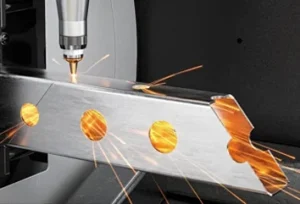
Laser engraving cost in Singapore does not come from one universal price per character or square centimetre. A practical quotation normally combines one-time setup, artwork or data preparation, fixture requirements, marking time, part handling, inspection and delivery. Material, surface condition, mark depth, quantity and the number of unique codes determine which of those elements dominates the final price.
A small logo on one finished component and a production batch of serialised Data Matrix codes are both called laser engraving, but their cost structures are very different. The first order may be driven by setup and safe handling. The second may benefit from automated processing while adding data control, duplicate prevention and scan verification.
This buyer’s guide explains the factors that should appear in a laser engraving quotation, how quantity changes unit cost and what information Singapore buyers should send before requesting a price. For process capabilities and material examples, see our laser engraving service in Singapore.
What Is Included in a Laser Engraving Quote?
A useful quote separates costs that occur once from those that repeat for every accepted part. This makes supplier comparisons clearer and helps buyers understand why a prototype has a higher unit cost than a repeat production batch.
Total job cost = setup and engineering + artwork or data preparation + fixture or tooling + marking time + handling + inspection + packing and deliveryUnit cost is the total job cost divided by the accepted quantity. For customer-supplied or high-value parts, define the trial-piece and spare-part arrangement before production.
Illustrative cost stack only. The proportions change for every project and are not a published price list.
| Quote element | What it may include | How it is commonly applied |
|---|---|---|
| Engineering and setup | Drawing review, process selection, parameter development and first-off sample | Usually once per new job or major revision |
| Artwork preparation | Vector cleanup, font conversion, code generation or low-resolution logo redrawing | Once per artwork version |
| Fixture or tooling | Part locator, multi-up nest, rotary holding or vision-assisted alignment | One-time, amortised or reusable for repeats |
| Marking cycle | Laser processing for the specified mark, depth and number of locations | Per part or production cycle |
| Handling | Loading, unloading, focusing, repositioning and cosmetic-surface protection | Per part or batch |
| Variable-data control | CSV import, serial rules, duplicate checks and production reconciliation | Per batch and sometimes per part |
| Inspection | First article, visual check, code decoding or specified verification | Sampling or 100% inspection |
| Logistics | Protective packing, local delivery or self-collection arrangement | Per shipment |
1. Material and Surface Condition
Material affects the laser source, parameter window, achievable contrast and processing time. Surface condition can be equally important. Bare stainless steel, anodised aluminium, powder-coated steel and polished brass should not be treated as interchangeable simply because each is a metal part.
| Material or surface | Typical cost consideration | Information to provide |
|---|---|---|
| Stainless steel | Surface marking, annealing and material-removal engraving have different cycle and heat requirements | Grade, finish, desired contrast and whether material removal is allowed |
| Bare aluminium | Alloy and surface texture influence appearance; deep removal adds passes and cleaning | Alloy, temper if relevant, finish and target result |
| Anodised aluminium | Marking may remove or modify the anodised layer; cosmetic consistency should be agreed | Anodise colour, thickness if known and approved sample |
| Painted or powder-coated metal | Coating removal depends on coating type and thickness; the exposed substrate may need protection | Coating specification, colour and downstream environment |
| Brass and copper | Reflective surfaces and appearance requirements can require trials and careful parameter selection | Alloy, surface finish, mark type and acceptable colour |
| Engineering plastic | Polymer formulation and additives affect contrast, melting and residue | Exact resin grade, colour and sample material |
| Acrylic, wood and organics | Material variation, smoke residue and edge appearance influence setup and cleaning | Material type, thickness, finish and visual reference |
The broader differences between laser interaction with metal and non-metal materials are covered in our metal versus non-metal laser engraving guide. If the material grade or coating is uncertain, a representative sample is more useful than selecting parameters from a generic material name.
2. Surface Marking, Coating Removal or Deep Engraving
The word “engraving” is frequently used for several different effects. Surface colour change, coating removal, shallow material removal and deep engraving do not have the same processing time. Before comparing prices, determine which result the part actually needs.
| Process result | Main cost driver | When it may be appropriate |
|---|---|---|
| Surface mark | Contrast, feature density and parameter stability | Identification where a recessed groove is unnecessary |
| Annealed mark | Heat control, focus and required appearance | Dark marking on compatible stainless surfaces where minimal removal is preferred |
| Coating removal | Coating thickness, colour consistency and exposed substrate | Panels, legends and anodised or coated nameplates |
| Shallow engraving | Material-removal volume, fill density and edge requirement | Permanent text, logos or paint-filled features |
| Deep engraving | Multiple passes, heat, debris removal and depth inspection | Wear-prone tooling or intentionally recessed features |
Deep engraving generally requires more processing than a surface mark, but no universal multiplier applies. Material, feature width, target depth and permitted surface condition all matter. Our guide to engraving depth, tolerance and readability explains how to specify only the controls needed for the part’s function.
3. Mark Size, Fill Density and Number of Locations
Mark area alone is a poor pricing measure. A large outline can require less laser time than a smaller logo with dense hatch fill. Fine text, photographs, multiple fields and tightly packed code modules can also increase scanning or validation effort.
- Outline versus solid fill: a filled logo usually requires more scan lines than its outline.
- Feature density: small text or detailed graphics may require slower, controlled processing.
- Multiple locations: front, rear and side markings may require refocusing or repositioning.
- Mark orientation: a mark tied to a datum or connector location needs repeatable part alignment.
- Code size: a small Data Matrix may add validation effort even when its physical area is small.
4. How Quantity Changes the Unit Cost
Quantity affects cost because one-time work can be spread across more accepted parts. A new program, sample approval and fixture may be necessary for one component and for one thousand components. However, loading, marking and inspection still repeat throughout production.
Indicative unit cost = one-time setup / accepted quantity + variable processing cost per accepted partThe variable cost may change at volume when a multi-part fixture, automated data flow, different sampling plan or additional production control becomes appropriate.
Ask suppliers to provide quantity breaks using the same drawing revision, artwork and inspection scope. This creates a meaningful comparison between prototype, pilot and production quantities without assuming that the lowest apparent unit rate covers the same work.
5. Artwork and Variable-Data Preparation
Production-ready vector artwork normally requires less preparation than a screenshot or low-resolution logo. Text should use agreed fonts or be converted to outlines. For unique identifiers, the customer should define the source data, format, sequence rules and treatment of rejected parts.
A batch of identical logos is not cost-equivalent to a batch in which every part has different content. Read our guide to permanent QR Code, Data Matrix and serial number laser marking for data and verification planning.
6. Part Geometry, Fixtures and Handling
Simple flat plates are normally easier to locate and keep in focus than curved, assembled or irregular parts. The correct fixture can reduce handling time and improve repeatability, but fixture design and manufacture are themselves part of the quotation.
- A basic edge locator may be sufficient for a flat nameplate.
- Multiple parts may be loaded into a batch fixture when geometry and traceability permit.
- Cylindrical or circumferential marks may require a rotary arrangement.
- Bent enclosures can require supports so the marking plane remains stable.
- Heavy parts add loading considerations, while delicate cosmetic surfaces require protection.
- A recessed or obstructed marking location may restrict beam access or the usable field.
Tell the supplier whether the same part will repeat. A reusable fixture can make sense for recurring orders even when a simpler temporary locator would be cheaper for a one-off prototype.
7. Customer-Supplied Parts and Production Risk
Finished customer-supplied parts need a clear trial and acceptance plan. A replacement blank may be inexpensive, while a completed machined, coated or assembled component can carry substantial upstream value. That difference affects handling, sampling and responsibility for nonconforming results.
Before production, agree on the incoming condition, approved artwork, marking position, cosmetic standard, trial piece or coupon, spare quantity and treatment of rejected identifiers. Where possible, use a representative sample with the same material and finish before marking the production lot.
8. Inspection, Readability and Documentation
Inspection scope can range from a visual first-off confirmation to 100% code verification. These are not equivalent. A reader successfully decoding a symbol confirms that the content can be read under that condition; it does not automatically prove a specified symbol quality grade or a complete traceability system.
| Inspection level | What it checks | Cost implication |
|---|---|---|
| First-off visual approval | Artwork, position, general contrast and appearance | Primarily setup-stage effort |
| Sample inspection | Defined attributes on selected parts | Depends on sample size and records |
| 100% text or serial check | Presence and correctness of every identifier | Adds per-part or automated control time |
| 100% code decoding | Whether each code can be decoded with the agreed reader setup | Adds scanning and reconciliation |
| Formal verification | Specified symbol-quality metrics using agreed equipment and method | Requires explicit scope and reporting |
| Depth or position measurement | Specified physical geometry relative to an agreed method or datum | Depends on tolerance and measurement method |
Request certificates or formal reports only when the application requires them, and define the report content before ordering. Our quality assurance page explains the importance of agreeing inspection scope rather than assuming every report is included by default.
9. Four Typical Cost Scenarios
The examples below show how cost drivers change. They intentionally do not use invented Singapore dollar amounts.
One flat stainless tag
A fixed logo on one part is likely to be setup-dominated. Material confirmation and first-off appearance matter more than automation.
100 identical aluminium panels
Setup can be distributed across the batch. A multi-part locator may reduce loading time if panel geometry is consistent.
1,000 unique Data Matrix codes
Unit setup cost falls, but source-data validation, part-to-record control and the agreed scan plan remain important.
Finished curved components
Safe handling, a representative trial, rotary or custom holding and surface protection can dominate the quotation.
10. How to Compare Laser Engraving Quotes
Place competing quotes into the same landed-cost framework. Confirm that every supplier has priced the same revision, quantity, mark process, inspection level and delivery scope.
| Comparison item | Question to ask | Why it matters |
|---|---|---|
| Setup or NRE | Is new-job engineering included, and will it repeat on future orders? | Affects prototypes and repeat-order economics |
| Fixture | Is the fixture included, reusable and owned by whom? | Changes first-order and repeat-order cost |
| Artwork | Is vector cleanup or code generation included? | Prevents unexpected preparation charges |
| Variable data | What validation and reconciliation are included? | Reduces duplicate, skipped or mismatched records |
| Inspection | Is inspection visual, decoding, sampling or formal verification? | Similar wording can hide different scopes |
| Customer-part risk | How are trial parts, spares and rejected parts handled? | Important for high-value finished components |
| Logistics | Are packing, Singapore delivery, taxes and payment terms included? | Determines the actual landed cost |
If engraving is combined with profiling or fabrication, compare the full manufacturing route instead of isolating only the marking operation. Our laser cutting cost guide and guide to reading a manufacturing quotation explain related cost and quotation items.
How Singapore Buyers Can Get an Accurate Quote
Local enquiries range from replacement equipment tags and automation panels to semiconductor equipment parts, marine identification plates and customised corporate items. Location alone does not determine price. A clear data package allows the supplier to plan processing, inspection, packing and local delivery without adding avoidable uncertainty.
Laser engraving RFQ checklist
- Material and exact grade
- Surface finish or coating
- Customer-supplied part or supplied blank
- Overall dimensions and weight
- Mark location and number of locations
- Vector artwork or drawing revision
- Fixed text or variable data
- CSV structure and serial rules
- Mark dimensions and orientation
- Surface mark, anneal, coating removal or depth
- Cosmetic and heat-sensitivity limits
- Prototype and production quantities
- Expected repeat-order volume
- Inspection or scan requirement
- Required records or reports
- Trial-piece and spare quantity
- Packing and protection needs
- Singapore delivery address and required date
Lead time and minimum-order requirements depend on current capacity, part condition, quantity and inspection scope. For urgent work, send the complete package and state the required delivery date rather than assuming a universal same-day service.
Frequently Asked Questions
How much does laser engraving cost in Singapore?
There is no reliable universal price without the material, finish, quantity, mark content, geometry and inspection scope. A quotation normally combines one-time setup with per-part marking, handling and inspection, plus any fixture, packing and delivery requirements.
Is there a setup fee for laser engraving?
New work may require drawing review, artwork preparation, process development, a first-off sample and fixture setup. Whether those items are combined or listed separately depends on the supplier, so compare the total scope rather than one line item.
Does a larger quantity reduce the unit price?
It can distribute one-time costs across more parts and may justify more efficient fixtures. However, loading, marking, data control and inspection still create variable cost, so the reduction is not automatically linear.
Is deep engraving more expensive than surface marking?
Deep engraving often requires more material removal, passes, heat control and cleaning. The actual difference depends on material, depth, feature size and finish requirements; it should not be estimated with one universal multiplier.
Does Data Matrix marking cost more than a serial number?
The physical marking time may or may not be higher. Cost can also come from data preparation, record control, code generation, duplicate prevention and the agreed decoding or verification plan.
Can I supply my own finished parts?
Yes, subject to project review. Provide the material, finish and part value, and agree on the trial sample, spare quantity, incoming condition and acceptance criteria before production.
Why can a small code cost more than a large logo?
A small dense code may require precise feature control, validated source data, careful positioning and individual scanning. A larger simple outline can require less processing and inspection effort.
What files should I send for an accurate quotation?
Send a dimensioned drawing or marked-up part image, production-ready vector artwork where possible, material and finish details, quantity, mark requirements, inspection scope and delivery date. For variable data, include a sample data file and explain the serialisation rules.
Request a Project-Specific Engraving Quote
Send the part drawing, material and finish, artwork or data sample, quantity and inspection requirement. We can review the cost drivers and discuss a practical production route for your Singapore project.