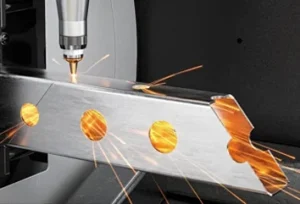
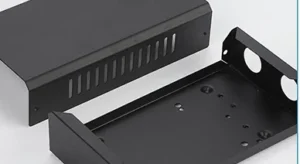
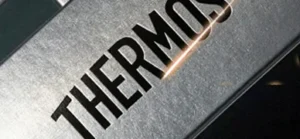
Laser marking customer-supplied parts is often one of the last operations before delivery or installation. The machining, coating and inspection may already be complete. A wrong identifier or an unapproved mark can therefore affect more than the marking operation itself.
Before sending finished components for outsourced laser marking, confirm the physical parts, approved content, surface requirements and permission to begin. This guide follows the handover from enquiry and incoming checks through sample approval, batch release and return packaging.
Quick answer: Confirm material and finish, part identity and quantity, the approved marking file, location and protected surfaces. Agree the trial route, acceptance checks and authorised approver. Approving a digital layout does not automatically approve a physical mark or authorise processing of the whole batch.
For industrial parts engraving in Singapore, send the actual part condition and marking requirements to Lumen Future’s laser engraving and marking service for review. Sample arrangements, inspection scope, handling restrictions and timing should be confirmed for the order rather than assumed from a general service description.
Confirm the Parts as They Will Arrive
Identify the part number and drawing revision, material grade where known, and the condition of the marking surface. Bare, anodised, plated, painted, polished and brushed surfaces are not interchangeable descriptions. Include photographs of the actual components, not only a catalogue image of the original design.
Explain which manufacturing steps are complete and whether another operation follows marking. A part described as “finished” may still be due for coating, cleaning or assembly. Those later steps can affect the required mark or how it will be inspected.
- Separate different material grades, finishes, part revisions and handed variants.
- Identify different incoming batches if their surface treatment may differ.
- State whether parts arrive assembled and whether disassembly is permitted.
- Disclose protective films, oils, residues and restrictions on their removal.
- Flag high-value, unique or difficult-to-replace components before arranging a trial.
Similar colour does not establish identical coating composition or marking response. If a finish is unknown, record that uncertainty and agree how it will be resolved. The guide to marking before or after coating and heat treatment covers process-sequence decisions in more detail.
Record Incoming Condition and Separate the Quantities
A delivery quantity is not necessarily a production quantity. A box may include reference pieces, trial samples and spares as well as parts approved for marking. Label their roles on the packing list and keep them distinguishable in the packaging.
| Part category | What to confirm before processing |
|---|---|
| Production parts | Received quantity, identity, revision and the number authorised for marking. |
| Trial samples | Whether permanent test marks are allowed and which areas may be used. |
| Spare parts | Whether separate permission is needed before a spare is used. |
| Reference pieces | Whether they are for comparison only and must remain unprocessed. |
| Parts awaiting clarification | Any identity, coating or visible-condition issue that prevents release. |
Agree the incoming inspection scope, particularly for cosmetic or high-value components. Existing scratches, dents, coating defects and previous marks may need photographs or a condition record. Do not assume every order includes a detailed inspection of every surface unless that requirement has been agreed.
If a discrepancy is found, identify the affected part or group and resolve it before processing. A clearly labelled hold category helps prevent a reference piece or questionable component from entering the approved batch.
Approve the Marking Content and File Revision
Provide one clearly identified release package: the approved artwork or data, a viewable reference and the corresponding part drawing. Where an editable source file is required, confirm the supported format with the supplier. A screenshot may communicate appearance, but it should not silently replace controlled production artwork.
Fixed text and logos
Check spelling, capitalisation, punctuation, typeface, artwork proportions, size and units. Identify the approved file revision and the person authorised to approve changes. If a font is converted to outlines or artwork is redrawn, review the resulting proof rather than assuming it is unchanged.
Serial numbers and variable data
Supply a controlled list or an agreed generation rule. State whether an identifier belongs to a specific physical part or may be assigned to any approved part in the batch. Define the character format, sequence, prefixes, separators and treatment of unused numbers.
For example, 000127 and 127 may not be equivalent approved formats. Check that spreadsheet handling or file conversion has not removed leading zeros. This is a format example, not a proposed numbering system.
Agree what happens to a number if a part is held, rejected or replaced. Do not automatically reuse identifiers or restart a sequence. Human-readable text and encoded data should also be checked against the same approved source where both are present.
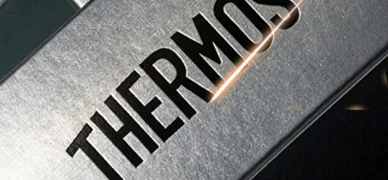
Separate Artwork Approval, Sample Testing and First-Piece Release
These approvals answer different questions. Keeping them separate prevents “the logo looks correct” from being mistaken for approval of the final surface result.
| Approval stage | Main purpose | What it does not establish |
|---|---|---|
| Digital artwork proof | Confirm content, layout, dimensions and orientation. | Actual contrast, depth or surface response. |
| Representative sample test | Review the result on the relevant material and finish. | Complete placement or handling performance on a different finished component. |
| First production piece | Check the approved requirements on an identified formal part. | That every subsequent part or unique identifier is automatically correct. |
A generic metal coupon may not represent a coated production part. Confirm how closely the test sample matches the supplied material, finish and surface condition. Record any limitation before using its result to support production approval.
A first piece is already a processed part. If it is made on a customer’s formal component, obtain permission for that permanent operation first. Agree whether the remaining batch must wait for approval and who can give that approval.
The release record should identify the part, artwork revision, sample or first-piece identity, acceptance decision and any exceptions. A revised file, changed coating or different part variant may require renewed review. Do not treat an old approval as covering changes it did not assess.
Confirm Marking Location and Permitted Contact Areas
Show the marked face, viewing direction, required size and location. Provide either a defined permissible zone or the necessary dimensions and tolerances. A verbal instruction such as “centre it on the front” can leave the face, orientation and artwork boundary ambiguous.
Separately identify areas where the part may be supported or clamped. A no-marking zone is not automatically a no-contact zone, and a face without marking may still have strict cosmetic requirements. Show sealing faces, polished areas and features whose condition must be protected.
Agree whether films, pads or packaging must be removed for loading and how the component can be handled. Do not assume protection can be added without affecting seating or access. The position accuracy and fixture guide covers locating and loading in depth; this handover should supply the constraints needed for that review.
Specify the Required Mark, Not Just “Laser Engraving”
A request for laser engraving finished metal parts can mean readable identification, a particular appearance, coating removal or a specified engraved depth. Describe the required result rather than relying on the process name alone.
Agree which checks apply: text and data accuracy, mark dimensions and location, contrast or appearance, depth where specified, and permitted surface changes. Any durability or exposure requirement should name the relevant conditions and verification method; “permanent” is not a complete acceptance specification.
For Data Matrix or other machine-readable identification, distinguish correct data from successful decoding and standards-based verification. A phone scan does not establish every verification requirement. Refer to the Data Matrix verification guide where formal code acceptance is required, and confirm the inspection capability before placing the order.
Plan Samples, Spare Parts and Exceptions
There is no universal spare-part percentage for every marking order. The arrangement depends on prior process validation, the availability of representative samples, component value and the permitted trial route. List sample and spare quantities separately from the required finished quantity.
If no spare exists, say so at quotation. Discuss an agreed representative sample or another suitable validation route before authorising work on an irreplaceable component. If the remaining uncertainty is unacceptable, processing should wait; zero risk cannot be assumed.
Pause for clarification when the actual finish differs from the approved sample, file revisions conflict, identifier-to-part mapping is unclear, or an unapproved surface defect is found. Keep affected parts separate and record the decision before continuing.
Do not assume an incorrect mark can simply be erased and replaced. Removal or over-marking may alter the surface or remain visible. Any proposed correction, replacement-part use and identifier reassignment should be reviewed and approved. Commercial responsibility and replacement arrangements belong in the agreed order terms, not in an assumed standard allowance.
Protect Parts During Packing and Return Handover
Confirm whether the original packaging will be retained and reused, and whether separators or individual protection are required. Keep variants and handed parts identifiable. For unique identifiers, preserve the agreed link between each component and its record through packing.
Separate completed parts from unprocessed returns and items awaiting a decision. Reconcile the received quantity against completed parts, unprocessed parts and separately documented exceptions. Include trial and reference pieces in the handover record so they are not mistaken for missing production parts.
Where inspection records or serial-number reports are required, specify them before quotation. The scope and format of documentation should be agreed rather than presumed to accompany every order.
What to Send for a Customer-Supplied Parts Quote
- Part photographs, part number and drawing revision.
- Material and coating or surface-finish details.
- Production, trial, reference and spare quantities.
- Approved text, logo artwork or controlled variable-data file.
- Marking face, orientation, dimensions and location requirements.
- No-marking areas and restrictions on fixture contact or handling.
- Sample, first-piece approval and acceptance requirements.
- Packaging, target timing and delivery or collection arrangements.
Identify unresolved questions before dispatch. A complete handover package helps separate technical review from production authorisation and reduces reliance on assumptions when the parts arrive.
Frequently Asked Questions
Can finished coated parts be laser marked?
They may be suitable, depending on the material, coating and required result. Marking can change or remove a surface layer. Assess the actual finish and agree any trial before processing formal parts.
Do I need to provide spare parts?
Not every order needs the same arrangement. Confirm samples and spares according to the proposed trial, existing validation and component value. Do not assume a fixed extra percentage or automatic permission to use every supplied part.
Is approving the artwork enough to start production?
Not necessarily. Artwork approval establishes the agreed content and layout. Physical result, incoming condition, acceptance criteria and permission to release the batch may need separate confirmation.
How should serial numbers be supplied?
Use a controlled list or agreed generation rule that preserves the required format. Define any mapping to physical parts and how duplicates, unused identifiers and replacement parts will be handled.
Can an incorrect mark be removed and replaced?
Do not assume it can. Correction may leave a visible change or affect the surface. Any rework needs a separate assessment and approval before proceeding.
Plan Marking for Your Finished Parts
Send part photos, material and coating details, quantity and the marking file. Include the required location, protected surfaces and any sample or first-piece approval requirements.