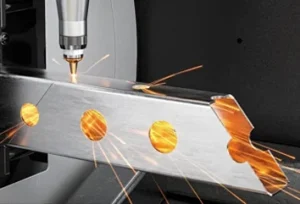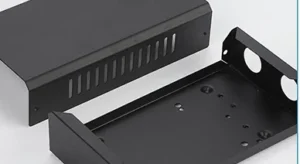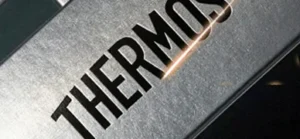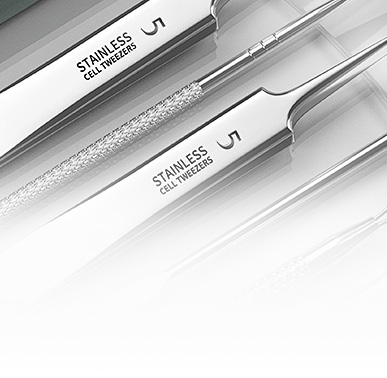
Choose a metal nameplate when you need a separate, replaceable information carrier, a larger layout, stable contrast or identification on a surface that is difficult to mark directly. Choose direct part marking when the identity must remain with the component, part-level serialisation matters or you want to avoid a separate plate and installation step. Many industrial systems use both: a nameplate for equipment-level ratings and warnings, plus direct marks on critical components for traceability.
The choice is not simply “metal plate versus laser.” A metal nameplate can itself be laser marked, engraved, etched or printed. The real decision is whether the information should sit on a separate carrier attached to the equipment or be formed directly on the component being identified.
For Singapore equipment builders, automation teams and maintenance buyers, that decision affects more than appearance. It influences replacement, assembly, data control, inspection, surface finishing and the total installed cost. This guide compares the two identification architectures without assuming that one is universally more durable or less expensive.
What Is a Metal Nameplate?
A metal nameplate is a separate plate, tag or label carrying information about a machine, assembly, asset or component. It may be made from stainless steel, anodised aluminium, brass, coated metal or another material selected for the operating environment and required appearance.
An industrial nameplate may include:
- manufacturer, model and equipment identification;
- rated voltage, power, capacity or operating information;
- warnings, instructions and multilingual text;
- asset, batch and serial numbers;
- logos, certification marks or customer-controlled symbols;
- QR codes, Data Matrix codes or conventional barcodes.
The plate can be fixed with screws, rivets, welding, an adhesive system, a bracket or a dedicated recess. The attachment method is part of the design; a mechanically fixed stainless plate should not be treated as equivalent to a general-purpose adhesive label.
What Is Direct Part Marking?
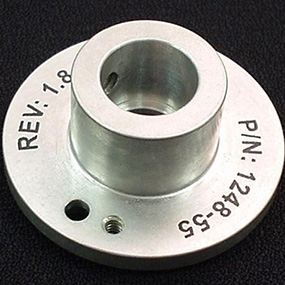
Direct part marking, or DPM, places the identification directly on the surface of the part. Laser marking, laser engraving, dot peen, electrochemical etching and other processes can all be used for DPM when they are suitable for the material, geometry and lifecycle.
DPM commonly carries a part number, batch, serial, logo, Data Matrix or maintenance code. Because there is no separate carrier, the mark normally remains associated with the component through handling and assembly. However, direct does not automatically mean readable, durable or suitable: surface finish, curvature, heat sensitivity, available area and downstream processing still require review.
For a broader explanation of the methods, see what direct part marking means for industrial parts.
Metal Nameplates vs Direct Part Marking
| Decision factor | Metal nameplate | Direct part marking |
|---|---|---|
| Information carrier | A separate plate attached to the asset or assembly | The component surface itself |
| Replacement | Can often be replaced if the attachment allows it | Usually difficult to change without reworking the part |
| Available area | Plate size can be designed around the information | Limited by accessible, markable part surfaces |
| Material choice | Plate material can be selected independently | Marking method must suit the component material and finish |
| Part association | Depends on correct plate-to-asset matching and secure attachment | Identity is formed directly on the tracked component |
| Installation | Requires an attachment operation and position control | Usually avoids separate plate installation |
| Variable data | Supports serials and codes but needs plate-to-equipment control | Supports direct part-level serialisation and data logging |
| Warnings and ratings | Suitable for larger tables, logos and multilingual information | May be constrained by small or curved surfaces |
| Retrofit | Often practical for existing assets and replacement identification | May require access, disassembly or portable marking arrangements |
| Surface treatment | Plate and equipment can follow separate finishing routes | Marking sequence must account for coating, passivation and cleaning |
| Failure modes | Loose fastener, adhesive failure, plate damage or plate mismatch | Wear, corrosion, low contrast, surface damage or incorrect direct data |
| Cost structure | Plate, cutting, marking, hardware and installation | Fixture, handling, marking, data control and inspection |
When a Metal Nameplate Is the Better Choice
A separate nameplate is usually worth considering when the information and the equipment surface have different design needs.
- Large information set: the label needs ratings, warnings, diagrams, multiple languages or many lines of text.
- Replaceable information: the asset may be upgraded, re-rated or reassigned and the identification must be changed through an approved process.
- Difficult substrate: the equipment surface is coated, highly textured, heat-sensitive, inaccessible or otherwise unsuitable for the required mark.
- Controlled contrast: a selected plate material and finish provide a more repeatable visual background than the machine surface.
- Retrofit work: an existing machine or facility asset needs a new identification plate without extensive disassembly.
- Shared equipment identity: the information describes the complete machine rather than one replaceable component.
Nameplates are also useful when separate fabrication simplifies the workflow. Blanks can be cut, finished and marked before final installation. Lumen Future’s metal cutting service can be paired with marking where a custom plate outline, mounting holes and permanent information are required.

When Direct Part Marking Is the Better Choice
DPM is often preferred when traceability belongs to the individual component and separation from its identity would create risk.
- every part needs a unique serial, batch code or Data Matrix;
- the identifier must remain with the part through assembly and service;
- there is insufficient room for a separate plate and its fasteners;
- an extra installation operation is undesirable;
- the marked surface is suitable and accessible before or after finishing;
- the marking record must connect directly to a CSV, database or production log;
- a transferable or accidentally exchanged plate would weaken part-level traceability.
The actual part should be tested when the surface is polished, brushed, curved, cast, thin or coated. A mark that looks acceptable on a flat coupon may behave differently under the intended reader, lighting or cleaning process.
Why a Hybrid Identification System Often Works Best
A machine-level identity and a part-level identity serve different purposes. Selecting only one method can force too much information onto a small component or leave replaceable parts without their own traceability.
Automation equipment
Use a main nameplate for model, ratings and warnings. Directly mark fixtures, brackets or replaceable modules with part and serial data.
Semiconductor equipment
Use the equipment plate for system identity, while suitable carriers, tooling and controlled components receive direct serial or Data Matrix marks.
Marine and maintenance
Use durable plates or tags for asset and operating information, plus direct identifiers on selected replacement or service parts where appropriate.
This layered approach lets each mark carry the information relevant to its lifecycle. It also allows the main equipment plate to be replaced through a controlled procedure without erasing the manufacturing identity of critical components.
Nameplate Attachment Is an Engineering Decision
| Attachment | Useful characteristics | Points to review |
|---|---|---|
| Screws | Serviceable and potentially replaceable | Hole locations, locking method, access and protrusion |
| Rivets | Simple mechanical retention for many sheet-metal assemblies | Drilling, backside access, material pairing and removal procedure |
| Welding | Permanent metal attachment in suitable structures | Heat input, distortion, finish, dissimilar materials and repair |
| Adhesive system | No mechanical holes and a clean visible face | Surface preparation, temperature, chemicals, moisture and edge lifting |
| Bracket or recess | Protects or supports a replaceable plate | Added parts, tolerance, access and retention method |
No attachment is automatically correct for every environment. The drawing should define plate position, holes or adhesive zone, orientation and any tamper or replacement requirement. Exposure to vibration, washing, chemicals, weather and temperature should be included in the review.
Machine-Readable Codes and Inspection
Both nameplates and directly marked parts can carry QR codes, Data Matrix codes and serial numbers. The acceptance plan must still separate appearance, decoding, data accuracy and formal verification.
| Inspection question | Metal nameplate | Direct part marking |
|---|---|---|
| Is the identifier correct? | Match the marked plate to the intended asset before installation | Match the decoded data directly to the part record |
| Is the code readable? | Test the delivered plate finish and installed orientation | Test the real component surface, geometry and presentation |
| Is the location correct? | Check plate position, orientation and attachment | Check the drawing-defined marking zone on the component |
| Does finishing affect it? | Review plate finishing and any protective layer | Recheck after passivation, coating, cleaning or other downstream work |
| Is formal grading required? | Specify the standard, verifier configuration, minimum grade and sampling plan before quotation | |
For code design, see our guide to permanent QR, Data Matrix and serial-number marking. For acceptance planning, read how to verify laser-marked Data Matrix codes. Our stainless-steel Data Matrix application case shows how drawing review, variable data and first-article checks fit together.
Compare Total Installed Cost, Not Only Marking Price
A nameplate quote and a direct-marking quote may include different operations. Buyers should compare the complete route.
Quantity changes the balance. A simple repeat plate may be efficient in batches, while direct marking may avoid plate inventory and assembly. Conversely, a large or difficult-to-handle component can require more positioning and fixture work than a small plate. Formal barcode reports, strict serial control and post-process validation add scope to either route.
Common Singapore Applications
Local sample review can help Singapore buyers confirm artwork, mounting holes, part presentation and reader performance before releasing a batch. Requirements still come from the drawing, customer contract and applicable product programme; a generic industrial article cannot determine compliance for a specific machine.
A Simple Selection Checklist
Choose the route after confirming:
- Asset-level or part-level identity
- Drawing and revision
- Information quantity
- Variable or fixed data
- Material and surface finish
- Available marking area
- Part geometry and access
- Replaceability requirement
- Attachment method
- Downstream processing
- Cleaning and operating exposure
- Target reader
- Inspection and report scope
- Prototype and production quantity
- Installation responsibility
- Packaging and local delivery
Lumen Future provides laser marking and engraving services in Singapore for suitable nameplates and industrial parts. We can also review custom plate cutting, mounting features and marking within one drawing-based workflow. Actual feasibility and results depend on the supplied material, finish, geometry, artwork, data and inspection requirement. See our quality assurance approach for broader inspection context.
Frequently Asked Questions
Is a metal nameplate considered direct part marking?
No. The information may be permanently laser marked on the nameplate, but the plate remains a separate identification carrier rather than a mark made directly on the component it identifies.
Is direct part marking more durable than a metal nameplate?
Not automatically. Durability depends on the direct-marking process, component surface, plate material, attachment, wear, corrosion, cleaning and operating environment. A securely fixed plate may outperform an unsuitable surface mark, and the opposite can also be true.
Can a Data Matrix code be marked on a metal nameplate?
Yes. The code size, module geometry, plate finish, installation angle and intended reader should be reviewed together. If formal grading is required, define the standard and verification scope before quotation.
Are riveted nameplates better than adhesive nameplates?
Neither is universally better. Rivets provide mechanical retention but require holes and suitable access. Adhesive systems preserve the surface but need validated preparation and environmental compatibility.
Can an existing machine be fitted with a replacement nameplate?
Often yes, provided the approved information, dimensions, attachment points, material, finish and installation responsibility are confirmed. Regulated or customer-controlled information should not be changed without authorisation.
What files are needed for an industrial nameplate or DPM quotation?
Send the part or plate drawing, material, thickness, finish, artwork, fixed and variable data, quantity, attachment method, target reader, downstream processes and inspection requirements.
Choose the Right Identification Route
Send your equipment or part drawing, material, marking data, quantity and operating requirements. We can review whether a separate metal nameplate, direct part marking or a hybrid approach is more practical.