Choose laser marking when you need a high-contrast code or identifier with minimal surface change. Choose laser etching when you need a shallow, high-contrast mark produced faster than deeper removal. Choose laser engraving when the mark must remain readable after coating, abrasion or long service. The right choice depends on the material, required durability, allowable heat input, readability target and production volume—not simply which process sounds most permanent.
“Laser marking,” “laser etching” and “laser engraving” are often used as if they mean the same thing. In a quotation, however, those words can imply different surface effects, cycle times and quality risks. Choosing the wrong process can leave a code with insufficient contrast, a cosmetic surface with unwanted texture, or a thin part with more heat input than necessary.
This guide gives engineers and buyers a practical way to specify the result they need. It focuses on process selection; for the separate question of how metals and non-metals respond to different laser sources, see our guide to metal and non-metal laser engraving.
Laser Marking vs Engraving vs Etching at a Glance
| Decision factor | Laser marking | Laser etching | Laser engraving |
|---|---|---|---|
| Primary effect | Changes colour or contrast | Melts or modifies a thin surface layer | Removes material to form a recess |
| Surface feel | Usually smooth | Slight texture may be detectable | Clearly recessed when sufficient depth is specified |
| Heat / material change | Generally lowest | Moderate and localised | Higher because more energy and passes may be required |
| Typical speed | Fast | Fast to medium | Medium to slow, depending on depth and area |
| Best fit | Serials, DataMatrix codes, logos on sensitive finished parts | High-contrast labels, coated surfaces and shallow graphics | Nameplates, tools and parts exposed to wear or later finishing |
| Main limitation | Contrast can depend strongly on alloy and finish | May not survive heavy abrasion or subsequent material removal | Longer cycle time; can affect thin or cosmetically critical parts |
The table is a starting point, not a universal specification. Laser source, pulse width, focal position, alloy, coating and surface finish all influence the result. If you are comparing fiber, CO₂ and UV equipment, our laser source selection guide explains why the correct wavelength comes before parameter optimisation.
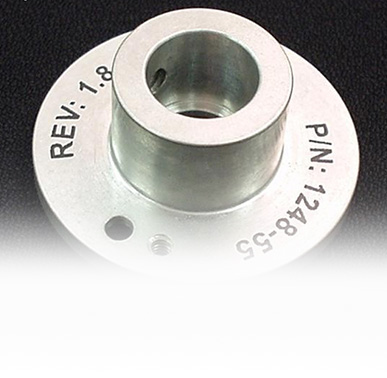
What Does Each Process Actually Do?
Creates information or contrast with minimal removal. Suitable when preserving the original surface geometry matters.
Produces a shallow surface change that balances visibility and cycle time. Often used for labels and graphics.
Removes material to create a recess. Chosen when wear resistance or post-process visibility is important.
Laser marking: contrast with minimal surface disruption
Laser marking uses controlled energy to change the way the surface reflects light. Depending on the material, this may involve oxidation, carbonisation, foaming, colour change or coating removal. On stainless steel, a dark mark can be produced while keeping the surface comparatively smooth. On some plastics, the mark may become lighter or darker through a photochemical or thermal reaction.
This makes marking useful for finished components, hygiene-sensitive parts and small machine-readable codes. The trade-off is that the achievable colour and contrast are material-dependent. A parameter set that works on one stainless grade or polymer formulation may not transfer directly to another.
Laser etching: a shallow, high-contrast surface effect
Laser etching applies enough energy to modify or melt a thin surface layer without pursuing significant depth. It is commonly selected when visual contrast matters more than a tactile recess and when cycle time must remain economical. Coated and anodised surfaces can also be selectively removed to reveal a contrasting layer underneath.
Because the change is shallow, the result should be tested against the actual service environment. If the part will be polished, blasted, exposed to heavy abrasion or machined after marking, a shallow etch may no longer be readable.
Laser engraving: controlled material removal
Laser engraving vaporises or ejects material through one or more passes. The resulting recess can remain identifiable after handling, paint application or surface wear, provided the depth and downstream process are specified together. Deeper is not automatically better: additional passes increase cycle time and total heat input, and can reduce fine-detail quality.
For industrial work, specify a functional outcome—such as “readable after powder coating” or “legible after the stated abrasion test”—rather than asking only for “deep engraving.” The supplier can then balance depth, line width and process time.
How to Choose the Right Process
Start with the failure mode you must prevent. The following decision rules cover most enquiries:
- Protect the surface or a thin wall: begin with laser marking. It generally introduces less material removal and is often suitable for completed components.
- Need fast visual contrast: evaluate marking or shallow etching on the real material and finish.
- Expect abrasion, coating or harsh handling: evaluate engraving, with the required post-process readability stated on the drawing or RFQ.
- Need a scannable code: prioritise cell size, quiet zone, contrast and verification grade—not decorative depth.
- Need a premium cosmetic result: approve a sample under the same lighting and viewing conditions as the final product.
Heat-sensitive geometries require particular care. Thin sheet, narrow rings, small tabs and precision surfaces may distort or discolour if the engraved area is large or requires many passes. In these cases, the correct answer may be a shallower mark, a different laser source, segmented toolpaths or a fixture that supports the part.
Material and Application Matrix
| Material / part | Likely starting process | What to validate |
|---|---|---|
| Stainless steel instruments or equipment tags | Dark laser marking | Contrast, corrosion behaviour, cleaning method and smoothness |
| Anodised aluminium panels | Coating removal / etching | Colour consistency, edge sharpness and whether the anodised layer must remain protective |
| Bare aluminium components | Marking or engraving | Alloy response, reflectivity, contrast and heat sensitivity |
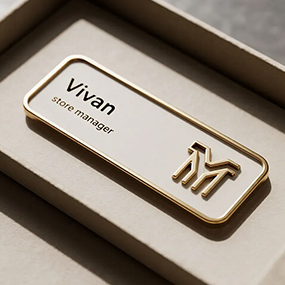
| Brass nameplates and premium badges | Etching or engraving | Reflectivity, oxidation, finish direction and required depth |
| Engineering plastics | Laser marking | Resin formulation, additives, colour, fumes and heat damage |
| Acrylic signage or awards | CO₂ surface engraving | Cast vs extruded acrylic, frosted appearance and edge quality |
| Tools or parts exposed to wear | Laser engraving | Depth, line width, readability after use and effect on the part |
| Painted or powder-coated components | Coating removal or pre-coating engraving | Layer contrast, coating thickness and final visibility |
The matrix does not replace a material trial. Even within one material family, grade, pigment, coating batch and surface roughness can change absorption and contrast. For additional material-specific guidance, see our articles on brass laser engraving and acrylic laser processing.
Serial Numbers, QR Codes and Industrial Traceability
In industrial automation and semiconductor and electronics, the mark is often part of the quality system. A serial number must be readable by an operator; a QR or DataMatrix code must also be readable by the intended scanner throughout the product life.
A useful traceability specification includes:
- code type, encoded data and human-readable text;
- overall mark area, minimum module or character size and quiet zone;
- orientation and location tolerance relative to part features;
- material, coating and finish condition at the time of marking;
- required verification method or acceptance grade;
- cleaning, sterilisation, abrasion or environmental exposure;
- whether the code must remain readable after coating or another downstream process.
A visually attractive code is not necessarily a reliably scannable code. For critical traceability, request a sample and verify it with the same scanner, lighting and working distance used on the production line.
What Drives Laser Marking and Engraving Cost?
Price is usually driven by process time and handling, not by the label attached to the process. The main variables are:
- Marked area and fill density: a filled logo takes longer than a serial number of the same outside dimensions.
- Required depth: deeper engraving generally needs more passes and inspection.
- Part geometry and fixturing: curved, reflective or irregular parts may need a dedicated jig and careful focus control.
- Quantity and variation: a repeated code is simpler than thousands of unique serials requiring data control.
- Quality validation: scan verification, sample approval or special inspection adds value and time.
- Material uncertainty: unknown alloys, plastics or coatings may require trials before production parameters are released.
The lowest-cost route is usually to provide final artwork, complete material information and clear acceptance criteria at the enquiry stage. That allows the supplier to select the process without repeated sampling.
RFQ Checklist: What to Send Your Supplier
Include these details for a faster, more accurate quotation
- part drawing or clear photograph with mark location and available area;
- material grade, coating, colour and current surface finish;
- vector artwork for logos; final data format for variable serial numbers;
- quantity, batch frequency and number of unique variations;
- desired visual result: dark, light, frosted, coating removed or recessed;
- functional requirement: smooth surface, wear resistance, scan grade or post-coating readability;
- downstream processes such as passivation, anodising, polishing or powder coating;
- reference sample or approval requirement, plus delivery date.
If you are unsure which label to put on the RFQ, describe the required result instead. Lumen Future can recommend a process and trial it on the supplied material through our laser marking and engraving service in Singapore.
Frequently Asked Questions
Is laser marking the same as laser engraving?
Not in a process specification. Laser marking normally describes a contrast change with little material removal, while engraving deliberately removes material to create a recess. In everyday sales language, “marking” may also be used as an umbrella term, so define the required result and approve a sample.
Which process is the most permanent?
Deep engraving generally offers the greatest resistance to material wear because the information is recessed. However, a high-quality surface mark may be entirely adequate for the real service environment. Permanence should be tied to abrasion, cleaning, heat, chemicals and downstream finishing requirements.
Is laser etching faster than laser engraving?
It often is because less material must be removed, but actual cycle time depends on the marked area, fill density, laser source, material and target contrast. Ask suppliers to quote against the same artwork and acceptance criteria.
Can the same machine mark metals and plastics?
Sometimes, but not universally. Material absorption depends on laser wavelength and formulation. Fiber lasers are commonly used for metals, CO₂ lasers for many organic materials and acrylic, and UV systems where lower thermal impact or certain plastics are involved. Confirm the exact grade and colour.
Should parts be marked before or after coating?
It depends on the intended result. Marking after coating can remove or change the coating for contrast. Engraving before coating can keep identification visible if the recess and line width are designed for the coating thickness. State the complete process sequence in the RFQ.
What file format is best for laser marking?
Vector formats such as AI, SVG, EPS, DXF or a clean vector PDF are preferred for logos and line work. For variable serials or codes, provide the required data structure and an approved sample layout. Avoid low-resolution screenshots for small text or machine-readable codes.
Not Sure Which Laser Process Fits Your Part?
Send the material, drawing, artwork, quantity and required result. We will review the application and recommend marking, etching or engraving with an appropriate sample plan.