Laser engraving on metal and non-metal are two different processes using two different lasers. Metals (stainless steel, aluminium, brass) need a fiber laser; non-metals (acrylic, wood, leather, paper) need a CO₂ laser. A shop with only one type can’t handle the other. Within metal engraving, there are three sub-methods: annealing (black mark, no depth), white marking (light contrast), and deep engraving (actual material removal). Choosing the right combination depends on your material, the look you want, and whether the mark needs to be felt or seen.
You take a stainless steel tumbler to one engraving shop and get back a beautiful black logo. You take the same tumbler to another shop and they tell you they can’t do metal at all — they can only engrave the powder-coated layer. Why?
Because “laser engraving” isn’t one process. It’s a family of techniques using different lasers on different materials, and most engraving shops are equipped for only some of them. This guide explains the core difference between metal and non-metal engraving, the three sub-methods used on metal, and how to specify what you actually want. It’s written for corporate gift buyers, quality engineers needing serial numbers and traceability, SME owners, and anyone planning a personalised order in Singapore.
If you’re new to laser-based fabrication, our complete laser cutting buyer’s guide covers the broader landscape. And our acrylic cutting quality guide goes deeper on one of the most popular non-metal engraving materials.
The Core Difference: What Laser Engraving Actually Does
Before metal-vs-non-metal, there’s an earlier distinction worth getting straight. Three terms get used interchangeably in the industry, but they describe different things:
| Process | Depth | Feel | Permanence | Typical Use |
|---|---|---|---|---|
| Marking | Surface colour change, no depth | Can’t feel it | Very high | Medical IDs, hygiene-critical parts |
| Etching | 0.001–0.025 mm | Barely felt | Extremely high | Premium gifts, fine logos |
| Engraving | 0.025–0.5 mm | Clearly recessed | Extremely high | Tools, industrial nameplates, awards |
When someone asks for “laser engraving,” they usually mean any of these. Knowing which one suits your project keeps the conversation efficient — and avoids the surprise of receiving a flat black mark when you expected a tactile recessed logo.
Why Metal and Non-Metal Need Different Lasers
This is the single most important thing to understand. The reason a shop can or can’t engrave your material comes down to laser wavelength — and how the material reacts to it.
That’s why shops with only a CO₂ machine can’t engrave bare metal — and why shops with only a fiber laser struggle with wood and acrylic. The two technologies aren’t substitutes; they’re complementary. A facility running both — like ours — covers the full material range without outsourcing.
| Material | Fiber Laser | CO₂ Laser | Notes |
|---|---|---|---|
| Stainless steel | ✅ Best | ❌ Won’t work | Annealing produces clean black mark |
| Aluminium (anodised) | ✅ Best | ⚠️ Only the anodised layer | White marking gives strong contrast |
| Brass / Copper | ✅ Good | ❌ Won’t work | Higher reflectivity; needs proper power |
| Titanium | ✅ Excellent | ❌ Won’t work | Vivid annealing colours possible |
| Cast acrylic | ❌ Won’t work | ✅ Best — frosty contrast | The classic non-metal engraving |
| Wood | ❌ Won’t work | ✅ Best — dark brown burn | Veneer, plywood, solid wood all work |
| Leather | ❌ Won’t work | ✅ Good | Dark burn mark, distinctive smell |
| Glass | ⚠️ Risky (cracks) | ✅ Frosted look | Often combined with sandblast mask |
| Paper / cardboard | ❌ Won’t work | ✅ Light burn | For premium packaging, cards |
| Painted / coated metal | ✅ Removes coating | ✅ Removes coating only | Reveals metal underneath |
The painted/coated row deserves a note: a CO₂ laser can “engrave” coated metal — but only by burning off the coating to reveal the metal below. It can’t engrave the bare metal itself. That’s why a tumbler with a powder-coated finish might engrave fine on a CO₂ machine, but a bare stainless steel one won’t.
Three Ways to Laser Engrave Metal
This is where most non-engineers get tripped up. “Engraving metal” isn’t one process — it’s three, each producing a different look and chosen for different applications. All three use a fiber laser; the difference is in power, speed, and focus settings.
Black Marking Without Depth
Annealing heats the metal surface just enough to form a thin oxide layer — but doesn’t remove any material. The result is a clean, dark mark that’s completely smooth to the touch. This makes it the preferred process for surgical instruments, medical device IDs, and anywhere a recess could trap bacteria or affect hygiene. It’s also the look most premium corporate gifts go for on stainless tumblers and flasks: refined, subtle, permanent.
Light Contrast on Dark Surfaces
White marking melts the surface very briefly, creating a high-contrast light-coloured mark — particularly striking on black anodised aluminium and dark-coated metals. Common in consumer electronics branding, premium pens, and high-end giveaway items where a logo needs to stand out against a dark background.
Real Material Removal
Deep engraving actually removes material from the surface, creating a tactile recess you can feel. This is what you want for industrial nameplates, tool identification, mould markings, and any application where the mark must survive heavy wear, weathering, or surface treatments. It’s slower than annealing and white marking, so it costs more per piece, but the durability is unmatched.
Which one to ask for? If you want a clean black logo on a tumbler or watch, ask for annealing. If you want a bright logo on a black anodised pen, ask for white marking. If you want a deep, tactile mark on an industrial nameplate, ask for deep engraving. Most quotes default to whatever the supplier’s machine does best — specifying upfront avoids surprises.
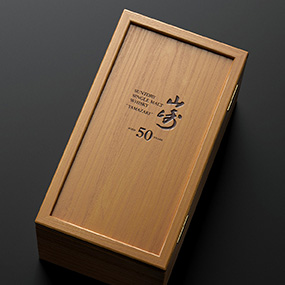
Non-Metal Engraving: The CO₂ Laser Workhorse
Non-metal engraving works on a different principle. A CO₂ laser doesn’t really “carve” wood or acrylic — it burns or vaporises the surface, creating a colour or texture change.
| Material | Engraved Appearance | Contrast | Notes |
|---|---|---|---|
| Cast acrylic | Frosty white | Excellent | The premium non-metal choice for awards and signage |
| Extruded acrylic | Faint, barely visible | Poor | Use cast acrylic instead for engraving |
| Wood (oak, walnut, plywood) | Dark brown burn | Good to excellent | Each wood type gives a different tone |
| Veneer / MDF | Brown burn | Good | Common for budget signage |
| Leather | Darkened, slightly recessed | Good | Distinctive smoky aroma — common for wallets, journals |
| Glass | Frosted texture | Moderate | Less precise than fibre on metal |
| Paper / cardboard | Light burn line | Subtle | For premium printed packaging |
| Fabric (cotton, denim) | Bleached or burned pattern | Good | Common for branded apparel |
The clear winner here is cast acrylic — engraved areas turn a clean frosty white that contrasts beautifully against the clear or coloured substrate. For why this matters and how cast differs from extruded, see our acrylic laser cutting guide.
Quality Standards: What to Expect by Material
Engraving quality varies by material. These are realistic benchmarks for what each can deliver:
Practical limits for legibility and detail
| Material | Min. Text Height | Min. Line Width | Contrast |
|---|---|---|---|
| Stainless steel (annealing) | 3–4 mm | 0.05 mm | High (black) |
| Anodised aluminium | 2–3 mm | 0.05 mm | High (white) |
| Brass / copper | 3–4 mm | 0.1 mm | Medium-High |
| Cast acrylic | 2 mm | 0.1 mm | High (frosty white) |
| Wood | 3 mm | 0.1 mm | Medium (brown) |
| Leather | 3 mm | 0.15 mm | Medium |
| Glass | 4 mm | 0.15 mm | Medium (frost) |
Minimum text height matters most for product serial numbers and IDs — if you need to fit “Model X-2026 / Serial 0001234” on a 10 mm wide tag, you’ll need to choose materials and processes carefully. For corporate gift logos and ornamental text, none of these limits are usually a constraint.
Singapore Applications: Where Laser Engraving Matters Most
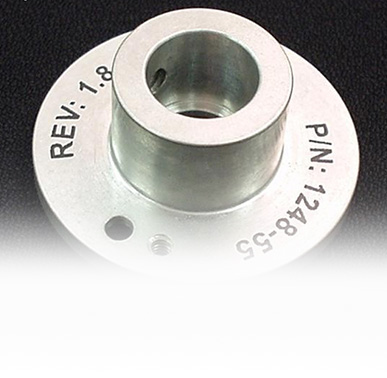
Five clusters drive most of the laser engraving demand in Singapore:
Corporate Gifts (the biggest market)
The largest single use case. Stainless steel tumblers and vacuum flasks with laser-engraved company logos and recipient names are the gold standard for premium corporate giveaways — long-lasting, daily-used, and elegantly branded. Other common items: engraved pens, notebook covers, USB drives, watches, and metal name cards.
A unique advantage of laser engraving for corporate gifts: each item can carry a different name, message, or date with no additional setup cost per variation. This makes personalised batch orders — a tumbler for every employee with their own name — as practical as bulk identical engraving. See our laser engraving service page for the full range we offer.
Awards, Plaques & Recognition
Acrylic and metal awards for long-service recognition, milestone celebrations, sports tournaments, and corporate events. Recipients keep these for years, so permanence isn’t a feature — it’s a requirement. Engraved info typically includes recipient name, achievement, date, and company logo.
Industrial Marking & Traceability
Serial numbers, batch codes, UDI medical identifiers, tool IDs, mould markings, and IP traceability. Annealing on stainless is especially common here because it doesn’t compromise the surface — important for hygiene-critical or corrosion-sensitive parts.
Retail, F&B & Hospitality
Shop signage, branded utensils, hotel room hardware, menu boards, branded packaging. Often mixes metal (premium feel) and acrylic (cost-effective signage) on the same project.
Personal & Lifestyle
Wedding rings, jewellery, custom knives, leather wallets, smartphone cases, fountain pens, watch case-backs. Often single-piece orders — and since laser engraving doesn’t require any setup tooling, single-piece pricing is straightforward.
Specifying a Laser Engraving Job
A clean spec saves a quoting round. Here’s what to include when you contact a supplier:
| What to Specify | Example |
|---|---|
| Material and grade | SS304, anodised aluminium, cast acrylic 3 mm, oak wood |
| Engraving type | Annealing / white marking / deep engraving / surface engraving |
| Design file | Vector preferred: AI, SVG, DXF, EPS. PDF acceptable for simple logos. |
| Text height & line width | e.g. min. 4 mm text, 0.1 mm lines |
| Quantity | Total pieces, plus whether each is identical or personalised |
| Personalisation list | If different per piece: send an Excel/CSV with the variations |
| Surface finish target | Smooth (annealing), white-contrast, or recessed |
| Delivery deadline | Event date if applicable — affects whether rush handling is needed |
Two specific tips that come up often:
- Send vector, not raster. A high-resolution JPG can sometimes work, but vector files give crisp results especially on small text. See our CAD file checklist.
- Mention if it’s a sample/test run. Suppliers can usually engrave one or two test pieces before the full batch, which is essential for first-time orders on a particular material.
Laser Engraving vs Other Marking Methods
Laser isn’t the only way to mark a product. Here’s how it stacks up against alternatives:
| Method | Permanence | Speed | Setup Cost | Personalisation | Materials |
|---|---|---|---|---|---|
| Laser engraving | Extremely high | Fast | None | Excellent — each piece different | Widest range |
| Screen printing (pad printing) | Moderate (wears off) | Fast | Low | Poor — identical only | Most surfaces |
| Hot foil stamping | Moderate | Medium | Medium (die) | Poor | Paper, leather mostly |
| Chemical etching | High | Slow | High (template) | Poor | Metals mostly |
| Mechanical engraving (rotary) | High | Slow | Low | Good | Narrower range |
| UV printing | Moderate | Fast | Low | Good | Wide |
Choose laser engraving when permanence matters, designs are detailed, each piece might be personalised, batch sizes are small to medium, and your material is in the laser-friendly list. Choose printing when you need vivid full-colour, very high volume, or non-permanent marking is acceptable. Choose chemical etching when you need ultra-precise patterns on metal at very high volume.
Lead Time, Pricing & Minimum Order in Singapore
Lead time in Singapore depends mostly on batch size and whether items are already in stock:
| Order Type | Typical Lead Time |
|---|---|
| Single piece / small personal order | 1–3 working days |
| Corporate gift order (50–500 pieces) | 3–7 working days |
| Bulk industrial order (1,000+ pieces) | 1–2 weeks |
| Rush / event-driven | 24–48 hours where capacity allows |
What drives the price:
- Per-piece engraving time — bigger designs take longer per piece
- Setup and file prep — typically minimal, since no tooling is needed
- Personalisation list management — handling 200 unique names from a spreadsheet adds some admin time, but no per-piece premium
- Material supply — if you bring your own (your own tumblers, pens, etc.) the engraving cost is on top of that; if the supplier sources the item, the gift cost is bundled in
About minimum order: at Lumen Future, there’s no MOQ on laser engraving. A single tumbler with your name on it gets the same care as a 500-piece corporate order. The per-piece cost is naturally higher for ones and twos (because there’s a minimum charge to cover file setup), but you’re not locked out by quantity. For more on how laser-related work is priced in Singapore, see our laser cutting cost guide.
Frequently Asked Questions
What’s the difference between laser marking and laser engraving?
Laser marking changes the surface colour (through oxidation or melting) without removing material — the result is permanent but completely flat. Laser engraving actually removes material to create a tactile recess that you can feel. Etching is in between — a very shallow surface melt. All three are sometimes loosely called “engraving,” but they look and feel different.
Can you laser engrave on coated or painted metal?
Yes — either by removing the coating to reveal the metal underneath (works with both CO₂ and fiber lasers), or by engraving directly on the metal beneath the coating (fiber laser only, with specific settings). The first method produces a high-contrast look that’s popular on powder-coated tumblers and anodised aluminium.
Why does stainless steel sometimes engrave black and sometimes white?
It’s the same material — different processes. Annealing (slow heating without removal) creates a black oxide layer on the surface. White marking (rapid melting) creates a lighter contrast. Deep engraving removes material entirely, showing the natural metal underneath. All three are options on the same stainless steel item — you choose based on the look you want.
Can each item in an order have a different name engraved at the same price?
Yes. Laser engraving is a digital process, so each piece can carry a unique name, message, or design without additional tooling cost per variation. This makes personalised batch orders — a tumbler for each employee, each with their own name — economical even at scale. You just need to provide the variation list (typically as Excel or CSV).
How small can text be laser-engraved and still readable?
On stainless steel and anodised aluminium, text down to about 2–3 mm cap height remains legible under normal viewing. On wood and acrylic, around 3 mm is the practical minimum. Below these sizes, individual character strokes may merge or become difficult to read. Use vector files for small text — rasters degrade noticeably at small sizes.
Is laser engraving permanent? Will it fade or wear off?
Laser engraving is essentially permanent under normal use. Annealing creates a chemically bonded oxide layer; deep engraving alters the physical surface itself. Neither can fade in the way ink does. Heavy abrasion or aggressive chemical exposure could eventually wear the mark, but for typical use (drinking from an engraved tumbler, wearing engraved jewellery), the mark will outlast the item.
Get a Custom Engraving Quote in 24 Hours
Three takeaways from this guide:
- Metals need fiber lasers; non-metals need CO₂ — a supplier with both covers your whole project without outsourcing.
- For metal, pick the right method — annealing for smooth black marks, white marking for dark anodised surfaces, deep engraving for industrial parts.
- No MOQ at Lumen Future — one piece or one thousand, each gets the same care, and personalisation per piece costs nothing extra.