

Quick answer: For post-weld stainless steel finishing, mark the welds and critical faces on the finished-part drawing. State whether each bead remains as welded or may be dressed, which heat-tinted zones need treatment, and the direction and appearance required on brushed faces. Approve a representative first-off part when appearance matters. Inspect the weld profile, surface condition and cosmetic finish as separate acceptance decisions.
In this guide
A stainless steel assembly may fit its machine and still be rejected because the weld area looks different from the surrounding panel. The reverse is possible too: a smooth, attractive weld does not prove that its geometry or corrosion-related surface requirements have been met. For equipment covers, enclosures, frames and other fabricated parts in Singapore, finishing belongs in the drawing and quotation—not in an undefined instruction to “polish all welds”.
Start With the Finished Part and Its Service Conditions
Before choosing a finishing route, show the stainless grade and thickness, original surface finish, weld locations, installed orientation and accessible sides. Mark the faces visible during normal use or cleaning, plus any mating surface or dimension that finishing must not change. An exposed outside seam, a concealed weld root and a brushed operator-facing panel may need three different requirements on the same assembly.
Describe the actual environment: sheltered indoor use, repeated wash-down, contact with cleaning chemicals, or outdoor and coastal exposure. Singapore’s humid climate is relevant background, but “suitable for Singapore” is not a measurable finish specification. The required surface condition depends on the part’s duty and exposure; neither 316 stainless steel nor one roughness value is a universal answer. See our stainless steel fabrication and material guide if the grade is still under review.
For a replacement part or a customer-supplied assembly, include photographs and its known finishing history. Existing scratches, coating, prior repair or corrosion can affect the achievable result. Agree whether the quotation covers only local weld finishing or the full visible face before production starts.
Heat Tint Is Not Just a Colour-Matching Problem
Heat tint is the coloured oxide that can form around a stainless steel weld. Under that oxide, welding can leave a chromium-depleted near-surface region. In environments with a relevant corrosion hazard, this can matter even if the surface is later made visually brighter. The British Stainless Steel Association’s post-weld guidance explains why the service environment and both sides of a weld matter.
In the RFQ, identify which weld zones and which sides require treatment. An interior weld root may be hidden from the normal viewing position yet face moisture or a cleaning fluid. A visible exterior weld may need a separate cosmetic blend. Where inside access is limited, state that limitation early rather than assuming the same finish can be applied everywhere after assembly.
Keep the treatment terms separate. Brushing can remove superficial discoloration without necessarily removing a chromium-depleted layer. Pickling, chemical passivation and mechanical polishing serve different purposes and can leave different appearances. If the project requires a particular process, standard, test or record, specify it before quotation; it is not automatically included by asking for “weld cleaning”. See Outokumpu’s post-fabrication treatment guidance and our surface-treatment comparison.
A colour description alone is weak acceptance language. Heat-tint colour depends on factors including the grade, starting finish and welding conditions; it is not a universal temperature gauge or proof of a specific treatment. Nor does removing visible colour establish a corrosion-performance result. If selective laser cleaning is being considered for a weld zone, confirm the process and any required validation for that part; visible oxide removal does not automatically prove an unchanged roughness or specified passivation. Our weld-cleaning guide distinguishes those outcomes.
Decide Whether the Weld Bead Stays or Is Dressed
“Finish the weld” also leaves the bead profile unresolved. Some joints must retain an agreed profile; an appearance-sensitive panel may allow a dressed transition. Excessive grinding can change the approved weld geometry, local wall thickness, fit or corner shape. The responsible designer should identify any required weld size and permitted material removal before the finish is specified.
| Requested state | What the drawing or RFQ must clarify |
|---|---|
| As welded | Retain the approved bead profile; identify only the cleaning or surface-treatment scope. |
| Locally dressed | State which protrusions or sharp transitions may be removed and what dimensions must remain. |
| Cosmetically blended | Mark visible areas, approved appearance reference and the geometry limits for blending. |
Inspect the weld and assembly at the project-appropriate stages. A smooth final surface cannot, by appearance alone, establish weld penetration, strength or compliance with a separate weld-inspection requirement. Conversely, a weld accepted for its profile or function may still fail a cosmetic brief. If a corner, channel or internal root cannot be accessed after assembly, discuss a different sequence or an agreed exception before making a blanket “flush finish” promise.
Re-Establish Brushed Grain Where Appearance Matters
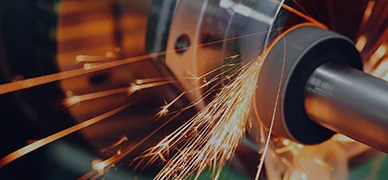
Here, grain means the visible direction of a brushed or ground surface, not the metal’s microscopic crystal structure. Dressing a weld can leave a different texture, sheen or direction from the parent sheet. A narrow local repair does not necessarily become invisible, particularly beside a wide, uninterrupted face.
Mark cosmetic faces and grain arrows on the finished-part drawing. Show the installed viewing direction and note adjacent pieces that must appear consistent. Agree whether the comparison is limited to the worked area, made across the entire face or judged against a representative first article. If appearance is important, approve a physical sample or a clearly documented reference; a label such as “hairline”, a grit number or an Ra value alone may not capture the expected visual result. Our brushed stainless steel parts guide covers general grain and sample requirements; this guide concentrates on the change caused by welding and local finishing.
Use Three Separate Acceptance Decisions
The following table is a practical RFQ framework, not a universal welding or corrosion standard. Set the requirements that apply to the actual part and make clear who approves a first-off sample.
| Acceptance area | Specify before production | Check at the agreed stage |
|---|---|---|
| Cosmetic appearance | Visible faces, grain arrows, approved sample, permitted variation, lighting and viewing position. | Texture direction, local blend, residual marks and appearance against the reference. |
| Surface condition | Heat-tint zones and sides, service exposure, agreed treatment and any required evidence. | Specified treatment scope, accessible inside and outside areas, contamination and records if required. |
| Weld geometry and fit | Required bead profile, permitted dressing, critical dimensions and separate weld inspection. | Agreed profile and assembly fit; assess specified weld inspection separately from appearance. |
If roughness is a functional requirement, state its value, measurement location and method. Ra alone does not define visible grain direction or gloss. A finish for equipment in a frequently cleaned environment should not be described as “hygienic” or certified solely because it looks smooth; any such requirement needs its own project specification and verification.
For an appearance-sensitive order, inspect and approve a representative welded first-off part before releasing the batch. Record the drawing revision, material, weld location, reference sample and finishing scope. Agree whether inspection happens before or after final cleaning, whether protective film is removed for visual review, and how accepted faces will be packed. A flat finish coupon may help choose a texture, but it cannot fully represent a formed corner or an internal weld.
RFQ Checklist for Singapore Equipment Projects
For a quotation on post-weld stainless steel finishing in Singapore, send the finished requirement and the starting condition:
- PDF drawing and, if available, a STEP model or assembly view with revision.
- Stainless grade, thickness, quantity and original surface finish.
- Weld locations and photographs, showing inside and outside access where relevant.
- Marked cosmetic faces, grain arrows and an approved finish sample or reference.
- Required bead profile, permitted dressing and critical fit dimensions.
- Use environment and any heat-tint treatment, inspection or documentation requirement.
- First-off approval contact, packing needs and Singapore delivery location.
Example drawing note for review: “Visible face A: brushed texture in arrow direction, compared with approved sample [ID]. Weld W1: blend the visible transition without reducing the specified weld profile or changing critical dimensions. Confirm the treatment and inspection access for the internal weld root before production. Record final visual and dimensional acceptance separately.”
This is a communication example, not a substitute for a project-approved welding or surface-treatment specification. Replace the open items with requirements agreed by the responsible designer and supplier.
Frequently Asked Questions
Is removing visible heat tint the same as passivating stainless steel?
No. A visually cleaner weld does not establish that a specified chemical treatment occurred or that a corrosion requirement was verified. Pickling, passivation and mechanical finishing have different purposes. Agree the required process and evidence for the particular job; the BSSA passivation guidance explains the distinction.
Can every stainless steel weld be ground flush?
No. Joint design, required weld profile, remaining material, accessibility and part function govern whether flush grinding is acceptable. Obtain a feasibility review before making it an acceptance condition.
Will a blended weld exactly match a brushed panel?
Not automatically. Starting finish, weld position, nearby geometry and working area affect the result. Mark the cosmetic face and grain direction, then approve a representative sample or first-off part and the allowable variation.
Does a polished weld prove that the weld itself passed inspection?
No. Cosmetic finish, surface treatment and weld integrity are different checks. State any required weld inspection and acceptance criteria separately in the drawing or purchase order.
Review the Finish Before the Batch Is Made
Send your stainless steel drawing, weld locations, photographs, quantity and finish reference. Mark the visible faces and describe the service environment and acceptance requirements. Lumen Future can review the welding and polishing and grinding scope together and identify what needs confirmation before production.