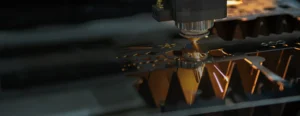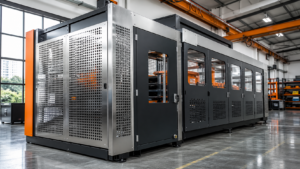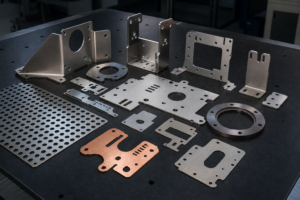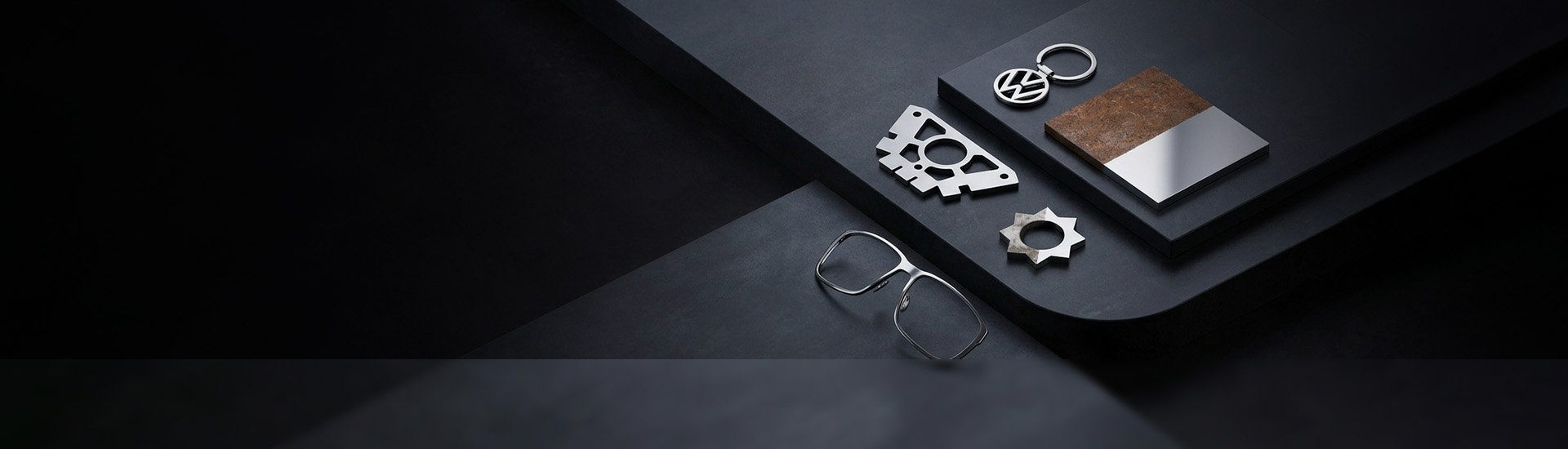
Laser cleaning for weld preparation is a controlled surface-treatment step, not a universal substitute for degreasing, grinding, blasting, passivation or coating. The correct route depends on the base metal, the identity and thickness of the contamination, the joint geometry, the welding process and the acceptance criteria.
Quick answer
Laser cleaning can be evaluated for selective removal of light rust, oxides, production residue and identified coatings from a defined weld zone. It is especially useful when the cleaning path must be localised and repeatable. Heavy wet oil, unknown paint, hazardous coatings, deep corrosion and inaccessible surfaces need additional review and may require pre-cleaning or another method.
The process does not repair pitting, prepare a bevel, correct joint fit-up or guarantee a defect-free weld. A representative coupon should be used when the material, coating or required weld result has not already been validated. See our laser cleaning service in Singapore for project-review information.
Why Does Weld-Zone Cleanliness Matter?
Rust, oxide, oil, grease, corrosion inhibitors, paint and other residues can interfere with a stable joining process. Depending on the material and welding method, contamination may contribute to porosity, spatter, inclusions, inconsistent wetting or a surface that is difficult to inspect and finish. It is only one part of the cause-and-effect chain: shielding gas, filler material, heat input, joint design and fit-up also need to be controlled.
The practical goal is therefore not to make the whole component look new. It is to establish an agreed surface condition over the weld path and any adjacent area needed by the welding and inspection process. Selective processing is one reason laser cleaning can be useful for precision components, repaired assemblies, automation frames and local weld seams.
Laser-system manufacturers describe welding preparation as an established application for removing selected oxidation and functional layers at joining points. However, published machine examples are not a performance guarantee for a different alloy, coating or geometry. The proposed process still needs to be reviewed on the actual project.
Cleaning Is One Step in the Weld-Preparation Sequence
A useful specification begins before the laser is switched on. The supplier needs to know what is present on the part and what the next manufacturing step requires.
Laser cleaning does not create a bevel, remove a mechanical burr, correct warped parts or establish the root gap. It also does not replace a welding procedure specification, process qualification, welder qualification or required nondestructive testing. These controls address different risks.
Can Laser Cleaning Remove Rust, Oxide, Oil and Coatings?
The answer changes with the condition. The table below is a screening guide, not a guaranteed processing specification.
| Surface condition | Initial suitability assessment | Important limitation |
|---|---|---|
| Light surface rust | Often a practical candidate for a local trial. | Inspect the exposed steel for pitting, cracking and section loss. |
| Heavy rust or thick scale | May require several passes, bulk removal or a combined method. | Large low-value areas may be more economical to blast or mechanically clean. |
| Thin oxide or process film | Can be selectively removed under material-specific settings. | Oxide type, thickness and substrate response must be established. |
| Light production-oil residue | May be evaluated after identifying the fluid and process requirement. | Vapour, aerosol, ignition and redeposition risks still require control. |
| Wet oil or heavy grease | Usually requires wiping, degreasing or another bulk pre-cleaning step. | Do not assume direct laser exposure is the safest or most effective first step. |
| Known paint or powder coating | May be suitable for selective stripping after reviewing composition and thickness. | Obtain the coating identity and safety data before processing. |
| Galvanising or metallic plating | Requires a coating-specific review. | Metal fumes and the effect on corrosion protection must be considered. |
| Unknown, lead-bearing or chromate coating | Do not process as a routine cleaning job. | Identification, exposure controls and an approved removal plan are required. |
| Salt or chloride contamination | Laser treatment alone may not prove removal of invisible ionic residue. | Washing, chemical treatment or contamination testing may be needed. |
| Deep pitting or material loss | Cleaning may expose the true condition. | It cannot restore missing metal or certify remaining structural capacity. |
Rust, Mill Scale and Oxide Before Welding
Light rust
Light, accessible surface rust over a narrow weld path is a strong candidate for process testing. The cleaned surface should then be checked for remaining oxide and the condition of the underlying metal. If the part will be stored or transported before welding, the handling and maximum allowable delay should be agreed rather than assumed.
Heavy corrosion
Thick rust can reduce productivity and create a large volume of particulate. Once removed, it may reveal pits, thinning or irregular edges that cleaning cannot correct. A repair engineer or customer engineer should determine whether the remaining component is usable. On broad structural surfaces, blasting, power-tool cleaning or replacement may provide a better total solution. Our laser rust-removal decision guide examines the wider cost and application questions.
Mill scale and material-specific oxide
Mill scale on carbon steel, natural oxide on aluminium and heat-generated oxide on stainless steel do not respond identically. Their absorption, thickness and bond to the substrate differ. A setting demonstrated on one material should not be copied to another without verification.
For aluminium welding, oxide management is only part of preparation; moisture, hydrocarbons, storage and filler selection also matter. For stainless steel, removing heat tint after welding is not the same as completing a specified pickling or passivation process.
Oil, Grease and Production Residues
Machined, formed and stored parts may carry cutting fluid, drawing compound, corrosion inhibitor, adhesive or handling residue. The first question is not whether a laser can create a bright track through it, but whether the residue can be processed safely and removed to the level required by the weld.
Thin, known residues may be evaluated with suitable extraction and controlled parameters. Heavy grease, pooled liquid and unknown solvent mixtures should normally be removed by an approved bulk-cleaning method first. Direct laser treatment can generate vapour and aerosol, spread residue or introduce an ignition hazard. Compressed air alone is not a substitute for identifying and safely collecting the contaminant.
Paint, Powder Coating, Galvanising and Plated Surfaces
Coating removal before welding is not merely a laser-parameter question. It is also an exposure, corrosion and downstream-quality question. The enquiry should identify the coating system, primer, previous repair layers and possible hazardous constituents. If the part is old or its history is unknown, testing or material identification may be required before any thermal removal process.
A selective laser path can reduce the area stripped around a joint, which may be useful where the surrounding finish should remain intact. Yet the remaining edge of the coating, the heat-affected region from welding and the method used to restore corrosion protection after joining still need to be specified.
- Paint and powder coat: provide the coating name, thickness and safety data.
- Galvanised steel: review zinc exposure, weld requirements and how protection will be restored.
- Chromate or lead-bearing systems: do not proceed without a suitable hazard assessment and controls.
- Multi-layer repairs: a topcoat description may not identify every underlying layer.
- Unknown legacy coating: treat the identity as unresolved, not as ordinary paint.
Pre-Weld and Post-Weld Laser Cleaning Serve Different Purposes
| Question | Pre-weld cleaning | Post-weld cleaning |
|---|---|---|
| Primary purpose | Prepare the joint zone by reducing specified contamination. | Remove selected surface oxide, soot or residue after welding. |
| Typical area | Seam path plus an agreed margin. | Weld bead and adjacent heat-tinted area as required. |
| Effect on internal defects | May support a more consistent process but cannot guarantee freedom from defects. | Cannot repair porosity, cracks, lack of fusion or dimensional distortion. |
| Inspection role | Establishes a known starting surface. | May improve visibility but does not replace required NDT. |
| Passivation or coating | Does not provide the final protective treatment. | Does not automatically passivate stainless steel or restore a coating system. |
Post-weld cleaning should therefore be specified by function. A cosmetic stainless assembly, an area awaiting dye-penetrant inspection and a carbon-steel frame awaiting paint can require different surface conditions even when the welds look similar.
Non-Contact Does Not Mean No Possible Substrate Effect
Laser cleaning is non-contact and does not need an abrasive medium, but it remains an energy-based material process. Excessive fluence, unsuitable scanning, too many passes or poor focus control may alter colour, roughness, surface oxide or local thermal condition. Fine edges and thin sections can also respond differently from a large flat coupon.
A validation plan can include:
- a representative material and coating coupon;
- defined cleaning width and number of passes;
- before-and-after photographs under consistent lighting;
- visual or magnified inspection for residual material and surface change;
- roughness measurement when it affects welding, sealing or coating;
- a trial weld using the intended joint, filler, gas and parameters; and
- the project-specific weld inspection required by the drawing or procedure.
A supplier’s laser power, scan-head resolution or demonstrated cleaning speed is not the same as a guaranteed finished-surface condition. Acceptance needs to be tied to the part, contamination and agreed method.
When Laser Cleaning May Not Be the Best Route
Laser cleaning should not be selected simply because it is newer. Another method or a combined process may be preferable when:
- the coating identity is unknown or contains hazardous constituents;
- the surface is covered in pooled oil, thick grease or loose bulk deposits;
- corrosion has caused deep pitting or structural section loss;
- a very large simple area makes blasting or mechanical cleaning more economical;
- the required surface profile must be produced for a particular coating system;
- the target is inside an inaccessible, shadowed or line-of-sight-restricted cavity;
- the site cannot provide suitable laser, fume and fire controls; or
- the actual requirement is bevel preparation, passivation, coating or dimensional repair.
For a wider comparison of alternatives, see our guide to laser cleaning versus sandblasting, chemical and mechanical cleaning.
Fume Extraction, Filtration and Laser Safety
Removed material does not disappear. Depending on the contaminant and laser interaction, the process can create particulate, vapour, gases and collected filter residue. “No blasting media” and “no liquid chemical bath” are useful process distinctions, but neither means zero waste.
Local exhaust should capture the plume close to its source. Filter selection must follow the material being removed: particulate filtration alone should not be presented as a universal control for gases or vapours. Used filters and collected dust may need to be managed according to the hazards of the original coating or contamination.
Many industrial cleaning applications use high-power laser equipment. The work area may require an enclosure or controlled zone, restricted access, beam termination, reflection control, interlocks, wavelength-appropriate eye protection, trained authorised personnel and fire precautions. Reflective metals deserve particular attention during the risk assessment.
How Should Weld-Preparation Cleaning Be Inspected?
“Looks clean” is not an auditable requirement. The drawing, purchase order, approved sample or inspection plan should define what matters. Visual inspection may be suitable for a general fabrication job, while corrosion-sensitive, sealing or regulated work can need additional verification.
Laser Cleaning for Weld Preparation RFQ Checklist
Send enough information for a process screen before a sample trial or quotation:
Lumen Future can review cleaning together with welding and structural assembly and project-specific quality requirements. If the joining method is still being selected, our laser welding versus TIG welding guide explains the broader process differences.
Frequently Asked Questions
Can laser cleaning remove rust before welding?
It can be evaluated for light or localised rust on suitable metal surfaces. Heavy corrosion may require multiple passes or a combined method, and the exposed substrate must still be inspected for pitting, cracks and material loss.
Can laser cleaning remove oil and grease?
Thin, identified production residue may be suitable for a controlled trial. Wet oil, pooled liquid and heavy grease usually require approved bulk pre-cleaning because direct processing can produce vapour, aerosol, redeposition or an ignition hazard.
Can paint or powder coating be laser-removed before welding?
Some known coatings can be selectively stripped, but the coating composition, thickness and safety data must be reviewed first. Unknown, lead-bearing, chromate or multi-layer legacy coatings require a dedicated hazard and process assessment.
Does laser cleaning replace grinding or sandblasting?
No single method is best for every job. Laser cleaning can be attractive for precise local zones and repeatable paths, while grinding or blasting may be more economical for heavy deposits, large simple areas or a specified surface profile.
Can laser cleaning damage the base metal?
It is non-contact, but unsuitable energy, focus, scanning or repeated passes may change roughness, colour, oxide condition or local temperature. A representative coupon and agreed inspection method help establish a safe process window.
Is post-weld laser cleaning the same as stainless-steel passivation?
No. Post-weld laser cleaning can remove selected surface oxide or residue. Passivation is a separate controlled chemical treatment and should be specified independently when required by the material, application or customer procedure.
Does laser cleaning produce zero waste?
No. It may avoid abrasive media or a liquid chemical bath, but removed rust, coating and contamination can become particulate, vapour and filter residue. Extraction, filtration and disposal must match the material being removed.
What is required for a weld-cleaning quotation in Singapore?
Provide the material grade, joint drawing, weld location, surface photographs, contaminant or coating identity, safety data, quantity, cleaning width, inspection requirements and any on-site access or ventilation constraints.
Request a Weld-Preparation Cleaning Review
Send the material grade, joint drawing, surface photographs and contaminant or coating details. Our laser cleaning team can review whether laser cleaning, pre-cleaning or a combined preparation route should be evaluated for your Singapore project.
Technical references: TRUMPF, Laser Cleaning; IPG Photonics, Laser Cleaning; OSHA, Laser Hazards and Controls, Ventilation and Protection in Welding, and Lead-Bearing Coating Guidance. These sources support general process and safety principles; project requirements must follow the applicable Singapore regulations, customer specifications, equipment instructions and site risk assessment.