

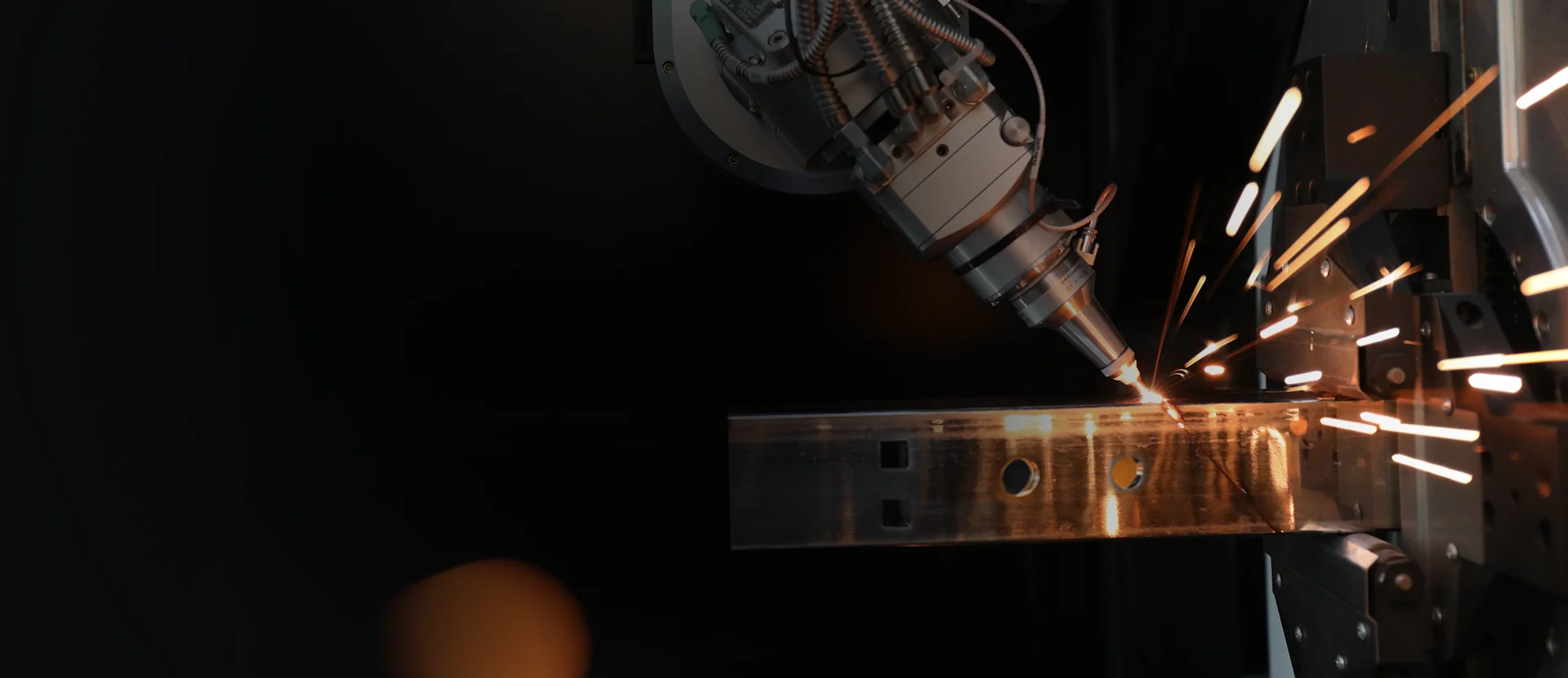
Metal Tube & Profile Laser Cutting Services in Singapore
Custom laser cutting for round, square and rectangular metal tubes—including end cuts, holes, slots, notches and assembly features based on your approved drawing.
Tube Parts Prepared for Fit-Up, Welding and Assembly
Traditional tube fabrication may require separate sawing, drilling, slotting, notching and manual marking operations. Laser tube cutting can combine many of these features into a controlled process based on an approved digital model.
It is especially useful for repeated hole positions, angled ends, tube-to-tube joints and locating features that support downstream assembly.
- Straight and angled end cuts
- Holes and elongated slots
- Tabs and locating features
- Notches and relief geometry
- Coping or fishmouth-style joints
- Features indexed on different tube faces
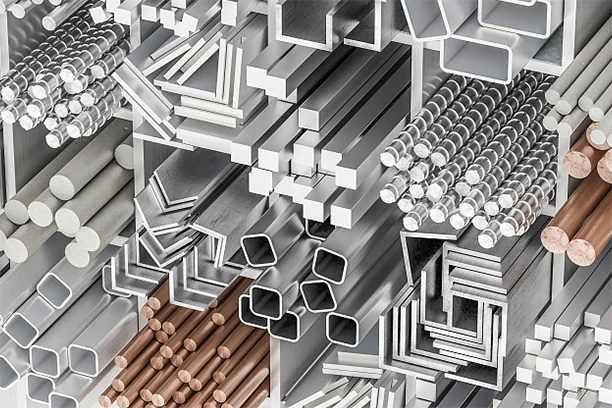
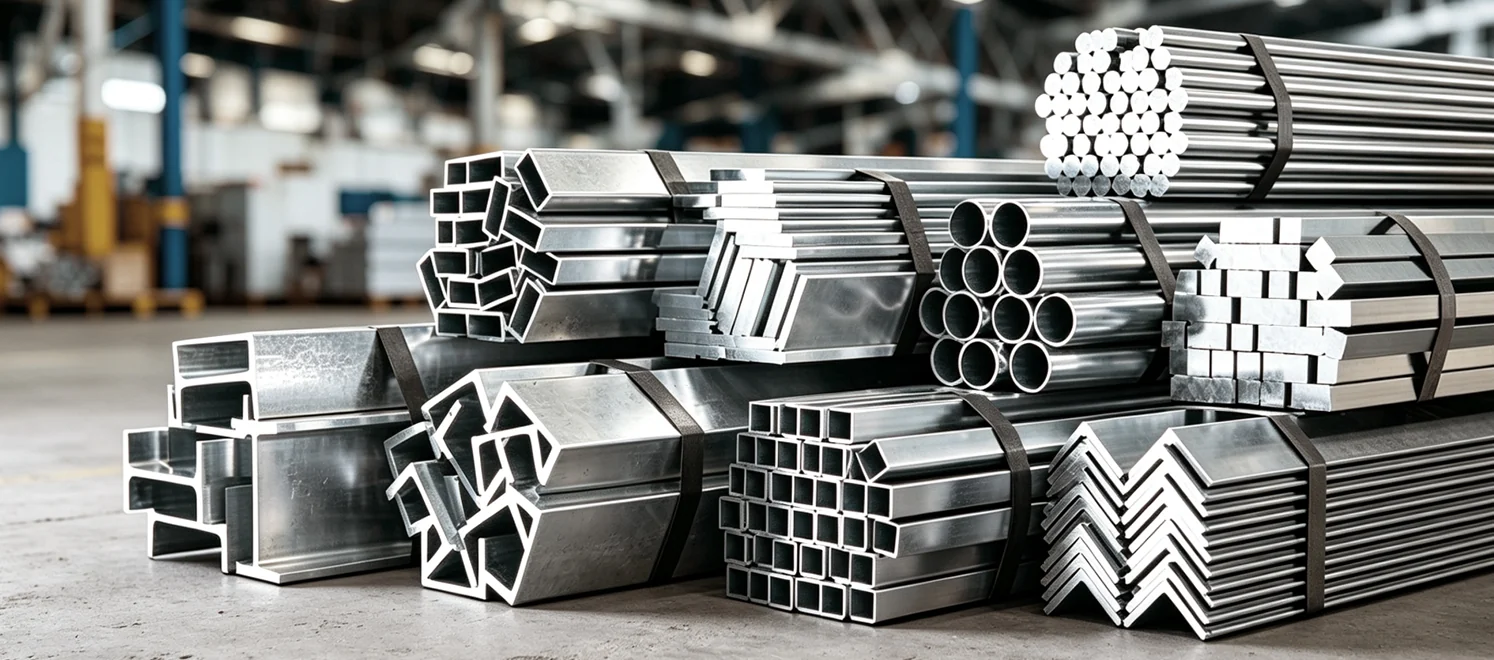
Metal Tube Profiles We Review
Final suitability depends on profile size, wall thickness, material, clamping area and feature geometry. Non-standard sections should be submitted with a profile drawing or datasheet.
Round Tube & Pipe
Round profiles for equipment frames, supports, rails and fabricated assemblies.
Square Tube
Square hollow sections for machine frames, guards, bases and racks.
Rectangular Tube
Rectangular sections where stiffness, orientation or mounting area matters.
Stainless Steel
For corrosion-resistant, cleanroom, marine and equipment structures.
Mild & Carbon Steel
For machine frames, structural supports and safety guards.
Aluminium
For lightweight automation, display and transportable assemblies.
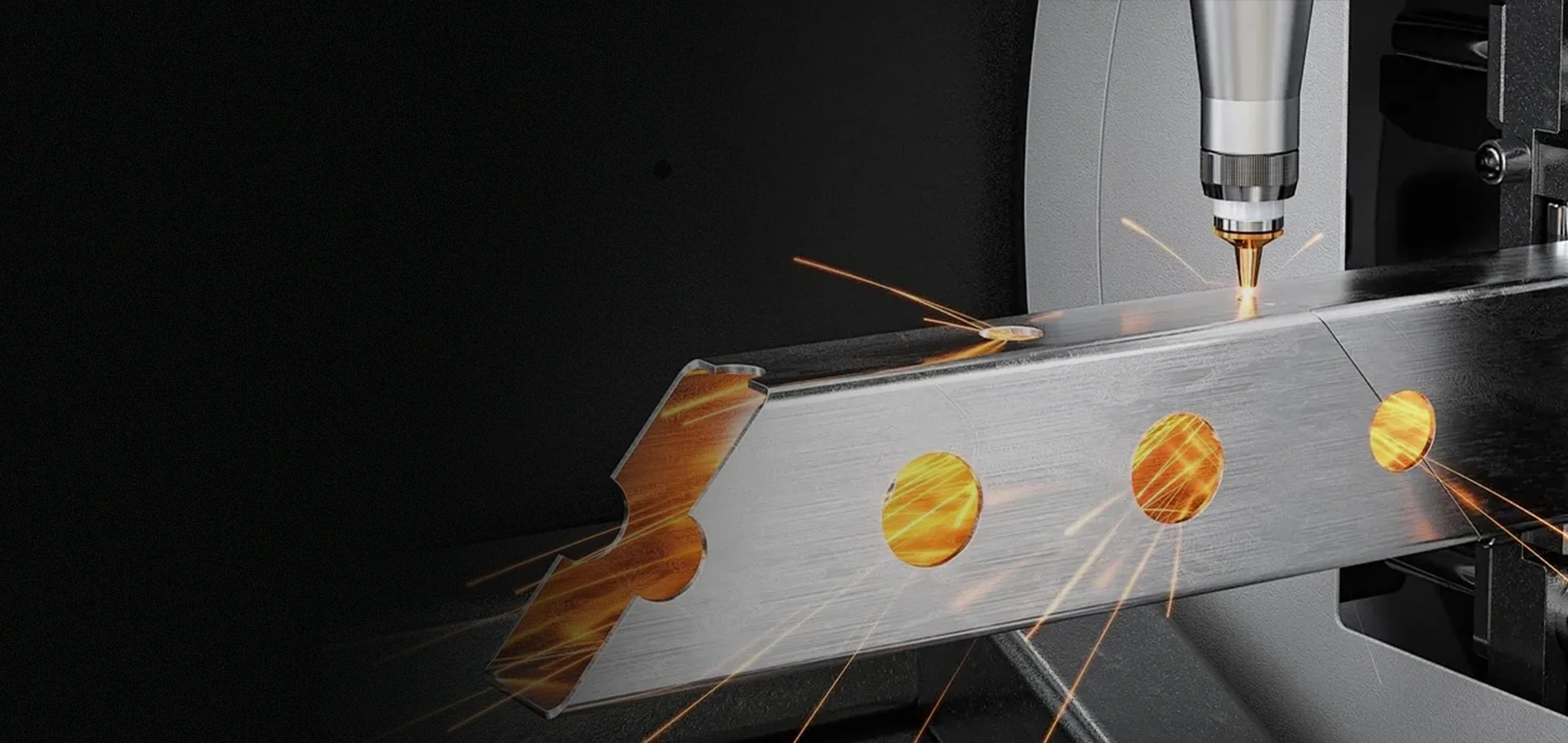
Cut More Than the Finished Length
A well-designed tube component can include geometry that helps position parts, locate mounting hardware and prepare connections for welding. This may reduce manual measurement and repeated setup during assembly.
These features do not automatically eliminate welding fixtures or inspection. We review the complete assembly intent before confirming the cutting scope.
- Locating tabs
- Assembly slots
- Matching notches
- Angled joints
- Mounting holes
- Reference features
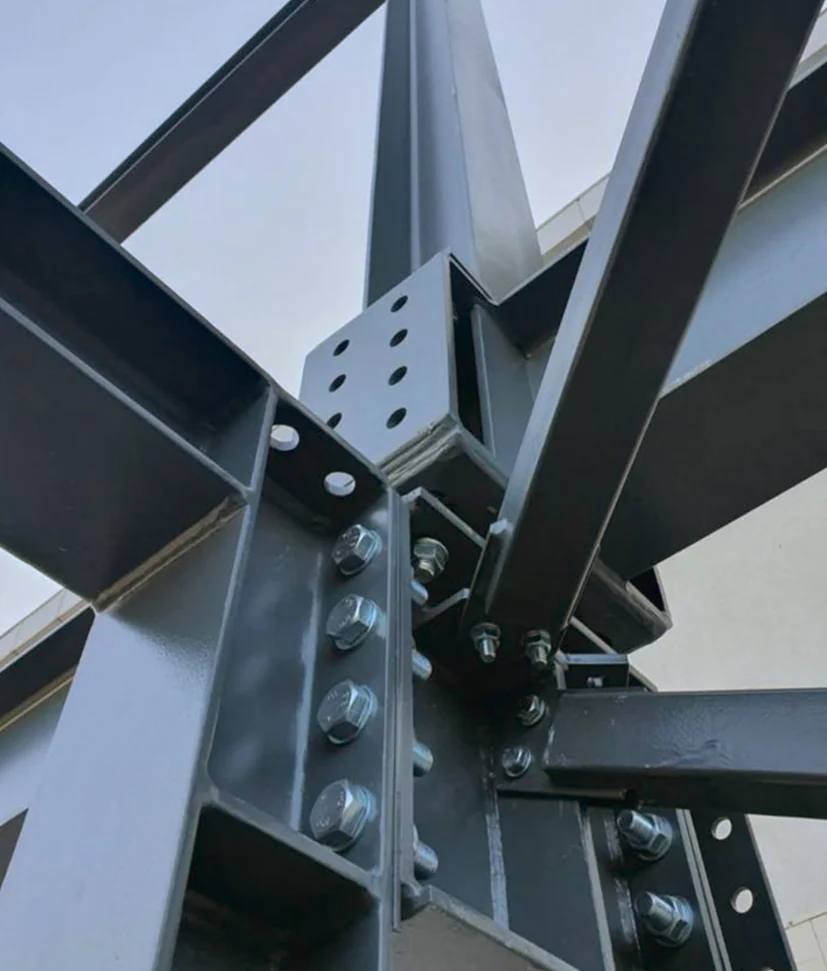
When Laser Tube Cutting Makes Sense
Laser cutting is valuable when geometry and repeatability justify digital processing. A conventional saw can still be more economical for simple straight cuts with no additional features.
| Part requirement | Likely approach | Why |
|---|---|---|
| Simple straight cut only | Saw cutting may be considered | Lower process complexity when no holes, slots or shaped ends are required. |
| Multiple holes or slots | Laser tube cutting | Features can be positioned from an approved digital drawing. |
| Features on several faces | Laser tube cutting | Indexed geometry can reduce separate drilling and marking operations. |
| Tube-to-tube joints | Laser tube cutting plus welding | Notches and end geometry can be prepared for fit-up and assembly. |
| Repeat production | Laser tube cutting | Program-controlled geometry supports consistent recurring parts. |
Send the Geometry and the Functional Requirements
STEP is preferred for complete three-dimensional tube parts, especially when holes and slots appear on different faces.
DXF may support simpler geometry, while a PDF engineering drawing should communicate material, tube section, wall thickness, critical dimensions, tolerances and inspection requirements.
A screenshot alone may not communicate feature orientation or drawing scale reliably.
Include These Details for a Faster Review
- Round, square or rectangular profile
- Outside diameter or section dimensions
- Material and grade
- Wall thickness and finished length
- STEP, DXF and/or PDF drawing
- Required quantity
- Critical dimensions and tolerances
- Welding, grinding or assembly scope
- Inspection documents required
- Target delivery date and location
From Tube Drawing to Delivered Parts
The agreed drawing and quotation define the material, cutting scope, related fabrication work and inspection requirements.
Submit Files
Send the profile, material, wall thickness, quantity, drawing and target delivery date.
Engineering Review
We check feature orientation, process access, tolerance requirements and downstream fabrication needs.
Scope & Quote
The quotation confirms the agreed material, quantity, cutting work and additional processes.
Tube Cutting
Parts are produced from the approved drawing and confirmed manufacturing scope.
Inspection
Checks follow the critical dimensions and inspection requirements stated in the drawing.
Finish & Deliver
Parts may proceed to welding, grinding or assembly before Singapore delivery or collection.
Tube Components for Singapore Industry
Tube-cut parts can be supplied as individual components or coordinated with related sheet-metal and structural fabrication.
Industrial Automation
Machine frames, conveyor structures, supports, guards and chassis.
Marine & Offshore
Stainless supports, equipment frames, rails and guards.
Construction & Infrastructure
Structural frames, railings, supports and hollow-section components.
Cleanroom & Medical
Equipment frames, racks, trolleys and instrument supports.
Commercial & Architectural
Display structures, furniture frames and decorative assemblies.
Replacement & Repeat Parts
Drawing-based replacement components and recurring production.
Specify the Dimensions That Control Fit
Achievable tube-cutting tolerance depends on material, wall thickness, profile variation, straightness, clamping stability, part length, feature size and feature position.
Instead of applying the tightest tolerance to every dimension, identify the dimensions that control alignment, fit or assembly. Where appropriate, provide datum references, mating-part information and the required inspection method.
We confirm practical tolerance and inspection scope after reviewing the complete drawing.
What Determines Tube Cutting Cost?
- Material, grade and profile availability
- Outside dimensions and wall thickness
- Raw length and finished part length
- Number of holes, slots and tube faces
- Piercing, cutting time and end geometry
- Quantity, nesting and repeat setup
- Welding, grinding and assembly scope
- Inspection, documentation and delivery
Continue From Cut Tube to Finished Assembly
Use one project scope to coordinate tube components with sheet parts, welding, finishing and identification requirements.