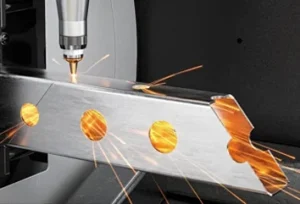
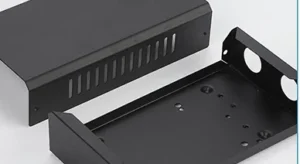
Automation teams should outsource parts when the design is sufficiently stable, the required equipment or inspection is not economically available in-house, or internal engineering capacity is more valuable elsewhere. In-house fabrication may remain the better choice for rapidly changing prototypes, emergency one-off parts, confidential development work or simple components that can be made safely with available equipment. The right decision depends on total cost, iteration speed, capability, documentation and supply risk—not the part name or quantity alone.
A robot link, camera bracket or control enclosure is not automatically a “buy” item. The same component may be made internally during concept development, outsourced for an engineering build and then placed with a repeat-production supplier after the design is frozen.
This guide provides a practical make-or-buy framework for automation parts outsourcing in Singapore. If you have already decided to outsource and want to compare materials, laser cutting, bending, welding and finishing routes, use our core guide to laser cutting for industrial automation parts in Singapore.
Make-or-Buy Decision Matrix for Automation Teams
Start by separating immediate engineering needs from production needs. Internal fabrication often excels at rapid learning; external fabrication becomes more valuable when the design, quantity and acceptance criteria are sufficiently defined.
| Decision factor | Make in-house may fit when | Outsourcing may fit when |
|---|---|---|
| Design maturity | Geometry or interfaces change daily | Drawing and interfaces are stable enough to control |
| Required response | A temporary part is needed within hours | The job can follow an agreed quotation and production schedule |
| Available capability | Existing equipment, tooling and operators are suitable | Specialist cutting, forming, welding, machining or finishing is required |
| Quantity and repetition | One-off experimental parts dominate | Multiple identical parts or repeat orders require consistency |
| Inspection | Simple fit checks are sufficient for development | Controlled dimensions, records or customer documents are required |
| Surface treatment | No specialist finish is needed | Anodising, coating, grinding or cosmetic finishing must be coordinated |
| Engineering capacity | People and machines are genuinely available | Fabrication work is delaying controls, integration, software or commissioning |
| Data and IP | The design cannot yet be released outside the team | Controlled drawings, NDA terms and supplier access can be managed |
Compare Total Internal Cost With Outsourced Landed Cost
Comparing an external unit price with raw material cost understates the internal option. The calculation should include the resources that the job consumes and the work displaced by it.
Opportunity cost is often the deciding factor for automation teams. If a mechanical engineer spends two days making brackets while robot integration or commissioning waits, the cost is not limited to those two days of labour. Conversely, outsourcing an unstable bracket can create repeated quotation, shipping and revision cycles that are slower than an internal prototype.
Use quantity-break quotations only after the design is stable enough for meaningful comparison. For help separating material, cutting, secondary processes, inspection and delivery, see our guide to reading a fabrication quotation.
A Hybrid Sourcing Strategy Is Often the Best Answer
Many successful automation projects change sourcing method as technical risk falls:
- Concept stage: make temporary plates and brackets internally for fast learning.
- Engineering build: outsource a controlled set to validate material, fit, forming and finish.
- Design freeze: issue a revision-controlled package for repeatable production.
- Field support: retain internal capability for emergency modifications while the supplier produces standard replacements.
This approach protects iteration speed without forcing the production team to repeat manual prototype methods indefinitely. It also creates a clear point at which the CAD model, drawing, bill of materials and acceptance criteria must become controlled.
1. Robot Link Profiles and Structural Channels
Robot links, gussets, channels and connecting plates combine structural load paths with motor, bearing and end-effector interfaces. Their sourcing decision depends on whether the geometry is still being tuned and whether the critical interfaces can be produced and verified with available equipment.
| Outsource when | The geometry is stable; several matching links are needed; forming, welding, machining or finishing exceeds internal capability. |
|---|---|
| Make internally when | Link length, joint position or stiffness is still being tested and a temporary prototype is needed immediately. |
| Provide | STEP assembly, controlled PDF drawing, joint and bearing interfaces, material, quantity, surface treatment and identified datums. |
| Common DFM risks | Holes near bends, incompatible alloy/temper and bend radius, weld distortion, inaccessible joints and interfaces that need machining rather than cutting alone. |
| Possible route | Laser-cut and formed sheet; cut or machined profile; fabricated structure with post-weld machining where the drawing requires it. |
| Inspection | Prioritise joint interfaces, mounting datums and assembly relationships. Define the report and method from the drawing instead of specifying CMM by default. |
2. Sensor and Camera Mounting Brackets
Sensor mounts often begin as highly adjustable prototypes and later become repeatable production components. Outsourcing too early can slow calibration work; waiting too long can leave every machine with a different hand-modified bracket.
| Outsource when | The sensor model, field of view, mounting reference and adjustment range have been validated, especially when multiple machines need the same bracket. |
|---|---|
| Make internally when | Position, viewing angle, lighting or cable routing is still changing during commissioning. |
| Provide | Sensor mounting drawing, STEP model, optical or measurement direction, adjustment range, cable envelope, reference datums and finish. |
| Common DFM risks | Undefined tolerance stack, holes too close to bends, insufficient slots, blocked connectors, weak stiffness and no access for installation tools. |
| Possible route | Laser cutting plus bending for sheet brackets; CNC machining where tight three-dimensional relationships or rigid datum interfaces are required. |
| Inspection | Check the mounting interfaces, angle and relevant datum relationships. Request numerical reports only for characteristics that affect alignment or function. |
3. Equipment Base Plates and Machine Frames
Base plates and frames can consume significant floor space, welding time and handling capacity. However, a rapidly changing prototype frame built from modular profile may remain easier to adjust internally than a fully welded structure.
| Outsource when | Size, mass, welding, fixturing, machining or surface treatment exceeds internal capability, or multiple machines need repeatable structures. |
|---|---|
| Make internally when | A simple modular frame is still being adjusted and the team has suitable assembly and alignment capability. |
| Provide | Assembly STEP, controlled drawings, weld symbols, mounting interfaces, loads, lifting points, required datums and any protected surfaces. |
| Common DFM risks | Treating as-cut plate as a precision datum, no allowance for weld distortion or post-weld machining, blocked weld access and coating on functional interfaces. |
| Possible route | Cut and weld; fabricated frame followed by machining or grinding; modular-profile assembly; coordinated finishing where specified. |
| Inspection | Define flatness, position, weld and mounting-interface requirements on the drawing. Select inspection tools according to part size, access and tolerance. |
4. Control Cabinet Panels and Enclosures
Control panels and enclosures are attractive outsourcing candidates after the electrical layout is stable because they combine cut-outs, bending, hardware, doors and finishing. During early PLC and drive selection, modifying an existing cabinet internally may still be more efficient.
| Outsource when | The component layout is frozen; multiple cabinets are required; controlled bending, hardware installation, welding or finishing is needed. |
|---|---|
| Make internally when | The PLC, drive, terminal and operator-interface positions are still moving, or an existing standard cabinet can be adapted safely. |
| Provide | STEP model, controlled panel drawings, cut-out schedule, door/hinge direction, cable entries, hardware specification, finish and sealing interfaces. |
| Common DFM risks | Cut-outs conflicting with bends or hardware, insufficient insertion access, coating allowance omitted, poor door clearance and undefined cosmetic faces. |
| Possible route | Laser cut, bend, install hardware, weld where required, finish and mechanically assemble according to the quoted scope. |
| Inspection | Check critical cut-outs, door and hinge fit, specified hardware and cosmetic criteria. Do not assume a complete enclosure has an IP rating without the required design and verification. |
5. End-Effector and Gripper Tooling Plates
End-effectors often contain the highest concentration of precision interfaces in an automation system. They may also change repeatedly while the team learns how to grip, locate or release the product. The sourcing decision should follow design maturity and the need for machining—not a default material or tolerance.
| Outsource when | Precision dowels, threads, pneumatic passages, repeatable datum interfaces or multiple identical tools require machining and controlled inspection. |
|---|---|
| Make internally when | Gripper spacing, suction-cup position or actuator arrangement is still changing and the internal shop can respond faster. |
| Provide | 3D model, 2D drawing, datum scheme, robot flange interface, load and centre-of-gravity limits, threads, dowels, air/vacuum routing and finish. |
| Common DFM risks | Expecting laser cutting to produce precision dowel holes, inadequate tool access, thin walls around air passages, coating on fits and material selection unrelated to load or process. |
| Possible route | Prepare a plate or blank, CNC machine functional features, apply compatible finish, then assemble and inspect the defined interfaces. |
| Inspection | Focus on flange, dowel, mounting, parallelism and tool-centre interfaces. CMM may be one option, but the appropriate method and report must be agreed. |
For bent aluminium parts, material selection should reflect forming and functional requirements rather than a blanket rule. See our comparison of Aluminium 6061 vs 5052.
Questions to Ask an Automation Parts Supplier
- Which processes are performed internally and which are coordinated externally?
- Can the supplier support both development batches and controlled repeat orders?
- How are drawing revisions received, approved and released to production?
- How is a design change handled after quotation or material release?
- Can prior programs, tooling and inspection requirements be identified for repeat orders?
- Will any material or process substitution require written approval?
- How is the inspection method selected from the drawing?
- Which reports or certificates are included, optional or separately quoted?
- Can prototype and production quantities be quoted separately?
- How do material availability and specialist finishing affect the proposed schedule?
- What NDA or controlled-data arrangements are available where required?
- What information is needed before the supplier can commit to the route and lead time?
If your team wants to understand what happens after file submission, see the complete DXF-to-delivery fabrication workflow. For measurement planning, review our quality assurance approach and CMM inspection buyer’s guide.
RFQ Package for Outsourced Automation Parts
- STEP model and controlled PDF drawing;
- DXF where a flat cutting profile is provided;
- part number and drawing revision;
- material grade, condition and thickness;
- prototype and expected production quantities;
- critical datums, fits and assembly interfaces;
- threads, inserts, dowels and hardware;
- surface treatment and protected faces;
- inspection characteristics and report requirements;
- packaging and part-identification requirements;
- required delivery date and Singapore destination; and
- whether alternative materials or processes may be proposed.
For geometry checks, use our CAD file preparation guide. A complete package lets the supplier distinguish a quick concept part from a controlled production component.
Make-or-Buy Decisions for Automation Teams in Singapore
Robotics parts sourcing in Singapore often rewards a hybrid approach: keep design iteration and urgent rework close to the engineering team while placing stable fabrication packages with a qualified local supplier.
Singapore automation projects often combine short engineering cycles, site commissioning and small-to-medium repeat quantities. Local proximity can help communication and physical review, but location alone does not guarantee capability, price or schedule. A regional or hybrid supply model may also be suitable when freight, data control, part size, supplier capacity and engineering response are considered together.
Evaluate the communication loop as carefully as transport distance:
- Can DFM questions reach the correct engineer?
- Can drawings and revisions be exchanged without ambiguity?
- Can a first build be reviewed before repeat production?
- Can the supplier support site-driven changes without mixing revisions?
- Are large frames, finished panels or delicate assemblies packaged appropriately?
- Does the quoted delivery route match the project’s commissioning plan?
Frequently Asked Questions
Which automation parts should always be outsourced?
None based on name alone. The decision depends on design stability, internal capability, quantity, inspection, finishing, response time and total cost. A bracket may be internal during development and outsourced after design freeze.
Is outsourcing always cheaper than in-house fabrication?
No. For a rapidly changing one-off part, external quotation and delivery may cost more than an internal prototype. For stable or repeated parts, outsourcing may avoid setup, rework, specialist equipment and occupied engineering capacity. Compare total cost rather than raw material with unit price.
At what quantity does outsourcing become economical?
There is no universal break-even quantity. Part size, setup, process route, material, internal utilisation and inspection requirements can matter more than piece count. Request quantity-break pricing and compare it with a complete internal cost model.
Should every outsourced robotics part have a CMM report?
No. Specify the functional characteristics and drawing tolerances first. The supplier should propose an appropriate measurement method. Request CMM data only when the feature, contract or agreed inspection plan requires it.
Can we prototype internally and outsource production?
Yes. This hybrid route is common, but the production package must convert prototype knowledge into controlled CAD, drawings, materials, interfaces and acceptance criteria. Hand-fitted adjustments should not remain undocumented.
What is the biggest sourcing risk for repeat automation parts?
Revision ambiguity is one of the most damaging risks. Use consistent part numbers, release status and change records, and require the supplier to confirm the revision before production.
Choose the Sourcing Route Before Requesting Production
Decide whether the immediate goal is learning, urgent repair, engineering validation or repeat production. Then compare capability, time, documentation, total cost and supply risk. The result may be in-house manufacture, external manufacture or a hybrid route that changes as the design matures.
Considering outsourcing an automation part?
Send the drawing, current development stage, expected quantity and required processes. Lumen Future can review whether the part is suitable for external fabrication and clarify the proposed manufacturing and inspection route before quotation.