

Mild & Carbon Steel Laser Cutting & Fabrication in Singapore
Drawing-based steel sheet, plate, tube and machined components for frames, equipment and industrial assemblies. We review the grade, product standard, stock form, geometry, finish and inspection requirements before confirming the manufacturing route.
“Mild steel” is a useful description—not a complete material specification
Mild steel commonly refers to lower-carbon steel that is practical for many cut, formed and welded parts. Carbon steel is a broader family that also includes medium-carbon grades such as 1045. Structural steels such as Q235, S235 and A36 are defined within different national or regional standards and may be supplied as plate, bar or structural section.
These names can overlap in everyday purchasing, but they are not automatic substitutes. The drawing should identify the governing standard, complete grade, product form and any delivery or test requirements. That prevents a familiar trade name from replacing an engineering decision.
Similar applications do not make the grades equivalent
Use this table to organise the RFQ. It is not a cross-reference or substitution approval; the applicable standard, product form, thickness and project requirements still govern.
| Designation | Material context | Typical project fit | What to verify |
|---|---|---|---|
| Q235 | Carbon structural steel within the GB standard system, supplied in project-specific qualities and product forms. | General frames, plates, brackets, bases and welded support parts when the design specifies it. | Complete suffix or quality, governing standard, product form, certificate and approved substitution rules. |
| S235 | Non-alloy structural steel within the EN 10025 family. JR, J0 and J2 designations address different impact-energy requirements. | Plates, structural sections, frames and general welded fabrications designed to the relevant EN requirements. | Full designation, thickness, delivery condition, impact requirement and structural responsibility. |
| A36 | ASTM carbon structural steel specification covering structural-quality shapes, plates and bars. | Base plates, brackets, frames, structural members and general welded construction where A36 is specified. | Product form, thickness, supplementary requirements and the welding procedure appropriate to the application. |
| 1018 | Low-carbon designation commonly encountered in bar and machined-product supply chains. | Pins, spacers, shafts, fixtures and machined parts where the drawing calls for the relevant 1018 product. | Hot-rolled or cold-finished condition, bar standard, size tolerance, mechanical requirements and certification. |
| 1045 | Medium-carbon steel used where a project needs higher strength, hardness response or wear-related performance. | Shafts, pins, tooling and selected machined components rather than ordinary folded enclosures. | Heat-treatment condition, machinability, weldability, forming risk and final property requirements. |
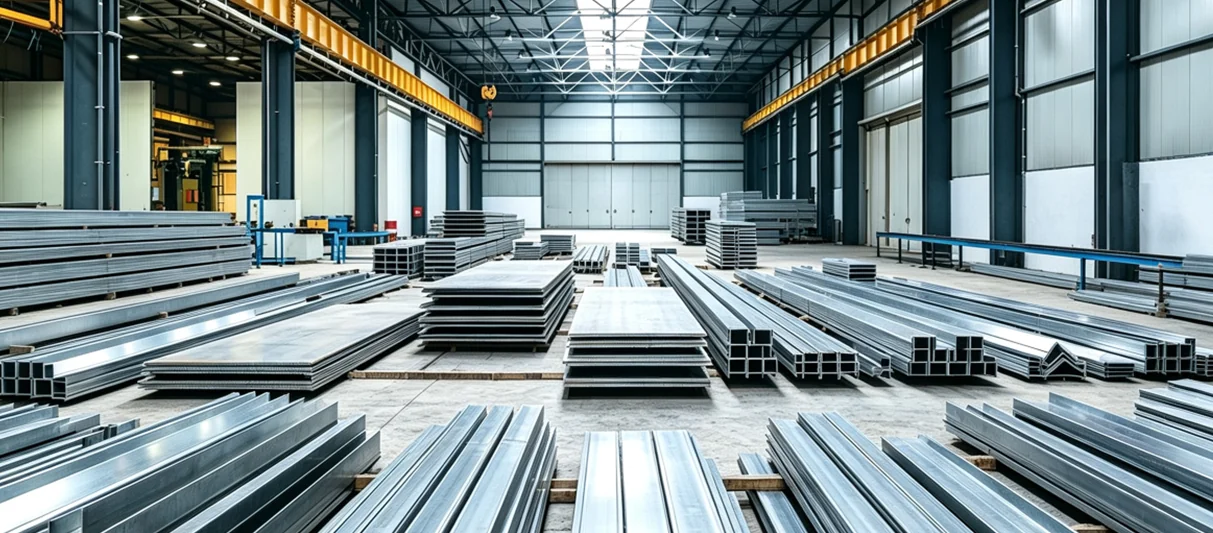
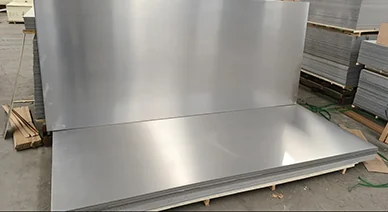
Sheet, plate, tube, section and bar do different jobs
A grade name alone does not tell the workshop what to buy. Flat sheet may become a folded cover; plate may become a machine base; hollow section may form a frame; bar may be turned into a pin. Each route carries different dimensional, surface and certification expectations.
Start with function, standard and manufacturing route
The drawing owner remains responsible for material selection. The fabricator can review availability and manufacturability without silently changing the specification.
GB structural projects
Often encountered in general structural plates and profiles sourced to a GB specification.
Review: full quality designation and certificate.EN structural projects
Used for non-alloy structural products where the project works within the EN 10025 framework.
Review: JR, J0 or J2 and delivery condition.ASTM structural parts
A familiar choice for structural-quality plates, bars and shapes under an ASTM-controlled drawing.
Review: form, thickness and supplementary needs.Low-carbon machined parts
Common in bar-derived parts where machinability, dimensional condition and the specified supply standard matter.
Review: cold-finished versus hot-rolled.Medium-carbon components
Considered for shafts, pins and wear- or strength-conscious parts—not as a default sheet-metal grade.
Review: heat treatment, welding and forming.Grade not yet fixed
Share the load, environment, stock form, process route and finish. We can identify manufacturing questions for the design team to resolve.
Material approval remains an engineering decision.Oxygen and nitrogen produce different cut-edge conditions
The best choice is not decided by material name alone. Thickness, laser power, productivity, edge appearance, welding, coating and total part cost all matter.
Where the cut edge forms part of a coated, welded or bonded surface, state the downstream requirement instead of asking only for the fastest cut.
The exothermic reaction can support cutting efficiency in suitable mild-steel conditions, but it normally leaves an oxidised cut edge. Edge preparation may be needed before some coating, joining or bonding operations.
Often considered when reduced edge oxidation is important. Gas use, required laser power, achievable quality and cost depend on thickness, machine capability and the actual geometry.
Burr, dross, taper, piercing marks and heat effects still depend on material condition, parameters and feature design. Confirm whether parts are accepted as cut or require deburring and surface preparation.
Build the part beyond the cut profile
A flat blank is often only the first operation. Forming, welding, surface preparation and inspection should be considered before nesting and production begin.
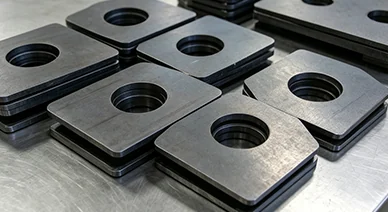
Sheet & plate cutting
Profiles, holes and slots are reviewed against grade, thickness, edge requirement, distortion risk and downstream use.
Sheet metal laser cutting →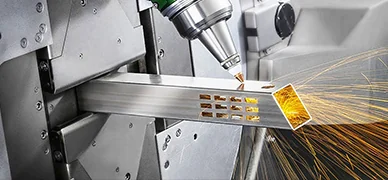
Tube & profile cutting
End cuts, holes, slots and notches can be coordinated around round, square and rectangular profiles.
Tube laser cutting →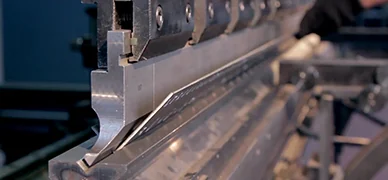
Bending & folding
Material condition, thickness, bend radius, tooling, grain direction and hole position influence the formed result.
CNC bending & folding →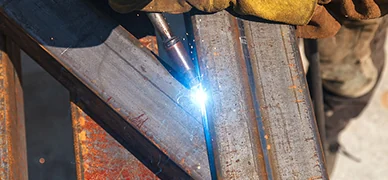
Welding & assembly
Joint access, fit-up, sequence, heat input, distortion and final datums should be planned as part of the fabrication route.
Welding & assembly →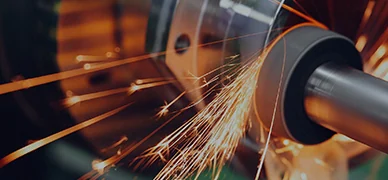
Deburring & preparation
Cut-edge oxide, mill scale, weld spatter, burrs and sharp corners may need treatment before coating or assembly.
Grinding & finishing →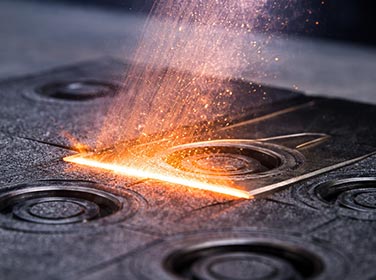
Laser cleaning
Rust, oxide or selected coating can be removed under a defined process, but cleaning is not passivation, painting or permanent corrosion protection.
Laser cleaning →Bare carbon steel needs an environment-specific finish
Singapore humidity, sheltered condensation, coastal salt, cut edges and water-trapping details can accelerate corrosion. “Powder coated” is not a complete corrosion specification.
Powder coating
Common for equipment frames and covers. Specify pretreatment, colour, gloss, cosmetic class, masking, grounding points and any outdoor requirement.
Wet-paint system
Useful where a defined primer and topcoat system, repair method or site-specific colour standard is required.
Zinc-based protection
Pre-galvanised sheet, electroplating, hot-dip galvanising and zinc-rich primers are different routes. State the intended process and post-fabrication treatment.
Temporary protection
Rust-preventive oil, wrapping and dry storage can support transport and short-term storage, but do not replace the final coating system.
Steel components for equipment and industrial assemblies
Low material cost can be attractive, but the correct decision accounts for fabrication, welding, coating, handling and the service environment—not sheet price alone.
 Machine bases & mounting plates
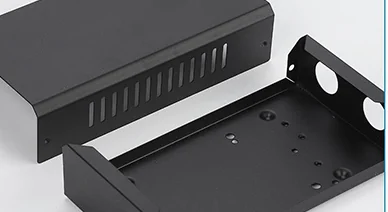 Brackets, guards & covers
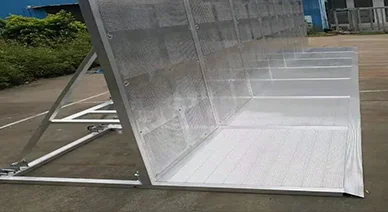 Enclosure frames & supports
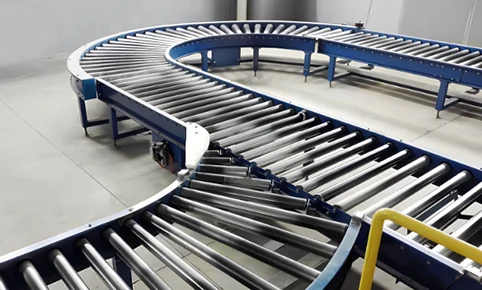 Automation frames & machine structures
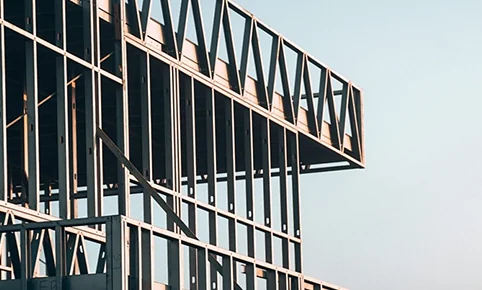 Tube frames & welded structuresCustom plates, profiles & repeat parts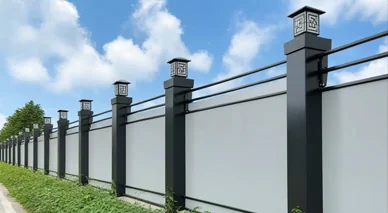
Design the protection around real exposure
An air-conditioned equipment room, a sheltered loading area and a coastal outdoor installation do not present the same corrosion risk. Drainage, crevices, contact with other metals and maintenance access can matter as much as the coating name.
For structural, lifting, pressure-containing, safety-critical or regulated parts, the responsible engineer must confirm the material, design standard, welding requirements and acceptance criteria.
Inspect the final manufacturing stage—not the machine specification
Laser positioning data does not guarantee the accuracy of a formed, welded and coated assembly. Inspection should follow the agreed drawing, datums and functional interfaces.
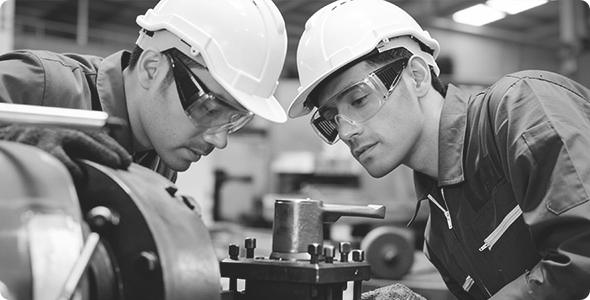
Put measurable requirements in the RFQ. “High precision,” “rustproof” and “good finish” do not define an inspection method or acceptance limit.
What to send for a mild or carbon steel quotation
Clear inputs reduce assumptions and allow cutting, forming, welding, coating and inspection to be reviewed as one route.
Related steel services and guides
Mild and carbon steel fabrication questions
Is mild steel the same as carbon steel?
Not exactly. Mild steel is an informal term commonly used for lower-carbon steels that are practical for forming and welding. Carbon steel is a broader family that also includes medium- and higher-carbon grades. The drawing should state the actual designation, governing standard and product form.
Are Q235, S235 and A36 equivalent?
No blanket equivalence should be assumed. They belong to different standards and can differ in chemical limits, mechanical requirements, product forms, thickness rules, delivery conditions and testing. A substitution requires engineering and customer approval against the governing documents.
What is the difference between 1018 and 1045 steel?
1018 is a lower-carbon designation commonly used for bar-derived and machined components. 1045 contains more carbon and may be selected where higher strength, hardness response or wear performance is needed. That difference also affects weldability, forming and heat-treatment decisions.
Should mild steel be laser cut with oxygen or nitrogen?
Oxygen can support efficient cutting in suitable conditions but normally produces an oxidised edge. Nitrogen may be selected to reduce edge oxidation, although gas use, equipment demand and cost can be higher. Choose according to thickness, geometry, edge acceptance and downstream welding or coating.
What finish should be used for steel parts in Singapore?
It depends on whether the part is indoors, sheltered, outdoors, coastal or exposed to condensation or chemicals. Powder coating, wet paint, galvanising and other zinc-based systems have different preparation, edge, masking and maintenance requirements. The complete protection system should be specified for the service environment.
What files and material information should I send?
Send a DXF for flat profiles, a STEP model for formed or assembled parts, and a PDF drawing showing the full grade, standard, product form, thickness, quantity, tolerances, datums, welding, coating and inspection requirements. State which file governs if the files conflict.
Turn the steel specification into a manufacturable part
Share the drawing, grade, standard, stock form, quantity and corrosion-protection requirement for a project-specific review.