Laser Surface Cleaning
Laser Cleaning Service in Singapore
Laser cleaning for selected parts, welds and tooling in Singapore. We review the substrate, contaminant or coating, protected areas and access before processing. Finish-critical work may require a representative trial and agreed acceptance checks.
Featured Laser Cleaning Projects
Explore laser cleaning projects for rust removal, paint stripping, oxide removal, weld seam cleaning, mould maintenance, and metal surface preparation. Our laser cleaning service provides a non-contact, chemical-free process for restoring metal surfaces and preparing parts for welding, coating, repair, and industrial maintenance in Singapore.


What We Do
Laser Cleaning Capabilities
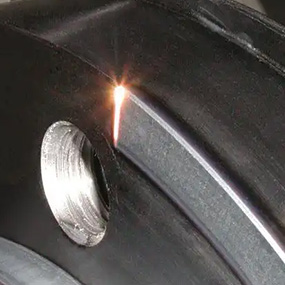
Pulsed laser cleaning can target rust, oxides, coatings or residues on suitable parts. The result depends on the substrate, layer, finish and processing settings; for sensitive work, confirm the method on a representative trial area before production.
Full removal
Rust & Oxide Removal
rust, mill scale, heat tint, black oxide
Remove surface rust, mill scale, and heat-tint oxides from steel, stainless steel, and aluminium. Clean bare metal surface ready for coating, welding, or bonding.
No abrasives
Weld Oxide Removal
Heat tint removal; finish to be checked
Remove visible heat tint from suitable stainless-steel welds without abrasive contact. Specify any separate passivation or corrosion-resistance requirement and agree how the finish will be checked.
Layer-selective
Paint & Coating Removal
remove top coat only, or strip to bare metal
Assess local removal of paint, powder coat, epoxy or other coatings from metal parts. If a primer or adjacent coating must remain, define the boundary and approve a trial before production.
Residue-free
Adhesive & Residue Removal
adhesive, grease, oil, release agent
Remove adhesive residue, label glue, grease, oil contamination, and release agent from metal and glass surfaces. Clean bonding surfaces for re-adhesion or welding without chemical solvents.
Zone-specific
Selective Area Cleaning
programmed from DXF or marked area
Clean specific zones — weld seams, bonding areas, contact pads, or corrosion spots — while leaving surrounding surfaces untouched. Beam path programmed from your drawing or marked area.
Contamination-free
Pre-Weld / Pre-Bond Surface Prep
surface activated and clean for bonding
Laser cleaning immediately before welding or bonding removes all contaminants that cause porosity, cold lap, or adhesion failure — without introducing new contaminants from chemical or abrasive methods.
Materials & Substrates
Substrates We Clean
Suitability depends on the substrate, contaminant or coating, surface finish and access. We review each application and agree a trial where the part or retained surface is sensitive.
Stainless Steel
2 – 19mm
Weld heat tint removal without abrasives
Visible weld heat tint can be addressed on suitable stainless-steel parts. Surface finish and any passivation or corrosion-resistance requirement need separate inspection and agreement.
Carbon / Mild Steel
Grade-specific review
Rust, mill scale, and paint removal
Pre-weld cleaning removes contamination that causes porosity. Surface ready for coating immediately after cleaning.
Aluminium
Alloy-specific review
Oxide layer removal for welding and bonding
Anodised surfaces need individual review: laser treatment may alter or remove the anodised layer. Identify any areas or coatings that must be retained, and specify the subsequent bonding or cleaning requirement.
Copper & Brass
Grade-specific review
Oxidation and tarnish removal from electrical contacts and connectors
Pre-solder and pre-weld surface activation without chemical flux contamination.
Tool Steel & Moulds
Tool-specific review
Release agent removal from mould cavities between production runs
Corrosion on stored tooling may be suitable for a controlled trial. Confirm critical cavity dimensions and finish before cleaning, then inspect the agreed areas afterward.
Titanium
Grade-specific review
Oxide and heat tint removal before welding and bonding
Critical for aerospace and medical applications where oxide inclusion in welds causes fatigue failure.
Glass & Ceramics
Flat surfaces
Coating and adhesive residue removal from glass surfaces without abrasive scratching
Organic contamination removal from ceramic substrates for semiconductor processing.
Coated & Painted Parts
Substrate review
Selective paint or powder coat removal — strip only the top layer, or remove completely to bare metal
Localised removal for repair, re-coating, or weld preparation on painted structures.
Not sure if your substrate is suitable? Send us a sample — we run a test clean and confirm results with photos before production.
Where Laser Cleaning is Used
Laser cleaning may suit selected contamination, corrosion or coating-removal work. We review the material, desired result, nearby features and access before choosing it over abrasive, chemical or mechanical methods.
Welding & Fabrication
Weld Heat Tint Removal
Laser cleaning may remove visible heat tint from suitable stainless-steel weld zones. If corrosion resistance or passivation is specified, agree the separate process and acceptance checks; visual cleaning alone does not verify those outcomes.
Maintenance & Restoration
Rust & Corrosion Removal
Assess surface rust or mill scale on carbon-steel parts, frames and fabricated assemblies. Corrosion may already have affected the base metal; specify the required surface condition and any follow-on coating or welding checks before production.
Semiconductor & Electronics
Precision Component Decontamination
Remove organic contamination, oxide layers, and adhesive residues from semiconductor tooling, PCB contact pads, and precision fixtures. Chemical-free process with no solvent residue — critical where chemical contamination would compromise downstream processes.
Tooling & Moulds
Mould Cavity Cleaning
Remove mould release agent, polymer residue, and carbonised deposits from injection mould cavities between production runs. Laser cleaning reaches into deep ribs and fine details that manual cleaning cannot access without risk of cavity damage.
Bonding & Adhesion
Pre-Bond Surface Activation
Remove oil, grease, oxide, and release agents from bonding surfaces immediately before adhesive application, gasket sealing, or rubber-to-metal bonding. Laser activation increases surface energy and bond strength without chemical primers.
Aerospace & Marine
Paint & Coating Stripping
Define local paint-removal zones for inspection, weld preparation or repair. Review the boundary, adjacent coatings and access; masking or a representative trial may be needed to confirm the retained areas.
From Drawing to Delivery
Six steps, transparent at every stage. Most orders quote within 24 hours.
Upload Drawing
DXF, DWG, PDF, or STEP. We accept most 2D/3D formats.
Engineering Review
We check tolerances, material fit, and flag any DFM issues before quoting.
Quotation
Detailed quote within 24h — material, thickness, quantity, finish noted.
Production
Clean approved areas using reviewed parameters; inspect to the agreed acceptance criteria.
Quality Check
Dimensional verification. First-off approval for new jobs; batch sampling for repeats.
Delivery
Same-day dispatch for in-stock jobs. Local Singapore delivery or self-collect.
What Makes Laser Cleaning Different from Alternatives
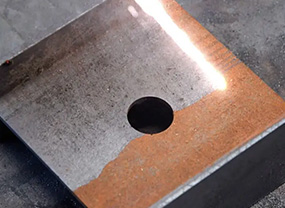
Laser cleaning is not just a cleaner version of abrasive blasting — it is a fundamentally different process that solves problems abrasives and chemicals cannot.

Controlled Cleaning with Trial-Based Checks
Laser cleaning can remove selected rust, oxide, coating and residue without abrasive contact. Surface response depends on the material, finish and settings. For critical dimensions or finishes, approve a representative trial and inspect to agreed criteria.
No Abrasive Media or Chemical Bath
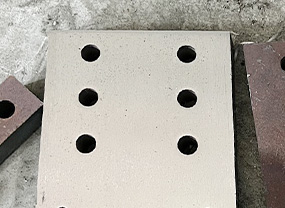
Laser cleaning does not require abrasive blasting media or a chemical bath for the treated area. Removed material can generate fumes and particles; extraction equipment and contaminated filters still require appropriate handling and disposal.
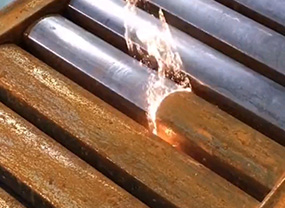
Access to Complex Geometry
Laser cleaning can target accessible features, but treatment requires a suitable beam path, head clearance and extraction. Recesses, internal passages and assembled components may require repositioning, disassembly or a different cleaning route.
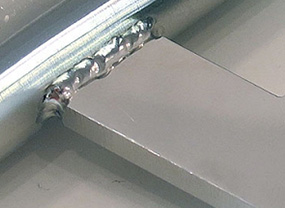
Pairs Directly with Our Other Services
Laser cleaning can be planned alongside welding, cutting, bending or finishing when the combined scope is confirmed. We review the part condition, required result and sequence of operations, then quote the process and lead time for that job.
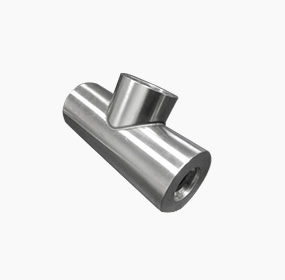
Laser Cleaning vs Other Cleaning Methods
Compare laser cleaning with abrasive blasting, chemical stripping and manual grinding. The appropriate method depends on the material, access, finish and acceptance criteria.
| Criterion | Laser Cleaning (Ours) | Abrasive Blasting | Chemical Stripping | Manual Grinding |
|---|---|---|---|---|
| Substrate damage | Assess by trial | Surface erosion / grit embed | Chemical attack risk | Dimensional loss |
| Selective area cleaning |
Defined zone; masking may be needed
|
Masking required |
Masking required |
Manual care needed |
| Access to complex geometry | Beam path and head access dependent | Line-of-sight only | Immersion covers all | Limited by tool access |
| Chemical / waste disposal |
Fumes, particles and filters require management
|
Contaminated grit disposal |
Hazardous waste disposal |
Grinding swarf |
| Ra / finish after cleaning |
Verify against agreed criteria
|
Roughened significantly |
Mostly unchanged |
Roughened, direction marks |
| Suitable for stainless steel |
Review by grade and finish
|
Fe grit contaminates SS |
Yes (acid pickling) |
Risk of Fe contamination |
Featured Projects
Laser Cleaning Work We've Delivered
A selection of recent laser cleaning projects — from stainless steel weld tint removal to mould cavity cleaning and pre-bond surface activation.
SS Weld Heat Tint Removal
316L SS · Full weld seam · Finish to be checked · Pre-passivation
Injection Mould Cavity Cleaning
P20 tool steel · Release agent + polymer · No cavity damage
PCB Contact Pad Decontamination
FR4 substrate · Oxide + flux residue · Selective zone · 300 pcs
Services That Work Well Together
Laser cleaning is most effective as part of a fabrication or maintenance workflow — integrated with the processes it supports.
Laser Welding & Assembly
Clean weld heat tint from SS seams immediately after TIG or laser welding — before passivation, in the same facility.
Polishing & Grinding
Laser clean oxide and contaminants first, then polish to Ra spec — cleaner starting surface means faster, more consistent polishing.
Laser Engraving
Clean oil and oxide from the engraving area for sharper, higher-contrast marks — especially on anodised and coated surfaces.
Metal Cutting
Clean mill scale and oil from incoming sheet stock for more consistent laser cutting parameters and edge quality.
FAQ
Laser Cleaning Questions
These are some of the common questions customers ask before sending drawings or requesting quotation.
Can laser cleaning affect the substrate?
Yes. Laser cleaning avoids abrasive contact, but unsuitable material or processing conditions can alter colour, roughness, a coating or the underlying surface. We review the substrate and target layer and agree a representative trial and acceptance checks where surface preservation is critical.
Can laser cleaning remove heavy rust, not just surface tint?
Heavy rust may require multiple passes and a trial to establish the achievable result. Cleaning cannot restore metal lost to pitting or corrosion, and a bare-looking surface does not by itself confirm dimensional or coating readiness. Send photos, material, dimensions and the required follow-on process for review.
Does laser cleaning replace stainless-steel passivation?
Laser cleaning may remove visible heat tint, but it does not by itself verify that a required passivation or corrosion-resistance specification has been met. If passivation is specified, agree the separate process, inspection method and acceptance criteria in the project scope.
Can you clean only a specific area?
We can review selective cleaning of a defined zone. Provide a drawing or marked photo showing the removal area, retained coating and protected features. Edge effects, access and the need for masking should be checked on a representative part before production.
Can you clean aluminium or anodised surfaces?
Bare aluminium and anodised parts need separate evaluation. Laser treatment can affect the oxide or anodised layer, so identify the exact cleaning zone and any coating that must remain. We will assess suitability and may recommend a trial or another method.
What is the turnaround time for laser cleaning?
For standard jobs — weld heat tint removal, light rust removal, adhesive stripping — we typically complete and return parts within 24–48 hours. For large structural assemblies or heavily corroded surfaces requiring multiple passes across large areas, lead time is 3–5 working days. If laser cleaning is combined with other services (welding, polishing, passivation), the overall lead time follows the longest process in the sequence. Most laser cleaning jobs are quoted and scheduled the same day you contact us.
Engineering Guides
Related Laser Cleaning Guides

Selective Laser Coating Removal: Cleaning Zones, Protected Areas and Trials
Planning selective laser coating removal? Define cleaning zones, protected surfaces, coating details and trial acceptance before processing metal parts.
Laser Cleaning Rusted Metal Parts: Sample Testing and Acceptance Requirements
Need laser cleaning for rusted metal parts? Learn which photos, sample areas and acceptance requirements to provide before requesting a
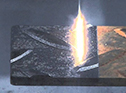
Laser Cleaning vs Sandblasting, Chemical and Mechanical Cleaning
Compare laser cleaning with abrasive blasting, chemical cleaning and mechanical methods for rust, coatings and surface preparation, including access, finish,
Get a Free Quote Today
Send your drawing or project requirement for review. We can discuss materials, related processing needs and a practical next step for your project.
Confidentiality Note
We understand the value of your design files. The information you submit will be used only for project evaluation, quotation and production communication. We take customer confidentiality, data security and intellectual property protection seriously.